Usuba
Usuba
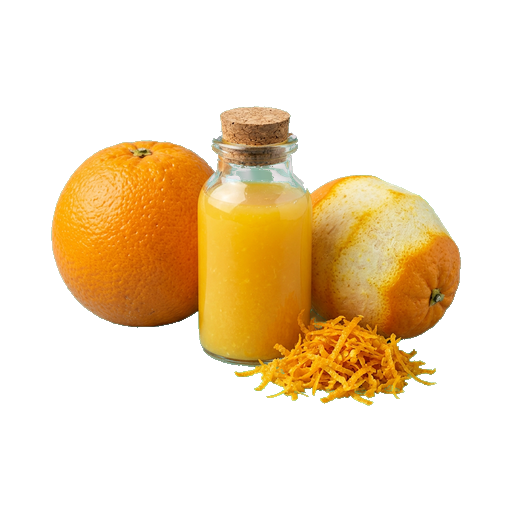
Orange (juice and zest)
Orange is a versatile citrus fruit with a bright sweet taste and pleasant acidity, used in cooking both as fresh-squeezed juice and finely grated zest. Orange juice is added to sauces, marinades, beverages, and desserts for refreshing acidity and natural sweetness, while its aromatic zest serves as a piquant addition to baked goods, meat dishes, and cocktails. When selecting oranges, prefer firm fruits with thin skin — they contain more juice, and for zest, it's important to use fruits without chemical wax treatment and pesticides.
About
Two sides of one fruit
Orange is one of the most versatile helpers in the kitchen. Its juice and zest work independently of each other, but together they create a deep, multi-layered flavor. The juice gives a dish bright acidity and natural sweetness, while the zest brings concentrated aroma and bitter-spicy notes. It's not just a fruit, but two different ingredients in one peel.
Juice: acidity and freshness
Orange juice is a bright, vibrant acidity that brings any dish to life. It is used not only for beverages, but also as a base for marinades, sauces, and dressings. The juice works well with meat, especially duck and pork, tenderizing the fibers and adding freshness. In baking, it reveals the flavor of the dough, making it more aromatic and airy.
Freshly squeezed juice works better than packaged juice — it retains a fresh taste and contains no preservatives. If you're making a sauce, add the juice at the end of cooking to preserve its freshness. For marinades, you can use juice with pulp — it will add texture and intensity.
Zest: concentrated aroma
Zest is a thin layer of peel in which all the aroma of an orange is concentrated. It is bitter, spicy, with a light astringency, and even a small amount can transform a dish. Zest is grated on a fine grater or cut into thin strips to add to sauces, desserts, drinks, and even meat dishes.
In baking, zest works like magic — a few grams added to dough or cream, and the entire dessert acquires a complex, refined flavor. It is added to chocolate cakes, cookies, and creams. In meat dishes, zest highlights the complexity of the sauce, especially when combined with herbs and spices. For beverages, zest can be candied or dried.
How to Choose and Store
Choose oranges with firm, smooth skin without spots or soft areas. The fruit should be heavy for its size — this is a sign of juiciness. Thin skin usually means more flesh and juice, thick skin — more zest. Even slightly dried oranges will work for zest, as long as the skin is undamaged.
Whole oranges can be stored in the refrigerator for up to three weeks. Juice can be squeezed in advance and frozen in ice cube trays — this makes it convenient to add it in portions. Zest is better grated just before use, but if you need to prepare it ahead, dry it in the air and store it in an airtight jar — it will retain its aroma for several months.
Successful Combinations
- Juice with soy sauce, ginger and garlic — classic base for Asian marinades
- Zest with dark chocolate and cinnamon — perfect duo for desserts
- Juice with honey and mustard — excellent sauce for duck and pork
- Zest with cream and vanilla — base for creams and mousses
- Juice with olive oil and herbs — dressing for salads with seafood
- Zest with sugar in dough — universal flavoring for cookies and buns
Nutrition
per 100 ml
- Calories
- 47 kcal
- Protein
- 0.9 g
- Fat
- 0.2 g
- Carbs
- 11.8 g
Measures and weight
- 1 tbsp
- 15.6 g
- 1 tsp
- 5.2 g
- 1 cup
- 260 g
- 1 pcs
- 150 g
Measure calculator
- Weight
- 100 g
- Calories
- 45 kcal