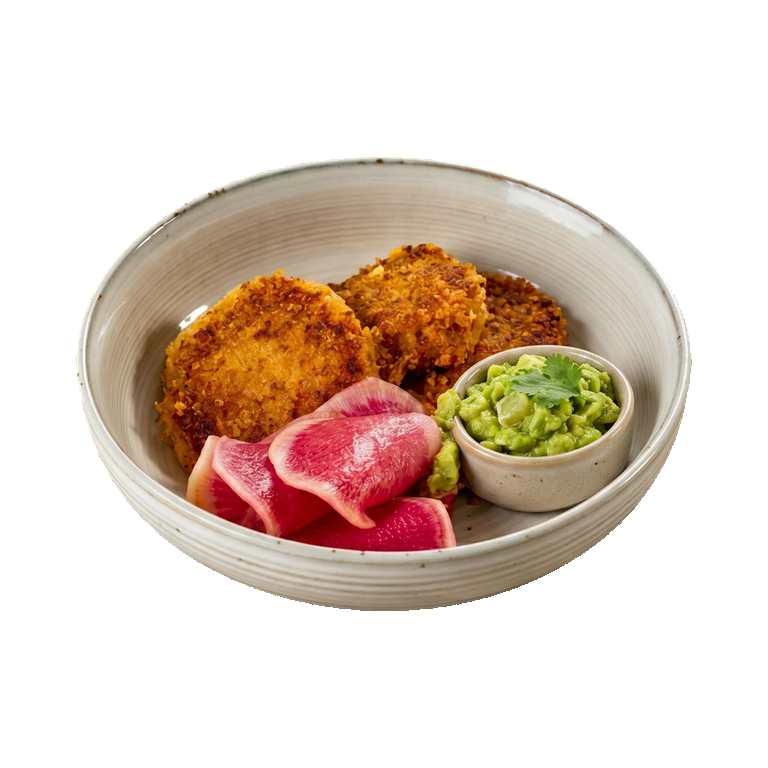
Usuba
Usuba
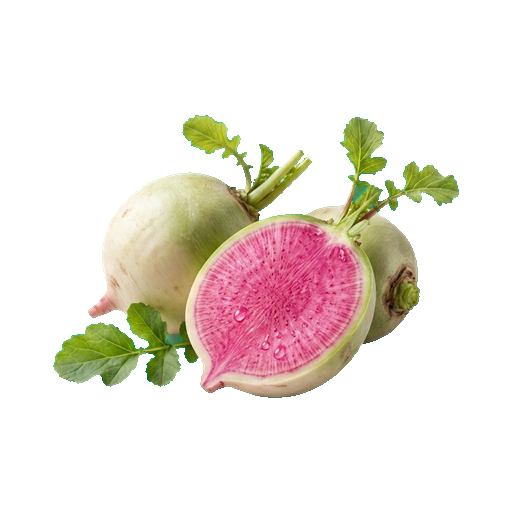
Watermelon Radish
A sharp radish with pink-red flesh and a slightly sweet flavor reminiscent of watermelon. In cooking, it is used raw in salads, marinades, and as a spicy appetizer, adding piquancy and a crispy texture to dishes. When selecting, prefer firm, medium-sized root vegetables without damage, and store in the refrigerator wrapped in a damp cloth.
About
Watermelon radish is a vegetable that immediately sparks curiosity with its name. Beneath a thin light skin hides pink or crimson flesh with a creamy center, which explains its nickname. Despite its slightly sweet aroma and delicate taste, it is a full-fledged radish with its own sharp character, though milder than that of black or white radish.
Taste and aroma
The flesh is crispy and juicy, with a delicate sharpness that doesn't sting the nose like classic radish. The taste is slightly sweet, subtly nutty, with a barely perceptible bitterness. The smell is fresh and vegetable-like, without sharp notes. Thanks to this balance, radish works well not only in hot dishes but also in fresh salads, where it doesn't overpower other ingredients.
Role in the kitchen
Raw watermelon radish is excellent in salads with cucumber, carrots, and light dressings made with oil and vinegar. Its delicate texture and sweet flavor make it ideal for appetizers and vegetable assortments. Try slicing it into thin slices and serving with salt and oil as a simple appetizer.
During heat treatment, radish becomes softer, loses its pungency, and reveals sweet notes. It can be added to soups, stewed with other root vegetables, baked, or boiled. In Asian cuisine, watermelon radish is often used in marinades and preserves due to its dense structure, which holds its shape well.
Successful Pairings
- With sharp spices: ginger, black pepper, chili — they emphasize the natural pungency of radish
- With acidity: vinegar, lemon juice, marinade — help reveal flavor and preserve crunch
- With neutral vegetables: carrots, beets, cabbage — radish doesn't compete, it complements
- With fatty sauces: sour cream, butter, sesame paste — soften the sharpness and add creaminess
- With seafood and fish — the freshness of radish contrasts well with their rich flavor
Selection and Storage
When purchasing, choose a medium-sized radish that is firm to the touch, without soft spots or skin damage. The skin should be smooth, light-colored, and free of cracks. Overly large root vegetables are often fibrous. If you plan to store the radish, make sure it has no sprouts.
Watermelon radish is stored in the refrigerator in the vegetable compartment for two to three weeks in a plastic bag or container. Before storing, remove the tops if any remain. If the radish begins to dry out, soak it in cold water for an hour — it will regain its crispness. Sliced radish is best used within a few hours, as it quickly loses moisture and becomes limp.
Watermelon radish — a vegetable for those who want heat but aren't ready for the aggression of classical radish. It works in a fresh salad, in a hot dish, and in a marinade, while staying true to itself: crispy, juicy, and slightly mischievous.
Nutrition
per 100 g
- Calories
- 16 kcal
- Protein
- 0.6 g
- Fat
- 0.1 g
- Carbs
- 3.6 g
Measures and weight
- 1 pcs
- 800 g
Measure calculator
- Weight
- 100 g
- Calories
- 16 kcal