Usuba
Usuba
Baba ganoush
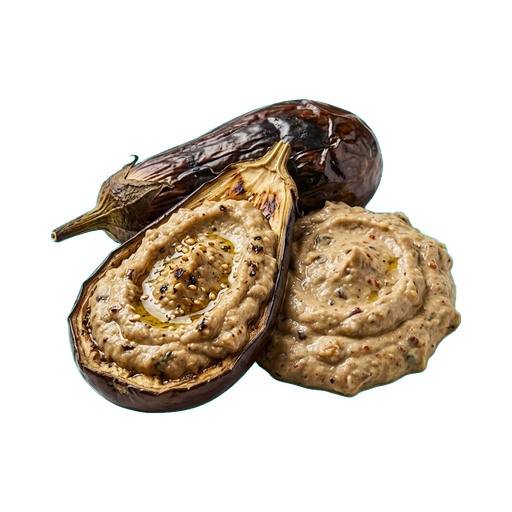
Baba ganoush is a Middle Eastern paste made from roasted eggplants with tahini, lemon juice, and garlic. The dish has a creamy texture, a smoky aroma, and a slightly bitter taste with nutty notes. It is served as an appetizer or sauce for bread, vegetables, and meat, and pairs well with olive oil and fresh herbs.
About
Baba ganoush is a thick paste made from roasted eggplants with tahini, lemon juice, and garlic. The dish originates from Eastern Mediterranean cuisine, but today it is prepared all over the world. The main difference from hummus is that the base is made not from chickpeas, but from eggplant, which gives the paste a more delicate, almost creamy texture and a subtle smoky aroma.
Aroma and Taste
Baba ganoush has a mild and slightly nutty flavor thanks to the tahini paste, with a bright lemon tanginess and a sharp note of garlic. If the eggplants were cooked over an open flame or charcoal, a pleasant smoky undertone appears, which makes the paste more interesting. The texture is smooth, almost like a puree, but with barely noticeable tiny pieces of eggplant if the paste was made by hand rather than in a blender.
Role in dishes
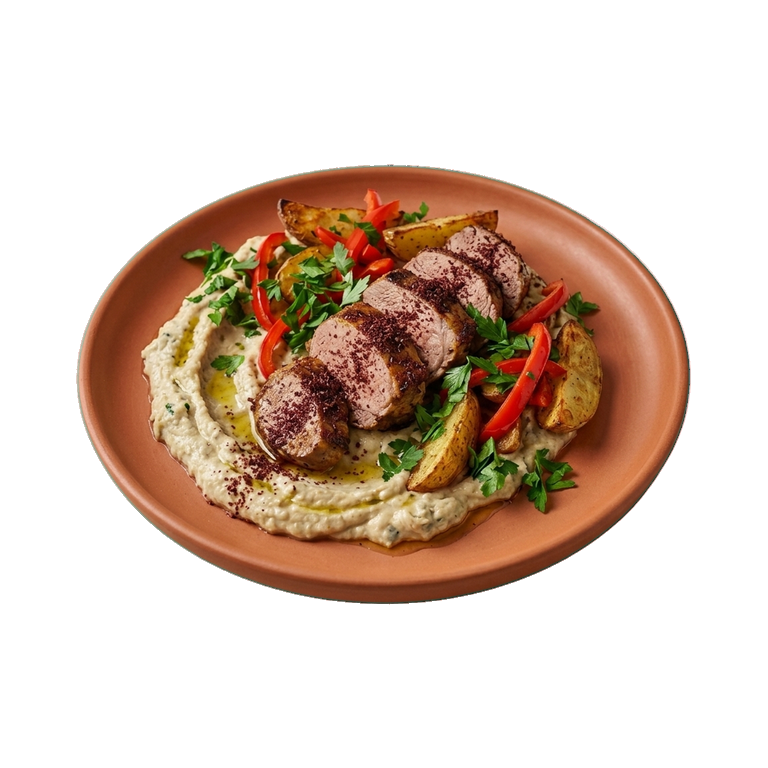
Baba ganoush works as an appetizer, sauce, and sandwich base. It is served with lavash, pita, or crackers, often garnished with olive oil and herbs. As part of mezze — an assortment of appetizers — baba ganoush becomes one of the main highlights on the table. It is also added to salads, used as a spread for sandwiches, or served as a side dish to meat dishes.
Pairings
- Fresh vegetables: tomatoes, cucumbers, bell peppers, radishes
- Herbs: parsley, cilantro, mint, dill
- Bread and cereals: lavash, pita, grilled bread, polenta
- Proteins: baked chicken, fish, boiled eggs, cottage cheese
- Oils and vinegars: olive oil, pomegranate vinegar, lemon juice
Selection and Storage
Ready-made baba ganoush is sold in jars or containers in the Middle Eastern products section. When choosing, pay attention to the consistency — it should be uniform, without separation. The smell should be pleasant, with garlic and lemon, without rancidity. If you're making it yourself, use large eggplants with thin skin and a minimal number of seeds.
Store the finished paste in the refrigerator in an airtight container for up to five days. Before serving, you can slightly dilute it with olive oil if the paste has thickened. Baba ganoush can be frozen, but the texture will change slightly — it will become less creamy. It's better to prepare the paste in small portions and use it fresh.
If you don't have the option to roast eggplants over coals, use an oven at 200 degrees. Pierce the skin with a fork and bake for 40–50 minutes until the eggplant is completely softened. This will give the desired consistency and a sufficiently soft flavor.
Nutrition
per 100 g
- Calories
- 120 kcal
- Protein
- 2.5 g
- Fat
- 9 g
- Carbs
- 7 g
Measures and weight
- 1 tbsp
- 14.3 g
- 1 tsp
- 4.8 g
- 1 cup
- 237.5 g
Measure calculator
- Weight
- 100 g
- Calories
- 120 kcal