Usuba
Usuba
Beef leg
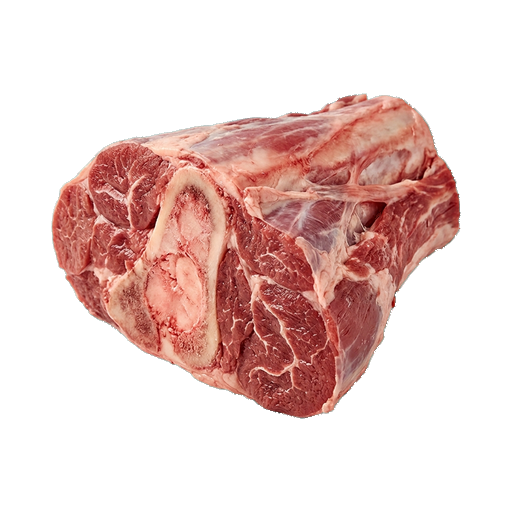
Beef shank is a meat and bone product from the front or hind limb of an animal, containing plenty of connective tissue and bone marrow. With prolonged braising or boiling, the meat becomes tender, and gelatin is released from the bones and cartilage, giving the broth a gelatinous consistency. This cut is ideal for soups, jellied meat, stews, and broths, requires a minimum of 2–3 hours of slow cooking, and pairs well with vegetables and spices.
About
Beef leg is one of the most rewarding cuts for long cooking. It's not meat in the classical sense, but a joint with cartilage, tendons, and bone, which when properly treated turns into kitchen gold. When you boil or braise the leg for hours, collagen converts into gelatin, and a deep, rich flavor is drawn from the bones. The result is a broth that sets in the refrigerator, and meat that separates from the bone on its own.
What happens during cooking
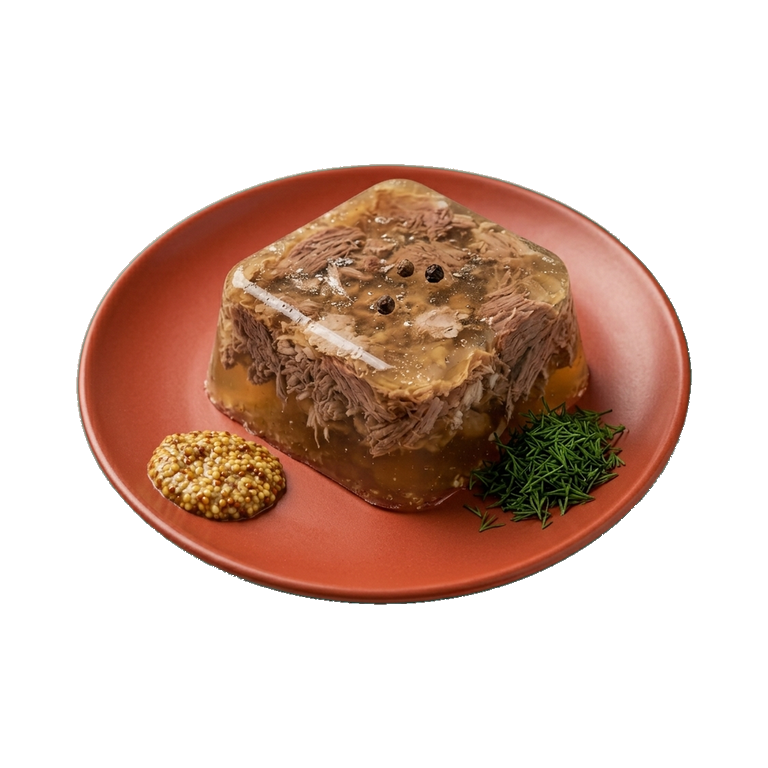
Beef leg requires time — this is not a compromise, but its essence. Over four to six hours of slow simmering, the tissues soften, flavors dissolve into the liquid, and the leg itself becomes tender and gelatinous. The cartilage acquires a tenderness that cannot be obtained from any other cut. If you're making aspic, there is literally no better choice — the leg will give you gelatin naturally, without any additives.
Start with blanching or searing. If you want a light, clear broth, place the leg in boiling water for a few minutes, then rinse under cold water and pat dry. This will remove the foam and blood that cloud the liquid. If you prefer a more rich color and flavor, sear the leg over high heat until it has a brown crust — this will add depth through the Maillard reaction.
Where to use it
- Aspic and jellied meat — classic application where the leg is fully utilized
- Broth for soups and sauces — simmer the leg separately, strain, use the liquid as a base
- Stew and braised dishes — the leg gives the dish viscosity and coating flavor
- Fondue and consommé — if you need crystal clear, rich broth
When boiled, meat separates from bones and cartilage easily. You can add it back to the aspic, use it for pie fillings, or simply serve it separately with mustard. Nothing goes to waste — even the marrow bone will give you marrow that can be spread on bread or used in sauces.
Selection and Preparation
Choose a leg with a good layer of meat, not just bone with skin. The meat color should be light pink, the bone — white or cream-colored, without dark spots. If the leg is frozen, thaw it in the refrigerator overnight — this is important for even cooking.
Before cooking, remove excess fat from the surface and remove any hair if present. Some chefs lightly singe the leg over a flame for cleanliness. Then rinse under cold water. If you blanch the leg beforehand, you will get a softer, more delicate flavor; if you fry it, you will get a more pronounced and deeper one.
Beef leg is not a rush. It's a reason to turn on slow cooking, fill your kitchen with aroma, and get a result that's worth the time spent. Once you try homemade aspic or broth made from a leg, you'll understand why this cut never goes out of style.
Nutrition
per 100 g
- Calories
- 170 kcal
- Protein
- 20 g
- Fat
- 10 g
- Carbs
- 0 g
Measure calculator
- Weight
- 100 g
- Calories
- 170 kcal