Usuba
Usuba
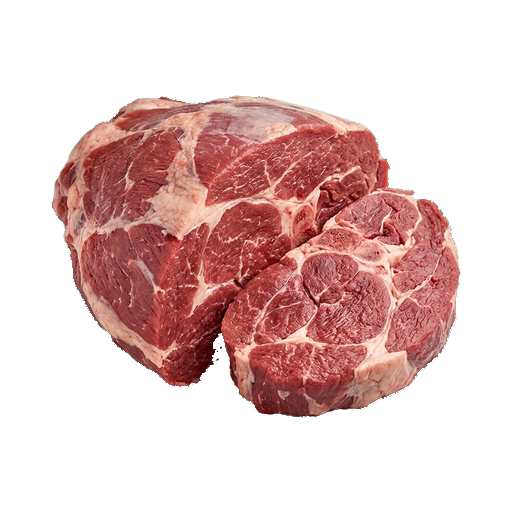
Beef shank
Beef shank is the hind leg of an animal that contains muscle tissue with layers of connective tissue and bone. Meat from this cut has a rich flavor and requires prolonged heat treatment to become tender, making it ideal for braising, boiling broths, and soups. When selecting, pay attention to the color of the meat — it should be bright red, and the fat should be white or slightly yellowish, which indicates the freshness and quality of the product.
About
Beef shank is the front or hind part of an animal's leg, where the muscles work most intensively. The result: dense, rich meat with visible fibers and layers of connective tissue. It is this 'toughness' that makes shank ideal for long braising and boiling, when collagen transforms into gelatin and the meat becomes tender.
Taste and Aroma
Shank stands out with its rich beef flavor — deep and slightly earthy. The bone that comes with it adds richness and roundness to the broth. There isn't as much fat here as in ribs, but there's enough to keep the dish from drying out after hours of cooking. With slow heating, shank reveals all its aromatic qualities.
How to Cook
Ham requires time and moisture. It's not a steak — completely different rules apply here. It's best to cut it into medium-sized pieces, sear it over high heat until browned, and then place it in a pot with vegetables and broth for at least two to three hours. Keep the temperature low and steady so the meat cooks tenderly.
- Beef broth — a classic that simmers for hours and becomes clear and aromatic
- Stews and braised meat — ham is simply indispensable here, as it doesn't fall apart and holds its shape
- Soup — from borscht to meat soup with noodles, ham provides the base
- Aspic — the bone part provides gelling properties
Pairs well with
Ham pairs well with root vegetables — carrots, celery, onions, and potatoes. Herbs like thyme and bay leaf enhance its deep flavor. Tomatoes add acidity and contrast. Spices — black pepper, cloves, juniper — reveal new dimensions without overpowering the natural aroma of the meat.
Selection and Storage
Look for ham with a dense structure, without dark spots and unpleasant odor. The color should be bright red or dark red, but not brown. The bone should be light-colored, without cracks. If you buy fresh meat, use it within three days or freeze it. Frozen ham can be stored for several months.
- In the refrigerator: up to three days on the bottom shelf in original packaging or in a container
- In the freezer: up to four months, wrapped in plastic wrap or foil
- After thawing: cook within a day, do not refreeze
Beef shank is an investment in quality broth and a rich dish. It requires patience, but the result is worth it: meat that melts in your mouth and broth you want to drink with a spoon. It's not fast food, but it's honest, nutritious, and delicious food.
Nutrition
per 100 g
- Calories
- 131 kcal
- Protein
- 20 g
- Fat
- 5 g
- Carbs
- 0 g
Measure calculator
- Weight
- 100 g
- Calories
- 131 kcal