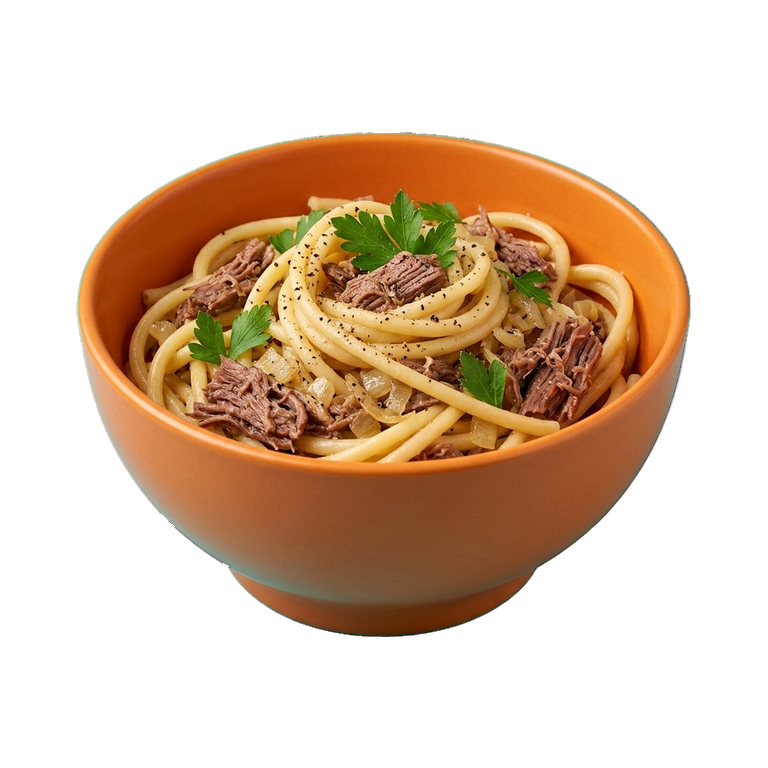
Usuba
Usuba
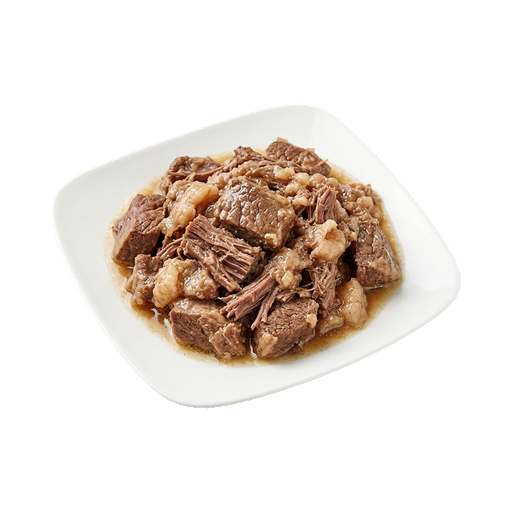
Beef stew
Canned meat prepared through prolonged stewing of beef with fat and spices in a sealed package. It has a soft, well-cooked consistency and rich beef flavor with a subtle saltiness. Used as a standalone dish, a base for soups, stews and meat pâtés, as well as a filling for pies and an addition to side dishes; when selecting, pay attention to the ingredients — quality stewed meat contains minimal additives and has a uniform consistency without excess fat on the surface.
About
Beef stew is canned meat that has already undergone prolonged heat treatment and is ready to eat. The can contains tender meat in its own sauce, saturated with fat and spices. It is not just a preservative, but a full-fledged ingredient that saves time and delivers predictable results.
Taste and Texture
The meat in the stew is tender, almost falling apart when pressed. The taste is rich, meaty, with noticeable saltiness and spices. Gelatin and fat create a thick, enveloping sauce — this is exactly what distinguishes good stewed meat from dry canned beef. When opening the can, you immediately feel an intense aroma: meat, black pepper, bay leaf.
How to use in dishes
Canned meat works in situations when you need quick results or when you don't have time for long cooking. It's ideal for soups, borscht, stews — simply add the contents of the can to boiling broth or sauce. The meat is already fully cooked, so you just need to heat it through and stir.
- Purees and pâtés: mashed canned meat becomes the basis for a quick pâté with the addition of butter and spices
- Macaroni casserole: a layer of canned meat under a layer of pasta and sour cream creates a rich, meaty dish
- Pies and dumplings: the filling already has the right consistency and doesn't require pre-processing
- Salads: diced meat from a can adds protein and satiety to cold appetizers
- Omelets and fried eggs: pieces of canned meat create interesting textural contrast
What to pay attention to when choosing
Quality canned meat should be heavy for its size — this means there is more meat than liquid. Open the can and take a look: pieces should be visible, not dissolved in fat. The smell should be pleasant, meaty, without mustiness or chemical notes. The composition is usually minimal: meat, salt, spices, sometimes sugar.
Check the release date and shelf life. Fresh stewed meat has a more delicate taste than one that has been on the shelf for a year. After opening the can, you need to use it within 24 hours, transferring the contents to a glass container.
Storage and Practical Tips
A sealed jar can be stored at room temperature in a dry place. A refrigerator is not needed until you open the canned product. After opening, transfer the meat to a container and refrigerate it — it will be suitable for 24 hours.
- If the canned meat is too fatty for your dish, slightly chill the can — the fat will harden and be easier to remove
- Don't discard the sauce from the can: it will add depth and richness to any soup or stew
- For a more delicate flavor, mix the canned meat with broth or cream before adding to the dish
Beef stew is a kitchen staple. It won't replace homemade ragù, but it will save you in a pinch and deliver quite decent results.
Nutrition
per 100 g
- Calories
- 213 kcal
- Protein
- 15 g
- Fat
- 17 g
- Carbs
- 0 g
Measure calculator
- Weight
- 100 g
- Calories
- 213 kcal