Usuba
Usuba
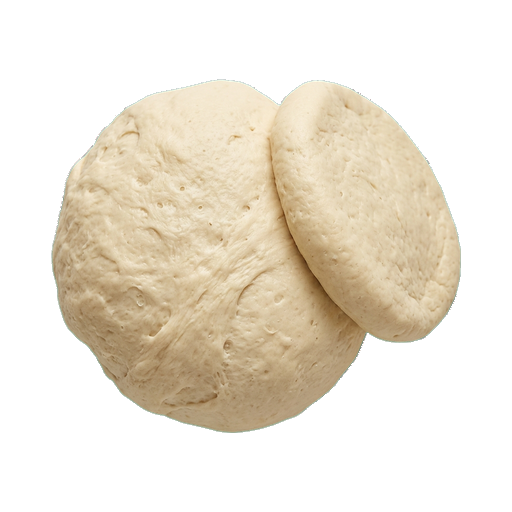
Yeast-free dough
Dough prepared without yeast relies on mechanical aeration or chemical leavening agents to rise and create a light structure. Such dough requires more vigorous kneading or the addition of baking soda, baking powder, or whipped eggs to achieve the desired consistency and porosity. It is used for pancakes, fritters, certain types of cookies, and quick breads when there is no time for fermentation or when a denser, uniform texture without a sour taste is needed.
About
Yeast-free dough is a baking base that relies not on microorganisms, but on physical leavening methods. Instead of yeast, baking soda, baking powder, or simply mechanical whipping of eggs are used here. The result is quite different: a denser crumb, clear shape definition, and the absence of the characteristic yeast aroma.
When to Choose Yeast-Free Dough
This dough is indispensable when you're in a hurry. Cookies, cupcakes, pancakes, fritters — all of these are prepared in minutes without waiting for proofing. Yeast-free dough is perfect for sweet baked goods: creamy pastries, sponge cakes, muffins. It is also chosen for puff pastry, where yeast would only interfere with the formation of layers.
Structure and Consistency
The consistency of yeast-free dough depends on its purpose. For cookies, you need a dense, crumbly mass that holds its shape well during baking. For cupcakes — a more moist, flowing dough that pours easily into molds. For pancakes — liquid, like sour cream. The main rule: the more leavening agent, the fluffier the result will be, but don't overdo it — the product will be crumbly and bitter.
Main Components
- Flour — the foundation of structure. The choice depends on the type of baking: regular wheat flour is suitable for cookies, while low-protein flour is better for delicate cupcakes.
- Baking powder or baking soda — create gas bubbles. Baking powder works when heated, baking soda needs acid (kefir, lemon, cocoa).
- Fat — butter or margarine add softness and flakiness. Its quantity determines the crumbliness of cookies or tenderness of cupcakes.
- Eggs — bind components and aid leavening if whipped well. In some recipes, eggs are the main leavening agent.
- Sugar and salt — regulate taste and affect dough structure, slowing down or speeding up baking.
How to work with dough
The main difference from yeast dough is minimal preparation time. Mix the dry ingredients, add the wet ones, stir quickly, and straight into the oven. Don't knead for long: extra work activates gluten, and the baking will turn out tough. If you use baking soda, add it at the last moment — the reaction starts immediately, and you shouldn't wait.
Flavor Combinations
Yeast-free dough is a neutral canvas for experimentation. Add vanilla, cinnamon, cocoa, citrus zest, ground ginger. Nuts, chocolate chips, and dried fruits work well for cookies. Berries, grated apples, and carrots are perfect for cupcakes. The main thing is not to overload the dough with additives, otherwise it may not rise evenly.
Storage and Preparation
Ready yeast-free dough should not be stored for long — maximum 1–2 hours at room temperature, otherwise the leavening agent will start working prematurely. Some recipes allow you to chill the dough before baking: this stabilizes it and helps cookies hold their shape. A dry mixture of flour and leavening agent can be prepared in advance and stored in an airtight container for several weeks.
Nutrition
per 100 g
- Calories
- 300 kcal
- Protein
- 7 g
- Fat
- 15 g
- Carbs
- 33 g
Measure calculator
- Weight
- 100 g
- Calories
- 300 kcal