Usuba
Usuba
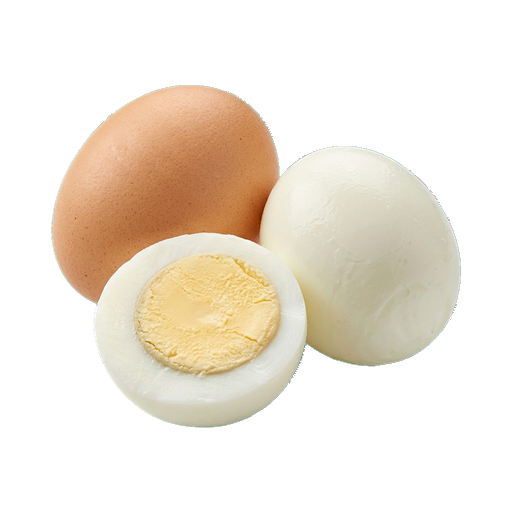
Boiled eggs
Boiled eggs are a versatile ingredient prepared by cooking in boiling water and used as a standalone dish, in salads, soups, side dishes, and appetizers. The degree of doneness depends on cooking time: a soft yolk is achieved in 4–6 minutes, while a fully hard yolk takes 10–12 minutes. Fresh eggs are harder to peel than eggs stored for a week, so older eggs are better suited for boiling, and after cooking they should be cooled in ice water for easier peeling.
About
Boiled eggs are one of the most versatile ingredients in the kitchen. They are ready to use, require no additional processing, and become the foundation for salads, appetizers, side dishes, and even main courses. It's not just convenience: boiled eggs retain all the nutritional properties of fresh eggs while being ready for immediate use.
Texture and consistency of the yolk
The degree of egg doneness changes everything. A soft yolk with a runny center is ideal for salads where you need a creamy texture, and for dishes where the yolk becomes part of the sauce. A medium egg with a semi-firm yolk is versatile: it holds its shape but remains tender. A fully hard yolk is suitable for slicing, stuffing, and cold appetizers.
Protein always hardens the same way when boiled, but its consistency depends on the freshness of the egg and cooking time. Older eggs are easier to peel, while fresh eggs require careful handling during peeling. If you boil eggs at home, remember: after the water boils, soft-boiled eggs cook for 4–5 minutes, medium-boiled for 7–8, and hard-boiled for 10–12 minutes.
Use in dishes
- Salads: egg is sliced or crumbled, becoming a source of protein and creamy texture
- Appetizers: deviled eggs, eggs with mayonnaise, as part of pâtés
- Side dishes: to serve with hot dishes, fish, meat, vegetables
- Cold soups and okroshka: egg slices float in the bowl, adding substance
- Sandwiches: sliced egg with butter, herbs, tomatoes
Pairings and flavor combinations
Boiled eggs are neutral in taste, but their creamy texture requires the right companions. Mustard, horseradish, and vinegar emphasize their softness. Fresh herbs — dill, parsley, green onions — add freshness. Mayonnaise and butter enhance the creaminess. Smoked fish, ham, and sausages create a contrast of saltiness and smokiness.
Eggs work flawlessly with vegetables: tomatoes, cucumbers, radishes, carrots. With creamy and buttery sauces, eggs become softer and more delicate. With spicy spices — paprika, black pepper, cayenne pepper — it creates an interesting contrast of textures.
Selection and Storage
If you are buying ready-cooked eggs, check the shell: it should be intact, without cracks or mold. The smell should be neutral, eggy. Avoid eggs with dark spots on the yolk — this is a sign of improper storage or cooking.
Boiled eggs can be stored in the refrigerator for up to a week in a closed container or dish. Peeled eggs should be used faster — within 2–3 days. If the egg was boiled at home, let it cool at room temperature before refrigerating, but do not leave it on the table for more than an hour.
Before using in salads or appetizers, take the egg out of the refrigerator 15–20 minutes beforehand — this will allow it to reveal its full flavor. Peel the egg under cold running water, starting from the blunt end, where there is an air pocket between the white and the shell — this will make the process easier.
Nutrition
per 100 g
- Calories
- 155 kcal
- Protein
- 12.6 g
- Fat
- 10.6 g
- Carbs
- 1.1 g
Measures and weight
- 1 pcs
- 55 g
Measure calculator
- Weight
- 100 g
- Calories
- 155 kcal