Usuba
Usuba
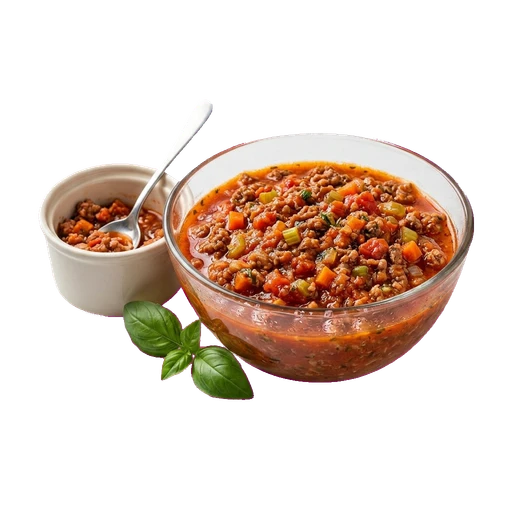
Bolognese sauce
A classic Italian sauce made with ground meat, tomatoes, and aromatic vegetables, slowly braised to develop a rich, saturated flavor. It features a deep, slightly sweet taste with notes of tomato and spices, and a thick consistency that clings well to pasta. Used to dress spaghetti, lasagna, and other pasta dishes; when substituting, you can use sauces based on ground meat from other sources, but note that Bolognese requires precisely prolonged simmering to fully develop its flavor.
About
Bolognese is not just a tomato sauce with meat. It is an entire cooking philosophy, where every component works to create a deep, multi-layered flavor. When you open the pot in which this miracle has been simmering for hours, you are greeted by an aroma that cannot be confused with anything else. This is precisely why this sauce has become a universal companion to pasta, risotto, and even polenta throughout the world.
Taste and character of the sauce
True bolognese is built on contrast: meat gives the sauce richness and umami, tomatoes add acidity and freshness, and long simmering transforms everything into a unified whole. The meat practically dissolves into the sauce, becoming an integral part of it rather than just an addition. The flavor turns out rich but not heavy, if you maintain a balance of ingredients and don't overcomplicate the recipe.
The key point is cooking time. Rushing is the enemy here. A minimum of two hours of slow braising allows the flavors to fully develop, the meat to become tender, and the sauce to achieve the right consistency. Some chefs insist on three to four hours, and they are right: the longer it cooks, the deeper the flavor.
Where and how to use
Bolognese is versatile, but it demands respect for its nature. With long pasta like spaghetti or bucatini, the sauce clings reasonably well, but it truly shines with shorter pasta — penne, rigatoni, farfalle. There the sauce lingers in the ridges, and each piece gets the maximum flavor.
- Pasta Bolognese — a classic that always works
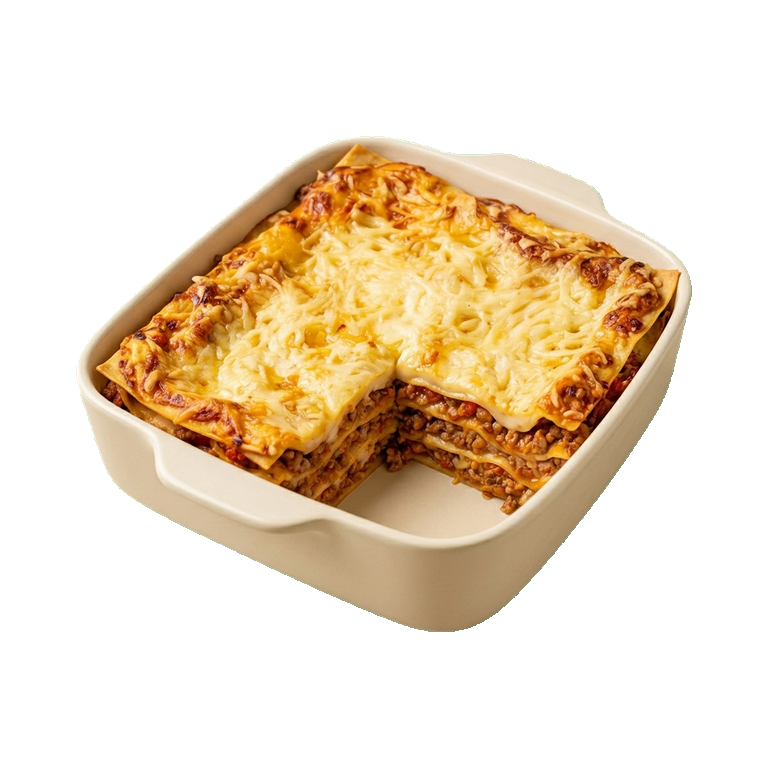
- Lasagna — here the sauce becomes the base, alternating with béchamel and cheese
- Risotto — meat sauce enriches the rice grains, creating a complex flavor
- Polenta — creamy porridge perfectly absorbs the meat sauce
- Filling for pies and dumplings — concentrated Bolognese works as a ready-made filling
Selection of ingredients and preparation
Meat is the basis of the sauce. Traditionally, a mixture of beef and pork is used, or beef alone. The ground meat should not be too fatty, but not lean either: fat gives flavor and helps the sauce become silkier. Tomatoes are best taken canned whole or in their own juice — they give a cleaner taste than tomato paste. If you use fresh ones, choose ripe, meaty varieties.
- Onion and garlic — essential, they create an aromatic base
- Carrot and celery — add sweetness and depth (not everyone, but many chefs use them)
- White wine — helps soften the meat and adds acidity
- Milk or cream — an unexpected but correct move that softens the acidity of tomatoes
- Olive oil — for sautéing and giving the sauce roundness
Bolognese keeps well in the refrigerator for up to four days and freezes excellently for several months. Moreover, it tastes even better the next day when the flavors fully meld together. Cook in batches — extra sauce will always find a use.
Bolognese teaches the main rule of cooking: good things take time. You can't rush, you don't need many ingredients, but each one must be of high quality.
Nutrition
per 100 g
- Calories
- 94 kcal
- Protein
- 5.2 g
- Fat
- 5.8 g
- Carbs
- 4.1 g
Measures and weight
- 1 tbsp
- 15.8 g
- 1 tsp
- 5.3 g
- 1 cup
- 262.5 g
Measure calculator
- Weight
- 100 g
- Calories
- 94 kcal