Usuba
Usuba
Broccoli rabe
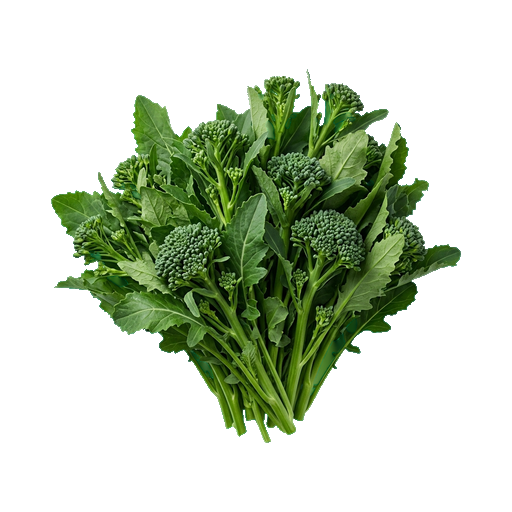
Broccoli raaab is a leafy vegetable with thin stems and small florets, resembling a hybrid of broccoli and turnip. It has a slightly bitter taste with nutty notes, and its stems are more tender than regular broccoli, so they cook faster. It is often sautéed with garlic and oil, added to pasta, or grilled; when selecting, look for young plants with firm stems, as overripe ones become tough and bitter.
About
Broccoli rabe is not quite the same as regular broccoli, although they are often confused. What you have before you is a long-stemmed cabbage with small florets and tender leaves that are completely edible. The plant looks more graceful and airy than the compact head of classic broccoli, and this affects its taste and texture.
Aroma and Taste
Broccoli rabe has a more pronounced, slightly bitter taste than its larger relative. The bitterness here is not aggressive, but noble — it adds depth and complexity to the dish. The stems are more tender than regular broccoli and cook faster. The leaves have a pleasant crispness and a more vibrant vegetable aroma.
Role in dishes
Broccoli rabe is excellent in both hot and cold dishes. It is often stewed with garlic and olive oil, added to pasta, grilled, or quickly stir-fried in a wok. Thanks to its thin stems and leaves, it requires very little time on the heat — literally 3–5 minutes to remain crispy and retain its vibrant color.
Successful Combinations
- Garlic and red pepper — a classic trio for a quick side dish
- Lemon and olive oil — highlight bitter notes
- Hot spices and soy sauce — for Asian dishes
- Parmesan and pine nuts — for a more hearty option
- Anchovies and capers — for lovers of bright, salty flavors
Selection and Storage
Choose bunches with firm, elastic stems of dark green color. Leaves should be fresh, without wilting and dark spots. Florets are dense and not open. Broccoli rabe is stored in the refrigerator in a perforated bag or container for no more than 3–4 days — this is a delicate vegetable, and freshness is critical here.
Do not cut off the leaves before cooking — they cook together with the stems and add tenderness and flavor to the dish. Simply rinse the bunch and cut it into convenient pieces.
Nutrition
per 100 g
- Calories
- 22 kcal
- Protein
- 3.2 g
- Fat
- 0.2 g
- Carbs
- 2.8 g
Measures and weight
- 1 tbsp
- 3 g
- 1 tsp
- 1 g
- 1 cup
- 50 g
- 1 bunch
- 200 g
Measure calculator
- Weight
- 100 g
- Calories
- 22 kcal