Usuba
Usuba
Lingonberry jam
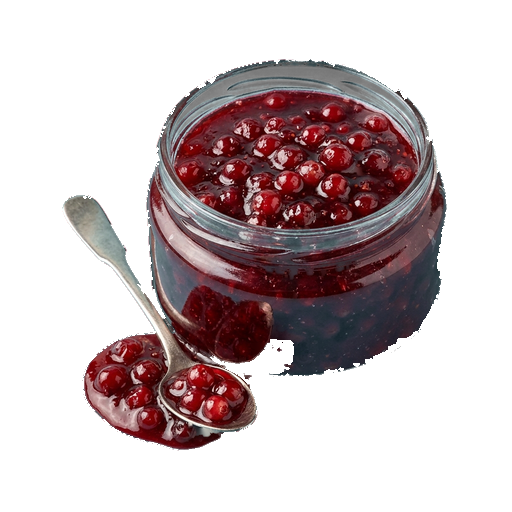
Lingonberry jam is a thick preserve made from tart lingonberries with a characteristic astringent flavor and rich deep red color. In cooking, it is used both as a standalone dessert served with pancakes and baked goods, and as a component in sauces for meat dishes, particularly game and poultry. When selecting jam, it is important to pay attention to consistency — good jam should be dense enough not to spread on the plate, but not hard, and its color should be deep and uniform without any signs of crystallization.
About
Lingonberry jam is a dense, bright red preserve with a slight tartness and a subtle astringent taste. Lingonberries contain a lot of pectin, so the jam turns out thick almost without adding gelling agents. This is the main advantage: a natural texture that holds its shape on a spoon but doesn't become rubbery.
Taste and aroma
Lingonberry jam smells like the forest — fresh, slightly resinous, with barely perceptible woody notes. In taste, it is not sweet jam in the classical sense. Here acidity and a slight bitterness dominate, which balance the sugar. If the jam is made with minimal sugar added, the taste becomes almost like berry compote in solid form.
Where to use
- With meat and game — duck, goose, venison. Acidity cuts through the richness, tannins emphasize the aroma of game
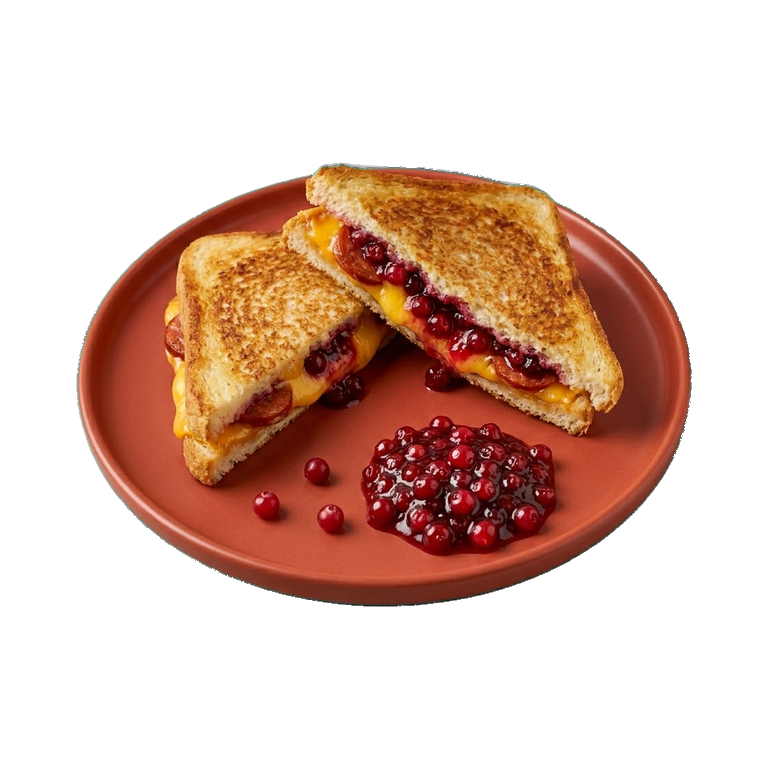
- With cheese — especially hard and semi-hard varieties. The contrast of flavors works perfectly
- In baked goods — in pies, buns, muffins instead of regular jam. Jam doesn't spread, maintains structure
- For breakfast with cottage cheese, yogurt or porridge — adds tartness and depth of flavor
- In sauces for meat dishes — especially for beef and pork
How to Choose and Store
When choosing, pay attention to the color — it should be a rich red, almost burgundy. If the jam is too light, it's possible that too few berries were used. Check the consistency: quality jam should not be liquid, but also not rubbery. Look for a simple composition on the label: berries, sugar, possibly lemon juice. Avoid options with starch and thickeners — they indicate low-quality raw materials.
Keep an open jar of lingonberry jam in the refrigerator in a glass container with a tight-fitting lid. Storage time is 2–3 weeks. If the jam starts to mold or develops an unpleasant odor, it should be discarded. A sealed jar is stored in a cool, dark place for a year or longer, but it is best to use it within the season for maximum aroma.
Food Pairings
- With spicy — jam softens the heat, adds sweetness. Great with spicy sauces for poultry
- With herbs — thyme, rosemary, juniper. Lingonberry highlights them
- With vanilla and cinnamon — classic combination for baking and cereals
- With black pepper — sharp spice contrasts with acidity
Practical Tips
If you are making a sauce based on lingonberry jam, dilute it gradually — the jam is very concentrated. Start with one tablespoon per cup of base (broth, wine). For baking, the jam can be slightly warmed to make it more fluid and distribute evenly in the dough. But do not boil — you will lose the aroma. If the jam turns out too sweet, you can «revive» it with lemon juice or a small amount of vinegar.
Nutrition
per 100 g
- Calories
- 240 kcal
- Protein
- 0.3 g
- Fat
- 0.1 g
- Carbs
- 60 g
Measures and weight
- 1 tbsp
- 19.5 g
- 1 tsp
- 6.5 g
- 1 cup
- 325 g
Measure calculator
- Weight
- 100 g
- Calories
- 240 kcal