Usuba
Usuba
Cannellini beans
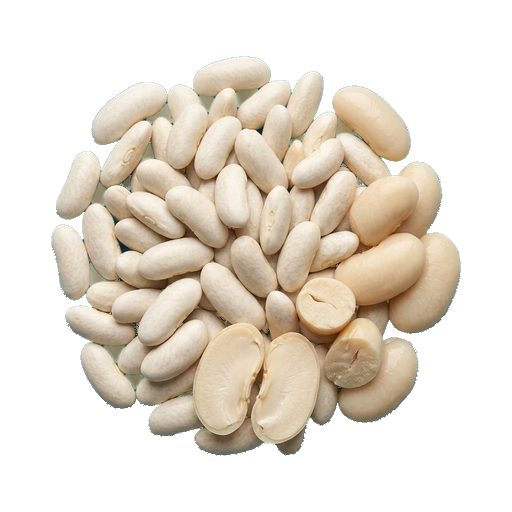
Cannellini beans are large white beans with a tender, creamy texture and a mild, slightly nutty flavor. They absorb surrounding flavors well and are often used in Italian soups, stews, and salads, particularly in minestrone and pasta e fagioli. When selecting, prefer beans without cracks or dark spots. When substituting, you can use common white beans or navy beans, though they are slightly smaller and cook faster.
About
Cannellini is a white bean with a tender, creamy texture and delicate, almost neutral flavor. It easily absorbs the aromas of neighboring ingredients, making it an ideal base for many dishes: from soups to pastas. Unlike denser varieties, cannellini cooks faster and does not require pre-soaking if you cook it in a pressure cooker or slow cooker.
Texture and Taste
The main advantage of cannellini is its softness. The beans break apart with minimal pressure, but with proper cooking they retain their shape and don't turn into mush. The taste is neutral, slightly nutty, with barely noticeable sweetness. This makes the beans a versatile partner for both Italian ragus and Mediterranean salads.
Role in the Kitchen
- Pasta e fagioli — a classic Italian soup where cannellini beans are the main protein component
- Salads with vegetables and lemon dressing — beans hold their shape and absorb oil
- Braised dishes with tomato and herbs — soft texture is ideal for stewing
- Cream soups — cannellini easily transforms into a creamy base without lumps
- Bean pastes and spreads — white beans give a tender, uniform result
How to cook
Canned cannellini beans — simply rinse and use. Soak dried beans for 4–8 hours or cook immediately in a pressure cooker for 20–25 minutes. On the stovetop, regular boiling will take 45–60 minutes. Add salt at the end of cooking so the beans don't lose their tenderness. If you're making soup, add the beans so they become tender at the same time as the other ingredients.
What goes well with it
- Tomatoes, garlic, olive oil, rosemary — a classic Italian combination
- Lemon and lime — acidity emphasizes the tenderness of beans
- Spinach, kale — greens contrast with the soft texture
- Carrots, celery, onion — the base for soups and stews
- Parmesan and pecorino — saltiness emphasizes nutty notes
Selection and Storage
Store dry beans in an airtight container in a cool place — they will maintain quality for up to a year. Keep canned beans in a cabinet at room temperature. Cooked beans can be frozen in portions in containers for 2–3 months. When choosing dry beans, make sure the grains are whole, without cracks and without signs of moisture.
Nutrition
per 100 g
- Calories
- 335 kcal
- Protein
- 23 g
- Fat
- 1 g
- Carbs
- 60 g
Measures and weight
- 1 tbsp
- 12 g
- 1 tsp
- 4 g
- 1 cup
- 200 g
Measure calculator
- Weight
- 100 g
- Calories
- 335 kcal