Usuba
Usuba
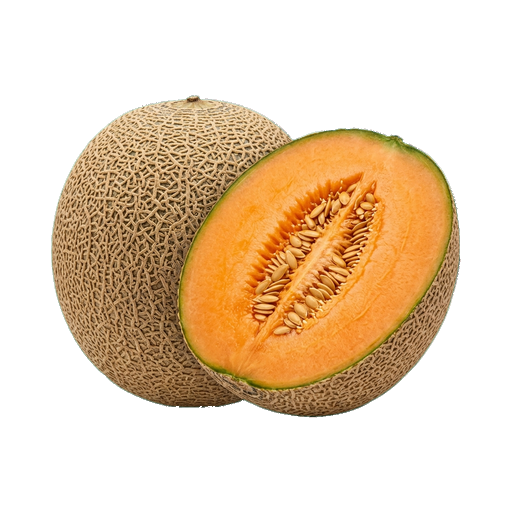
Cantaloupe
A sweet melon with a dense netted skin in beige or brown tones and aromatic orange flesh. It boasts a pronounced honeyed flavor with a subtle musky note, which gives the fruit its name. In cooking, it is used in desserts, fruit salads, as a standalone fruit or paired with parmesan and ham, as well as in beverages and ice cream. When selecting, pay attention to an even aroma, slight firmness, and a cracking sound when pressed at the end opposite the stem.
About
Cantaloupe is one of the most aromatic and sweetest varieties. Its dense netted skin hides tender orange flesh with a delicate musky aroma that can be felt as soon as you cut it. This is not just a dessert, but a whole event on the table thanks to its intense flavor and aroma.
Aroma and Taste
A characteristic musky aroma is the hallmark of this variety. It becomes more pronounced as the fruit ripens. The flesh is sweet, with a delicate texture that literally melts in your mouth. The taste is rich, but not cloying, with a subtle honey note.
Role in dishes
Muskmelon is best of all in its fresh form — simply sliced into wedges or cubes. Its sweetness and aroma make it an ideal breakfast or light dessert. But it's not limited to just that.
- Smoothies and cocktails — the pulp is easily pureed and gives drinks a creamy texture
- Desserts — it is used in ice cream, sorbet, puddings and fruit salads
- Appetizers — melon is served with prosciutto or cream cheese for a contrast of salty and sweet
- Preservation — jam and compotes are made from it, although the fresh taste is somewhat lost in the process
Pairings
Cantaloupe works well with other fruits — berries, citrus, kiwi. On the table, it pairs nicely with ham, bacon, and seafood. In sweet dishes, it is complemented by vanilla, mint, lime, ginger, and coconut. With cream cheese and honey, it makes a classic, yet never tiresome duo.
Selection and Storage
When shopping at the market, look for a melon with an intact, unblemished skin and a pronounced musky aroma. A ripe fruit yields slightly when pressed on the end opposite the stem side. The skin should be beige or grayish-brown with a distinct net pattern, without any green spots.
- Store a whole melon at room temperature for up to five days or in the refrigerator for two weeks
- Wrap a cut melon with plastic wrap and place it in the refrigerator — it will last 3–4 days
- Diced melon can be frozen in a container for up to three months for smoothies and desserts
If the melon is not ripe enough, leave it at room temperature for a few days — it will ripen and the aroma will become even more intense. Cut flesh is best used within a day to preserve its flavor and aroma.
Nutrition
per 100 g
- Calories
- 34 kcal
- Protein
- 0.8 g
- Fat
- 0.2 g
- Carbs
- 8.2 g
Measures and weight
- 1 pcs
- 1500 g
Measure calculator
- Weight
- 100 g
- Calories
- 34 kcal