Usuba
Usuba
Chestnuts
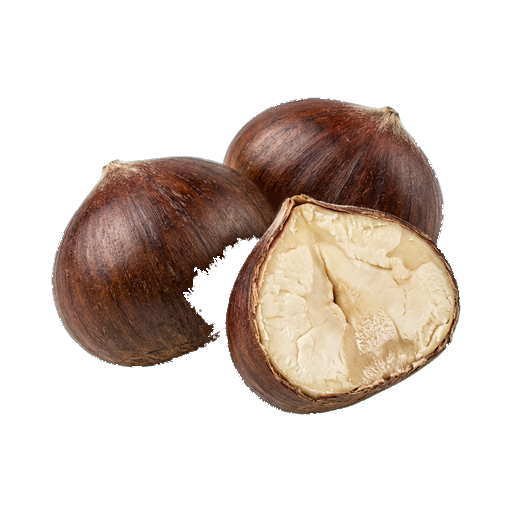
Chestnuts are nuts with soft, slightly sweet flesh and low fat content compared to other nuts. They are used in side dishes, desserts, stuffings, and soups, often roasted or baked whole. When selecting, prefer heavy fruits without cracks or mold, and before cooking, make a cross-shaped cut in the skin so it comes off more easily after boiling or frying.
About
Chestnuts are a rare guest in Russian cuisine, but they hold an honored place in European and Asian culinary traditions. Unlike other nuts, chestnuts contain much less fat and more carbohydrates, making them lighter and leaving almost no oily sensation in the mouth. This makes them a versatile ingredient: they are equally good in both sweet and savory dishes.
Aroma and Taste
The taste of chestnuts is mild and slightly sweet, with nutty notes and delicate earthiness. Raw chestnuts have a starchy texture, but after processing become almost creamy. Roasted chestnuts acquire a more pronounced nutty aroma and caramel undertones.
How to cook and use
Chestnuts require preliminary preparation. Raw nuts need to be scored and roasted in the oven at 200 degrees for approximately 15–20 minutes to easily remove the skin. Cleaned chestnuts can be boiled, stewed, fried, or used as a puree. They are perfect for poultry stuffing, additions to stews, side dishes, and even desserts.
- Stuffing for duck, goose or chicken — a classic European combination
- Side dish for meat — boiled or fried chestnuts with herbs
- Additive to soups and stews for richness and texture
- Chestnut puree as a base for sauces and side dishes
- Fried chestnuts as an appetizer for wine or beer
Successful Combinations
Chestnuts work well with game and poultry, especially duck meat. They pair well with mushrooms — porcini, chanterelles, oyster mushrooms — and create a deep flavor layer. Herbs like thyme and rosemary enhance the nutty aroma. Chestnuts also combine well with apples, pears, and dried fruits in side dishes and stuffings.
Selection and Storage
Fresh chestnuts in their shells should be heavy, without cracks or mold. If the nut rattles when shaken, it has dried inside. Peeled chestnuts are sold in vacuum packaging or canned. Raw nuts are stored in the refrigerator in a paper bag for no more than two weeks, and roasted ones are stored in an airtight container at room temperature.
- Raw in shell: refrigerator, 2 weeks
- Shelled raw: freezer, up to 3 months
- Roasted: airtight container, room temperature, 1 month
- Canned: as indicated on the package, usually 1–2 years
Chestnuts cook easily, so add them to the dish at the end of cooking so they don't turn into mush. If you're cooking them separately, check for doneness with a fork — the flesh should be soft but hold its shape.
Nutrition
per 100 g
- Calories
- 180 kcal
- Protein
- 2 g
- Fat
- 1.5 g
- Carbs
- 40 g
Measures and weight
- 1 pcs
- 15 g
Measure calculator
- Weight
- 100 g
- Calories
- 180 kcal