Usuba
Usuba
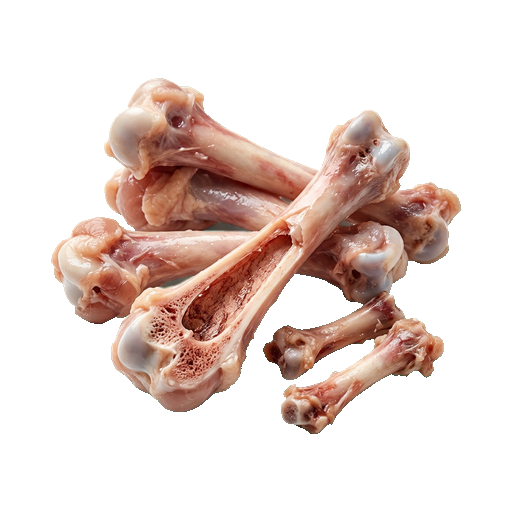
Chicken bones
Chicken bones are the foundation for broths and sauces, containing collagen that transforms into gelatin during long cooking and gives the liquid body and rich flavor. It's best to use bones from the back, wings, and joints, first blanching them with boiling water or searing them for deeper aroma. When choosing, prefer fresh bones from young poultry — they produce a cleaner broth than frozen ones and require 1.5–2 hours of simmering for complete extraction of nutrients.
About
Chicken bones are one of the most underestimated ingredients in the kitchen. Many people throw them away after butchering poultry, not realizing that they are the foundation for broths that transform an ordinary soup into a dish with deep, rich flavor. Bones contain collagen and gelatin that, during prolonged cooking, dissolve into the liquid, giving it thickness and a refined taste.
Taste and Aroma
Chicken bones produce a mild, delicate broth with a tender chicken flavor. Unlike beef bones, they don't require pre-roasting, although light treatment in a dry pan will slightly enhance the taste. Bones from the back and ribs are the most aromatic, while wing and leg bones are more neutral, but also beneficial for broth.
Role in dishes
The main purpose of chicken bones is making broth. Good chicken broth is the base for soups, risotto, sauces, and even for cooking rice. Broth is simmered for 1.5 to 3 hours depending on the desired richness. Gentle simmering is more important than time: a rapidly boiling broth becomes cloudy and loses its tenderness.
- Soups — from classic chicken to more complex combinations
- Broths-based sauces — for meat and vegetables
- Porridges and risottos — instead of water for greater flavor
- Aspics and jellies — bones contain enough gelatin
Selection and Storage
It is best to buy bones from fresh poultry or ask the seller for them when purchasing a whole carcass. Frozen bones work just as well as fresh ones. Before cooking, rinse the bones with cold water to remove blood and particles — this will help you get a clear broth. Store bones in the freezer in a sealed container or bag for up to three months.
Practical Tips
- Combine backbone and wing bones for best results
- Add onion, carrot, and celery for deep flavor
- Simmer uncovered so the broth concentrates better
- Strain the broth through a sieve or cheesecloth for clarity
- Cooled broth is easier to defat — it solidifies on top
Chicken bones are an investment in the quality of your dishes. Homemade bone broth is incomparable to store-bought options, and it's one of the most economical ways to cook. Collect bones, freeze them, and make broth on a calm day — your kitchen will be grateful.
Nutrition
per 100 g
- Calories
- 110 kcal
- Protein
- 20 g
- Fat
- 3 g
- Carbs
- 0 g
Measure calculator
- Weight
- 100 g
- Calories
- 110 kcal