Usuba
Usuba
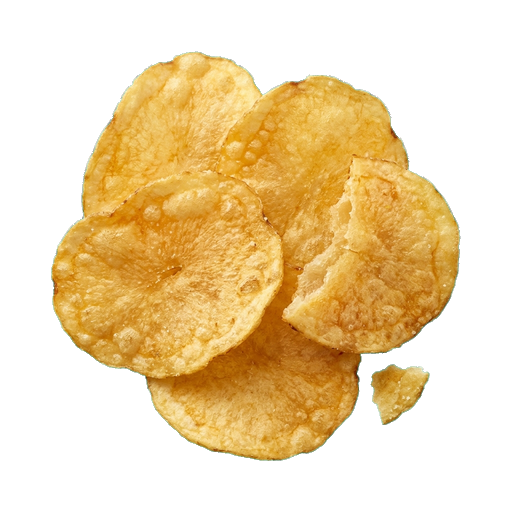
Chips
Crispy potato slices deep-fried to a golden color. Used as a standalone snack, a texture addition to dishes, or an ingredient in salads and sandwiches. When selecting, pay attention to the freshness of the packaging and the absence of a rancid smell, as chips quickly absorb moisture and lose their crispness.
About
Chips are crispy thin slices that have become a universal snack in the kitchen. They are made from potatoes, vegetables, or grains through frying or baking. In cooking, chips work not only as a standalone snack, but also as an ingredient for adding texture to dishes, breadcrumb crumbles for coating, or a base for layered compositions.
Taste, aroma and texture
Potato chips offer a clean, slightly sweet taste with a salty note if salted. A crispy texture is their main virtue: when bitten, a slice makes a characteristic sound and almost instantly crumbles. The aroma depends on the cooking method: fried chips smell of oil and potato, baked ones are lighter with nutty notes. Vegetable and grain varieties carry their own flavor signatures: beets provide earthiness, corn adds sweetness, lentils bring nuttiness.
Role in dishes and pairings
In hot dishes, chips are added at the last moment to preserve their crunch. They work perfectly as a garnish for cream soups, creating a contrast of textures. Crushed chips become a coating for cutlets, fish, or chicken — they provide a golden crust and additional flavor. In cold dishes, chips decorate salads, serve as a base for appetizers with dips, or are added to layered desserts for an unusual crunch.
- With avocado, sour cream and herbs — classic appetizer
- With spicy sauces and guacamole — Mexican style
- With cottage cheese, dill and lemon — light appetizer
- In breading for fish or seafood — adds a briny flavor
- With cheese and bacon in salads — rich taste
Selection and Storage
When purchasing, pay attention to the integrity of the packaging — chips should be whole, without crumbs at the bottom of the bag. Check the production date: fresh chips crunch more loudly. Choose a variety depending on your needs: classic chips are suitable for snacking, while denser varieties are better for cooking as they won't fall apart when mixed.
Chips are afraid of moisture and air. An open package should be tightly sealed or transferred to a container with a tight lid. Store them at room temperature in a dry place, away from sunlight. In the refrigerator, they can become damp and lose their crunch. The shelf life of a sealed package is from several months to a year depending on the manufacturer; an open package is best used within a week.
If the chips have softened, place them in the oven for 10–15 minutes at 150 degrees — they will regain their crunch. But remember: this only works once.
Nutrition
per 100 g
- Calories
- 530 kcal
- Protein
- 6 g
- Fat
- 35 g
- Carbs
- 49 g
Measure calculator
- Weight
- 100 g
- Calories
- 530 kcal