Usuba
Usuba
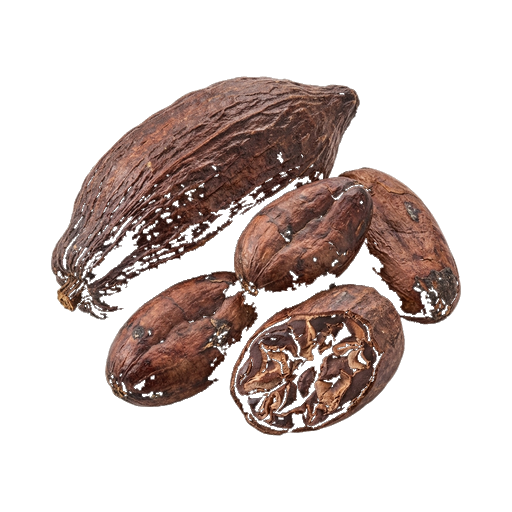
Cocoa beans
Cocoa beans are seeds from cocoa tree pods, from which cocoa powder and cocoa butter are derived. They have a bitter, slightly acidic taste with nutty and fruity notes, with an intense aroma featuring chocolate undertones. In cooking, they are used for making chocolate, cocoa beverages, desserts, and baked goods; when selecting beans, it's important to pay attention to their origin, as the flavor profile depends on the growing region — African varieties have a more bitter taste, while South American varieties are distinguished by fruity notes.
About
Cocoa beans are the seeds of cocoa tree pods, from which cocoa powder, cocoa butter, and chocolate are derived. In their raw form, they are bitter, astringent, and nothing like the familiar taste of chocolate. All the magic happens during fermentation and roasting: that's when complex aromatic notes unfold, which are later recognized in finished products.
Cacao beans are rarely found for home use — they are typically processed in production. However, if you want to experiment, whole beans will help you understand how chocolate's flavor is structured and give you the opportunity to make cocoa butter yourself or try an unusual ingredient for desserts.
Aroma and Taste
Roasted cocoa beans have a deep aroma with woody and nutty notes, sometimes with fruity hints. The taste is bitter, full-bodied, sometimes with a slight acidity — this depends on the variety and degree of processing. Cocoa from different regions differs: some provide more fruity undertones, others — earthy or spicy.
If you break open a cacao bean, inside you will find seeds covered with a thick shell. This shell is what needs to be removed before use — it is bitter and rough. The kernels that remain are what cocoa powder and cocoa butter are made from.
How to use in cooking
Whole roasted cacao beans can be added to desserts as a crunchy element: sprinkle them on cakes, pastries, and ice cream. They work well in chocolate sauces and glazes — simply grind them in a mortar or coffee grinder. Some pastry chefs add crushed beans to cookie or brownie dough to emphasize the chocolate flavor.
If you have access to raw cacao beans, you can lightly roast them at home in a dry pan — this will enhance the aroma. But be careful: they roast quickly and can easily burn. The temperature should be medium, and the time should be just a few minutes.
Selection and Storage
Look for cacao beans in specialty stores or from suppliers of confectionery ingredients. Pay attention to whether the cocoa percentage and region of origin are indicated — this will help you understand what flavor profile to expect. The beans should be whole, without cracks or mold, with a uniform color.
Store cocoa beans in an airtight container in a cool, dry place, away from odors. They absorb moisture and foreign aromas well, so do not keep them near spices or products with strong smells. With proper storage, beans retain their quality for several months.
Pairings
- Cocoa beans and vanilla — a classic combination that works in any chocolate dessert
- Cocoa and cinnamon, cloves, black pepper — spices emphasize bitterness and add complexity
- Cocoa and salt — a small pinch of sea salt enhances the chocolate flavor
- Cocoa and fruits (cherry, orange, raspberry) — the acidity of fruits balances the bitterness
- Cocoa and nuts (almonds, hazelnuts, peanuts) — textural and flavor enhancement
Nutrition
per 100 g
- Calories
- 565 kcal
- Protein
- 12.6 g
- Fat
- 51.6 g
- Carbs
- 10.9 g
Measures and weight
- 1 tbsp
- 9 g
- 1 tsp
- 3 g
- 1 cup
- 150 g
Measure calculator
- Weight
- 100 g
- Calories
- 565 kcal