Usuba
Usuba
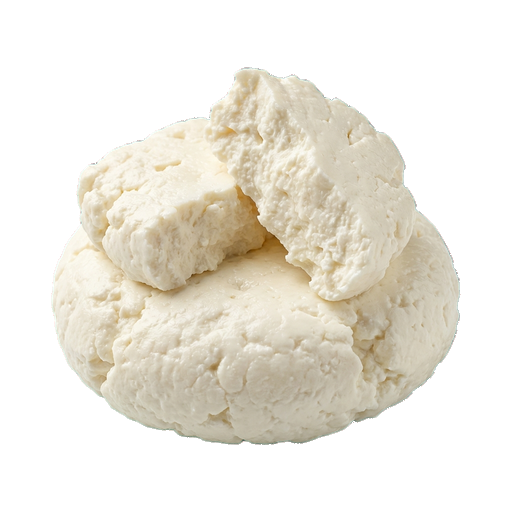
Cottage cheese
A soft fresh cheese with a delicate curdy texture and mild milky flavor that is easy to make at home from regular milk and kefir or lemon juice. Used in both sweet and savory dishes — from cottage cheese casseroles and cheese pancakes to pie fillings and salads, as well as suitable for breakfasts with sour cream and berries. During storage, it quickly absorbs foreign odors, so it is best kept in an airtight container and used within a few days.
About
Homemade cheese is not just cottage cheese, although many people confuse these products. It is a delicate, fresh cheese with a subtle texture that is obtained by curdling milk and separating the whey. Its main difference is that it does not require long aging, and you get a finished product in literally just a few hours. In the kitchen, it works as a universal helper: equally good in sweet dishes, savory ones, and as a standalone breakfast.
Texture and Taste
The consistency of homemade cheese depends on how thoroughly you have drained the whey. If you leave it moist, you get a tender, almost creamy product that melts on your tongue. If you squeeze it harder, the cheese becomes denser and more crumbly. The taste is mild, milky, slightly tangy — no sharp notes, just the purity of milk with a barely noticeable sourness. This neutrality is its main advantage, because the cheese easily absorbs the flavors of neighboring ingredients.
Where to use it
- In sweet casseroles and cheese pancakes — its tenderness is ideal for these dishes
- In pasta and risotto instead of ricotta — adds creaminess without heaviness
- In salads — crumbles beautifully and doesn't overpower vegetables with its flavor
- In fillings for pies and dumplings — holds its shape and bakes well
- For breakfast with berries, honey or simply with salt and pepper
What goes with it
Homemade cheese pairs well with herbs — dill, parsley, green onions. Berries and honey enhance it in sweet dishes. Soft spices work best: vanilla, cinnamon, cardamom. In savory versions, it goes well with tomatoes, cucumbers, and radishes. Nuts — walnuts, almonds, hazelnuts — add texture and depth. Even a simple combination with black bread and salt reveals its merits.
How to Choose and Store
When purchasing, pay attention to the production date — homemade cheese is best within the first 2–3 days. It should smell of milk and dairy products, without any foreign odors. The consistency should not be slimy or flaky. Store cheese at home in the refrigerator in a sealed container for a maximum of one week. If you make cheese yourself, use fresh milk and clean dishes — this guarantees safety and better taste.
Main rule: homemade cheese is a living product, it doesn't like long storage and works best in fresh dishes where its delicacy is not lost during prolonged heat treatment. Use it quickly and boldly experiment with combinations.
Nutrition
per 100 g
- Calories
- 113 kcal
- Protein
- 17.4 g
- Fat
- 4.5 g
- Carbs
- 1.8 g
Measure calculator
- Weight
- 100 g
- Calories
- 113 kcal