Usuba
Usuba
Cucumber Brine
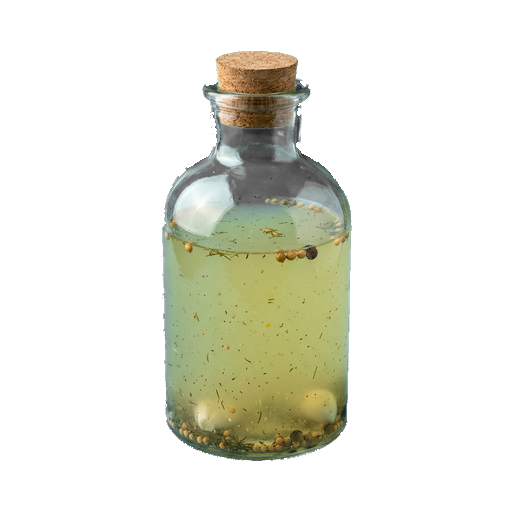
Cucumber brine is the liquid in which pickled cucumbers were stored, saturated with salt, vinegar, and spices. In cooking, it is used to add acidity and saltiness to dishes, for marinating meat and vegetables, as well as a base for sauces and dressings. When adding it to a dish, it is important to take into account its saltiness and acidity to avoid over-salting the finished dish and to properly measure the amount.
About
Cucumber brine is not just a liquid left over from pickling. It is a ready-made ingredient with a sharp, salty, and slightly tangy profile that can transform a dish with its depth of flavor. The brine absorbs spices, vinegar, and salt, becoming a concentrated base for sauces, marinades, and beverages.
Taste and aroma
The brine has a bright acidic start, given by vinegar and fermentation. Saltiness adds piquancy to it, and if the recipe includes garlic, dill, or peppercorns, they impart their aromas into the liquid. The taste turns out to be multi-layered — not just sour, but with subtle herbal notes and a light spiciness.
Where to Use Brine
- Marinade for meat and poultry — brine softens fibers and adds acidity, accelerating marination
- Base for cold sauces and dressings for salads with potatoes, meat or fish
- Additive to pie dough with filling — a little brine makes the dough more tender
- Component in okroshka, botvinya and other cold soups
- Base for homemade beverages — pickle brine or salted lemonade quench thirst better than water
- Ingredient in sauces for sausages, smoked meats and cold cuts
Successful Combinations
Brine works well with beef, pork, and poultry. It pairs nicely with potatoes, beets, and other root vegetables. If you add brine to sour cream or mayonnaise, you'll get a spicy dressing. With herbs — dill, parsley, tarragon — brine creates aromatic marinades. Don't forget its role in meat and fish preserves, where it enhances flavor and helps with preservation.
Selection and Storage
It's best to use brine from your own homemade preparations — you control the amount of salt and vinegar. If you buy ready-made brine, pay attention to the ingredients: it should not contain unnecessary preservatives. Brine keeps for a long time thanks to its acidity and saltiness, but in the refrigerator it will better preserve its freshness and aroma. A glass jar with a tight-fitting lid is ideal storage. Even after the cucumbers are eaten, the brine can be used for several more months.
Practical Tips
- If the brine is too salty, dilute it with water or add it to the dish gradually
- For meat marinade, use brine in a 1:1 ratio with vegetable oil
- Add brine to okroshka at the end to preserve its fresh taste
- If preparing a cold sauce, strain the brine to remove spices that may cloud the liquid
Nutrition
per 100 ml
- Calories
- 12 kcal
- Protein
- 0.3 g
- Fat
- 0.1 g
- Carbs
- 2.5 g
Measures and weight
- 1 tbsp
- 15.3 g
- 1 tsp
- 5.1 g
- 1 cup
- 255 g
Measure calculator
- Weight
- 100 g
- Calories
- 12 kcal