Usuba
Usuba
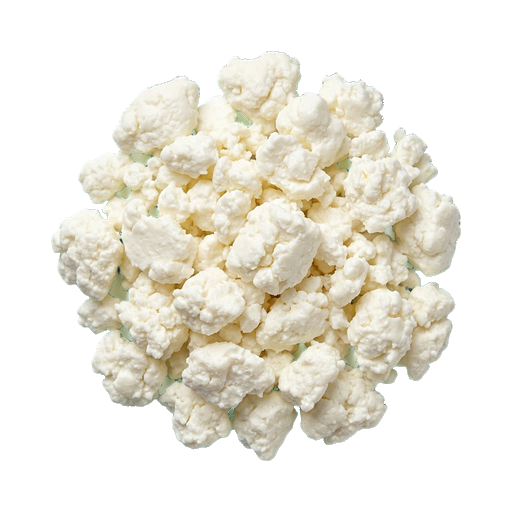
Cottage cheese
Cottage cheese is a fermented milk product with a coarse, loose structure and pronounced tangy flavor, obtained through traditional production methods without added stabilizers. It absorbs moisture well and maintains its grainy texture, making it ideal for baking, casseroles, and sweet dishes where structure matters. When selecting, pay attention to freshness and consistency uniformity, and if substituting with denser cottage cheese, keep in mind that you may need more liquid in the recipe.
About
Cottage cheese is a dairy product obtained through natural milk souring and whey separation. Unlike industrially produced cottage cheese, it often has a larger, crumbly texture and a distinctly pronounced milk flavor. This type of cottage cheese is valued for its simple composition and the ability to use it in both sweet and savory dishes.
Taste and Texture
The main characteristic of cottage cheese made in the countryside is its delicate, pure milk flavor without any impurities. The consistency depends on the preparation method: the curds can be large and crumbly or smaller and denser. The whey in such cottage cheese usually remains in greater quantity than in its industrial counterpart, making it more moist and soft.
The sourness in homemade cottage cheese is usually delicate and pleasant. It develops naturally during fermentation and is not aggressive. If the cottage cheese is fresh, the acidity is barely noticeable; over time, the taste becomes more pronounced.
How to use in the kitchen
Cottage cheese is good on its own — with berries, honey, or a small amount of sugar. Thanks to its soft consistency, it works perfectly for casseroles, syrniki, and tvorozhniki. Its crumbly structure allows it to absorb sweet and savory sauces well.
In savory dishes, cottage cheese works as a base for fillings in dumplings, varenyky, and pies. It can be mixed with herbs, salt, and pepper for pasta or spread. Due to its high moisture content, it is less suitable for dry cottage cheese balls or dense cheeses, but ideal for creams and mousses.
Selection and Storage
When choosing, pay attention to the smell — it should be milky and pleasant, without sharp sourness or foreign aromas. The color of cottage cheese is usually white or creamy. The consistency should not be slimy or lumpy with water. If cottage cheese is bought at the market, ask to try a small piece.
Cottage cheese doesn't keep for long — in the refrigerator at a temperature of 2–4°C it lasts for 3–5 days. If you notice a change in smell, the appearance of mold, or an overly sour taste, it's better not to use the cottage cheese. To extend its shelf life, you can freeze portions in containers, but keep in mind that the texture will change slightly.
Successful Pairings
- Berries (strawberries, raspberries, blueberries) — a classic sweet combination
- Honey and nuts — for breakfast or dessert
- Herbs (dill, parsley) and salt — for savory dishes
- Eggs and sugar — for baking and casseroles
- Sour cream — for creams and gravies
Cottage cheese is a versatile ingredient that works any time of year. Its main advantage is that it requires minimal processing and beautifully brings out the flavor of other dish components. If you're cooking for the first time, start with simple recipes — casseroles or syrniki — and you'll feel the difference between homemade and industrial cottage cheese.
Nutrition
per 100 g
- Calories
- 155 kcal
- Protein
- 16.5 g
- Fat
- 9 g
- Carbs
- 1.8 g
Measure calculator
- Weight
- 100 g
- Calories
- 155 kcal