Usuba
Usuba
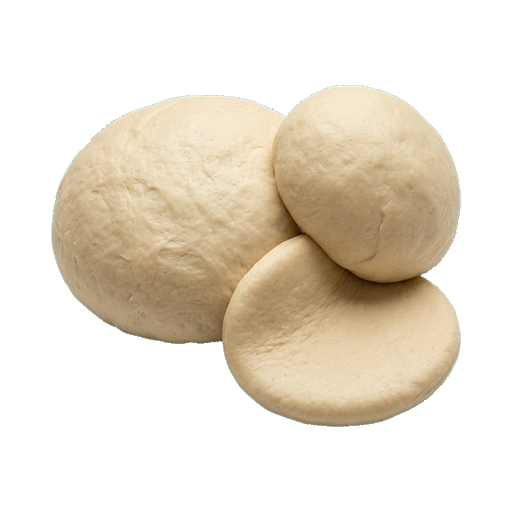
Dumpling dough
Stiff unleavened dough made from flour, eggs, water, and salt, distinguished by its elasticity and resilience due to high gluten content. It should be dense and hold its shape well, which is why it is typically prepared without added oil and allowed to rest before rolling out. With proper kneading and resting, the dough becomes smooth and rolls out easily into thin sheets, from which circles are cut for shaping dumplings.
About
Dumpling dough is the foundation that determines the success of the entire dish. Its consistency, elasticity, and ability to hold its shape determine whether the dumplings will be tender and juicy or fall apart during cooking. Good dough should be dense but not stiff, so it can be easily rolled out and molded, and when boiled it should remain intact and not absorb excess water.
What it contains and how to prepare it
A classic recipe is built on flour, water, egg, and salt. The proportions are simple: for 300 grams of flour, take one egg, 100 milliliters of water, and a pinch of salt. The flour should be of high quality — with good gluten, otherwise the dough will crumble and won't hold its shape. Water is added gradually to achieve the desired consistency: the dough should be neither sticky nor dry.
The cooking process requires patience. Flour is mixed with salt, a well is made in the center, egg and water are poured in, then gradually kneaded. After the dough begins to come together in a lump, it needs to be kneaded for 10–15 minutes until it becomes smooth and elastic. Then the dough is wrapped in plastic film and allowed to rest at room temperature for at least 30 minutes — this allows the gluten to fully develop and makes the dough more pliable when rolling out.
Secrets of Perfect Results
- Some chefs add a drop of vegetable oil to the dough — this makes it more elastic and prevents sticking when rolling out.
- If the dough turns out stiff, you can add water just a few drops at a time; if it's sticky — sprinkle a little flour. The key is not to overdo it.
- After kneading, the dough can be refrigerated for several hours or even overnight — the cold will make it more pliable and easier to work with.
- When rolling out, use flour for dusting, but don't overdo it — extra flour in the dough folds can cause it to crack during cooking.
Working with Dough
The rolled dough should be thin — approximately 2–3 millimeters thick. Cut circles from it using a special cutter or a glass, then shape the dumplings, carefully pinching the edges so the filling doesn't leak during cooking. If you're preparing dumplings in advance, the rolled dough can be cut into strips, sprinkled with flour, and frozen — it will keep for several months and will always be on hand for quick preparation.
Storage and Freezing
Ready but not yet rolled out dough is stored in the refrigerator wrapped in plastic wrap for up to three days. Rolled out and cut dough can be frozen on a baking sheet, then transferred to a container — this way it won't stick together and will be convenient to portion out. Frozen dough takes several minutes longer to cook than fresh dough, but the quality doesn't suffer.
Once you master the basic recipe, you'll understand how the dough reacts to different conditions and how to adapt it to your preferences. Over time, the process will become intuitive, and you'll be able to make dumplings that are just as good as homemade ones.
Nutrition
per 100 g
- Calories
- 250 kcal
- Protein
- 8 g
- Fat
- 2 g
- Carbs
- 50 g
Measure calculator
- Weight
- 100 g
- Calories
- 250 kcal