Usuba
Usuba
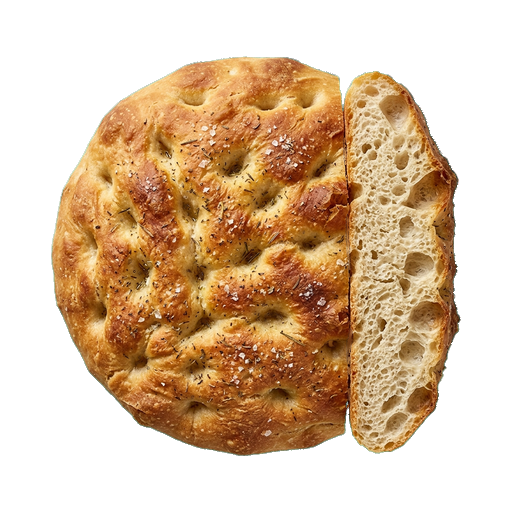
Focaccia
A dense bread flatbread with a crispy crust and airy crumb, made from simple dough with olive oil. Usually served with salt, herbs, and olive oil or used as a base for appetizers and sandwiches. When selecting, pay attention to freshness — a good flatbread should be soft inside and crispy outside, absorbs oils and sauces well, making it an ideal complement to salads, soups, and appetizers.
About
What is it and why is it needed
Italian flatbread is a versatile base that occupies the perfect middle ground between bread and pizza. Thin, crispy on the outside and soft on the inside, it is ideal for quick snacks, appetizers, and full-fledged dishes. Unlike regular bread, flatbread holds its shape and doesn't fall apart under toppings, and compared to pizza, it is more delicate and doesn't require prolonged baking.
It is made from simple dough based on flour, water, olive oil, and salt. The main secret is proper dough proofing and a generous pinch of salt on the surface before baking. The result has characteristic air bubbles inside and a golden crust outside.
How to use in the kitchen
Flatbread works in many different roles. Serve it hot with good olive oil and sea salt — and it's already a ready-made appetizer. Cut it in half and fill with soft cheese, tomatoes, and basil for a quick sandwich. Use it as a base for appetizers: you can top it with pâté, sliced meat, vegetables, or even sweet versions with honey and nuts.
- With savory fillings: prosciutto, mozzarella, sun-dried tomatoes
- As a base for vegetable side dishes: with fried eggplants, zucchini or mushrooms
- For soup or stew: pieces of flatbread absorb the sauce and become softer
- As bread for appetizers and antipasti
Selection and Storage
When choosing a ready-made flatbread, pay attention to the color — it should be evenly golden, without dark burnt spots. The surface is slightly oily, and the flatbread itself is light and not heavy. A fresh flatbread emits a pleasant bread aroma with a hint of olive oil.
Store best in a paper bag at room temperature — in polyethylene it will become damp and lose its crispness. If the flatbread has dried out a bit, lightly dampen it with water and warm it in the oven at 180 degrees for 2-3 minutes — it will revive. A frozen flatbread just needs to be thawed at room temperature or immediately warmed in the oven.
Taste and Aroma
The taste of the flatbread is delicate, slightly salty, with a barely noticeable sweetness from processed flour. The aroma is expressive: warm, with distinct notes of olive oil and rosemary (if spices are added). The texture is contrasting: a crispy crust immediately transitions to soft, airy crumb with small air pockets.
Pairings with other ingredients
Flatbread pairs well with all Mediterranean flavors: olive oil, garlic, tomatoes, basil, oregano. It works great with soft cheeses — ricotta, mozzarella, gorgonzola. Meat options — prosciutto, smoked brisket, liver pâté — also find their place on flatbread. For contrast, add hot sauces, mustard, or pesto.
Nutrition
per 100 g
- Calories
- 280 kcal
- Protein
- 8 g
- Fat
- 5 g
- Carbs
- 50 g
Measures and weight
- 1 pcs
- 150 g
Measure calculator
- Weight
- 100 g
- Calories
- 280 kcal