Usuba
Usuba
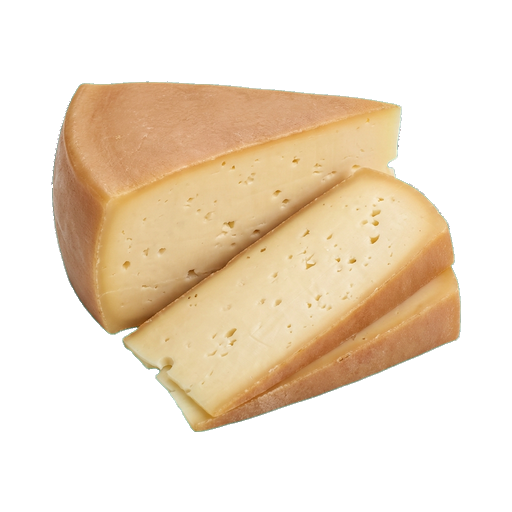
Fontina cheese
A semi-hard Italian cheese with a tender texture and creamy, slightly nutty flavor that becomes more pronounced with age. It melts well, making it ideal for casseroles, risotto, and hot sandwiches, and also works well on a cheese board. When selecting, look for cheese with a smooth rind without cracks. When substituting, keep in mind that young Fontina is softer and more delicate than aged varieties.
About
Fontina is a semi-hard cheese with a creamy texture and delicate buttery flavor. It melts evenly and almost without lumps, making it an ideal choice for both hot dishes and cheese boards. Beneath the rind lies a soft paste with barely noticeable holes, and the aroma is calm, milky, with light nutty notes.
Taste and aroma
Young Fontina is more delicate and soft — it is dominated by creamy, almost sweet notes. The aged version becomes more expressive: earthy undertones appear, along with a slight sharpness and depth. The flavor is not aggressive, rather cozy and familiar, which is why the cheese easily fits into various dishes without overpowering other components.
Role in dishes
- Fondue — Fontina melts perfectly, creating a thick homogeneous mass without separation
- Risotto and pasta — add at the end of cooking for creaminess and soft buttery flavor
- Baked dishes — garnish, vegetables, meat under a layer of Fontina get a tender golden crust
- Cheese board — young Fontina pairs well with pear, honey and nuts
- Sandwiches and open-faced sandwiches — melts at room temperature without losing structure
Selection and Storage
When buying, pay attention to the rind: it should be intact, without mold or cracks. The paste should be neither too liquid nor grainy. If you're cutting cheese in the store, ask for a fresh cut — the oxidized surface loses flavor.
Store fontina in the refrigerator, wrapped in parchment or special cheese paper — plastic retains moisture and spoils the taste. Before using, take it out of the refrigerator 20–30 minutes in advance so the cheese can reveal its aroma. Young fontina is best consumed within two weeks, while aged fontina can be stored longer.
Pairings
- White wines — Sauvignon Blanc, Pinot Grigio, Chardonnay without excessive tannins
- Fruits — pear, apple, fig, apricot
- Nuts — walnut, hazelnut, almond
- Honey and jam — especially chestnut or white mulberry
- Vegetables — mushrooms, truffle, white cabbage, potato
Fontina is excellent because it doesn't require special skills: it works both in simple peasant dishes and in sophisticated compositions. Its softness and delicacy make it a versatile helper in the kitchen.
Nutrition
per 100 g
- Calories
- 389 kcal
- Protein
- 27 g
- Fat
- 30 g
- Carbs
- 0 g
Measures and weight
- 1 slice
- 20 g
Measure calculator
- Weight
- 100 g
- Calories
- 389 kcal