Usuba
Usuba
Frillis Salad
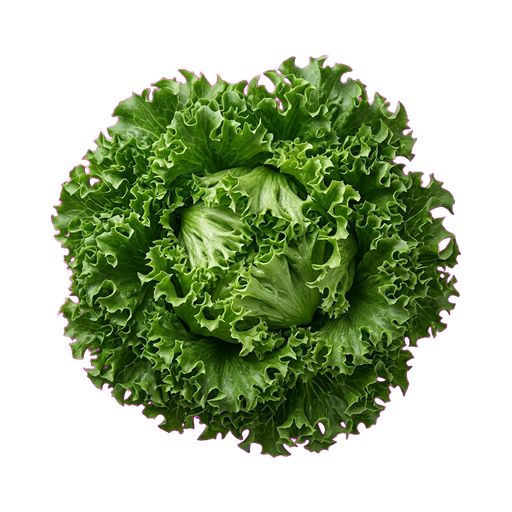
Frilly lettuce is a leafy salad green with thin, wavy edges and delicate texture, distinguished by a mild, slightly sweet flavor without bitterness. The leaves are fragile and require careful handling during preparation and when tossing with dressing. It is primarily used in fresh salads, on sandwiches, and as a decorative element on the plate — best added at the last moment before serving to maintain crispness.
About
Frillis lettuce is not just leafy greens, but a true visual accent on the plate. Its wavy edges and delicate texture immediately catch the eye, while the taste remains subtle and fresh. It is one of those ingredients that works well in both complex compositions and simple salads, where the quality of the leaf itself is what matters most.
Appearance and Texture
Frillis is instantly recognizable by its leaves, which resemble fine lace fabric with numerous folds and wavy edges. The color ranges from light green to deeper green shades, sometimes with reddish veins. The leaves are very delicate, almost translucent when held up to light, creating an impression of fragility, though in fact the lettuce is quite resistant to transportation thanks to its dense structure.
Taste and Aroma
Frilly lettuce has a delicate and soft taste, without bitterness or sharp notes. It doesn't overpower other dish components, but rather creates an airy base. It has almost no aroma in the classical sense — it's pure greens with a light freshness, which is especially valued in summer salads and as a garnish.
Where to use it
Frillis is ideal for any salads where a light base is needed. Its wavy leaves beautifully hold the dressing, distributing it evenly. Salad is often used in restaurant cuisine as a decorative element — it is placed under the main dish or added to the final composition for texture and volume. In home cooking, it works well as a base for mixed salads, in sandwiches, or as a garnish for hot dishes.
- Light summer salads with vegetables and lemon dressing
- Base for salads with seafood and delicate sauces
- Side dish for fish, chicken or meat
- Layer in multi-layered salads in glass jars
- Decorative element in cold appetizers and platters
Combinations with other ingredients
Frilly lettuce works well with light dressings — olive oil, lemon juice, white wine vinegar. It doesn't compete with bold flavors, so it pairs beautifully with tomatoes, cucumbers, radishes, and avocado. It looks interesting paired with soft cheeses, smoked fish, and shrimp. If you add nuts or seeds to a salad with frilly lettuce, they will provide the needed textural contrast.
Selection and Storage
Choose frillis with bright color and crisp leaves without signs of wilting or dark spots. The leaves should be crunchy, not soft. If the salad is sold in a package, check that there is no condensation inside — this is a sign that the greens are starting to spoil.
Store frillis best in the refrigerator in the vegetable compartment, wrapped in paper towels or in an airtight container. This will keep it fresh for 5–7 days. Before use, rinse the leaves with cold water and dry thoroughly — moisture accelerates spoilage. If the salad has wilted slightly, place it in ice water for 10–15 minutes, and it will regain its crispness.
Frillis does not like heat and long storage. Use it within a week of purchase, and it will be a perfect addition to any dish.
Nutrition
per 100 g
- Calories
- 15 kcal
- Protein
- 1.2 g
- Fat
- 0.2 g
- Carbs
- 2.9 g
Measures and weight
- 1 head
- 150 g
- 1 bunch
- 100 g
Measure calculator
- Weight
- 100 g
- Calories
- 15 kcal