Usuba
Usuba
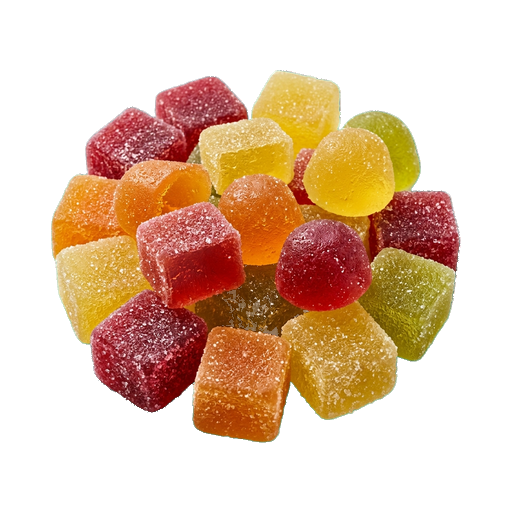
Fruit jelly
A gel-like confection made from fruit puree or juice with the addition of sugar and gelling agents, characterized by a dense consistency and vibrant fruity flavor and aroma. Used in confectionery for cake fillings, cookie layers, dessert decoration, and as a standalone treat. When choosing marmalade, it is important to pay attention to the composition and consistency — a quality product holds its shape, does not spread, and when substituting in recipes, jam or jelly can be used taking into account the difference in density.
About
What is fruit jelly and why you need it in your kitchen
Fruit marmalade is a concentrated sweetness obtained by simmering fruit puree with sugar and a gelling agent. Its elastic, slightly chewy consistency makes it a versatile kitchen helper. It works simultaneously as a filling, sauce, glaze, and an independent ingredient for complex desserts.
The taste of marmalade depends on the original fruits: apricot marmalade offers a soft sweetness with a barely perceptible sourness, berry brings brightness and tartness, apple provides a neutral sweetness that doesn't overpower other aromas. The texture is dense but not rubbery—if the marmalade is of high quality, it slightly springs back when pressed.
Where to use and how to apply
In baking, marmalade works as a classic filling for buns, cookies, and puff pastries. It can be layered in cakes instead of cream or mixed with cottage cheese for a more interesting texture. For glazing, simply warm the marmalade slightly and apply a thin layer to the cooled pie — this will create a glossy coating with a fruity aroma.
Marmalade works well in sauces for meat and poultry — especially apricot or orange. Dilute it with a small amount of vinegar or lemon juice, and you'll get a sharp glaze for roasted duck or pork. In yogurts and cottage cheese, marmalade adds a fruity layer without the excess liquid that would be present in jam.
How to Choose and Store
When choosing, pay attention to the consistency — marmalade should be dense, but not rock-hard. Check the ingredients: a quality product should not contain thickeners like starch or pectin in huge amounts, although they cannot be avoided entirely. The color should be uniform, without layers or sugar crystallization on the surface.
Marmalade keeps well for a long time in an airtight container at room temperature, protected from direct sunlight. If the jar is opened, transfer the contents to a glass container and store it in the refrigerator — this way it will maintain its quality for several months. Never use a dirty spoon to take marmalade: microbes that get into it multiply quickly in the sweet environment.
Successful Pairings
- Apricot marmalade — with almonds, vanilla, black tea and cream cheese
- Berry (raspberry, currant) — with chocolate, lemon, mint and mascarpone
- Apple — with cinnamon, ginger, walnuts and caramel
- Orange — with dark chocolate, cloves and red wine for sauces
Nutrition
per 100 g
- Calories
- 320 kcal
- Protein
- 0 g
- Fat
- 0 g
- Carbs
- 80 g
Measures and weight
- 1 tbsp
- 19.5 g
- 1 tsp
- 6.5 g
- 1 cup
- 325 g
Measure calculator
- Weight
- 100 g
- Calories
- 320 kcal