Usuba
Usuba
Foie gras
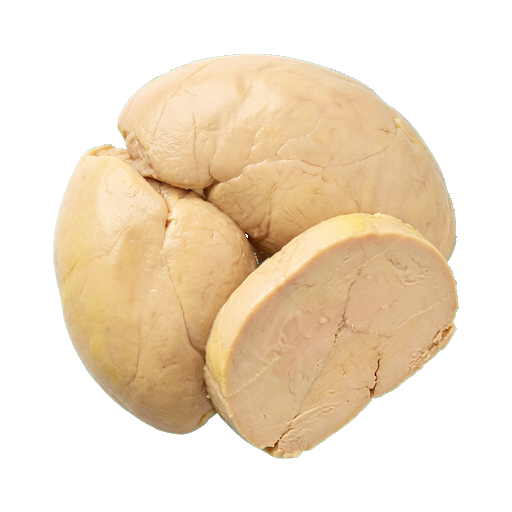
A delicate product made from goose or duck liver enlarged through special feeding. It has a tender, almost buttery consistency with a subtle creamy flavor and a barely noticeable hint of bitterness. Primarily used cold as an appetizer or pâté, it requires delicate handling and low temperatures for storage and serving.
About
Foie gras is a delicacy that requires special handling in the kitchen. The product is finicky to work with, but the result justifies the attention. Before you start cooking, you need to understand its nature: it is a liver that has a tender, almost buttery consistency and requires minimal heat treatment to unlock its full potential.
Taste and Aroma
The taste of foie gras is delicate, creamy, with a barely noticeable bitterness and earthy notes. The aroma is subtle, not sharp — more of a hint of richness than a loud statement. When the product is prepared correctly, it literally melts in your mouth, leaving a sense of luxury. It is this texture and flavor profile that make foie gras so coveted in restaurant cuisine and home cooking experiments.
How to use in dishes
Foie gras does not tolerate prolonged cooking. The classic method is quick searing on a hot skillet on both sides for 1–2 minutes until the crust is golden, while the inside remains tender. The product works well as a standalone dish with minimal garnish: bread, berry sauce, or wine reduction. Some chefs add a slice to pâté or use it as a filling for poultry.
- Quick searing in a hot skillet — the main technique
- Serving with bread, dried fruits or berry sauces
- Use in pâtés and terrines
- Stuffing for poultry before baking
Pairings and Wine
Foie gras opens up beautifully in the company of sour and sweet elements. Berry sauces, balsamic vinegar reduction, honey, or jam balance the richness of the fat. White wines with good acidity pair well with the delicacy, as do some sweet wines — they don't compete but rather enhance its depth. Avoid heavy red wines, as they will overpower the delicate flavor.
Selection and Storage
When buying, look at the color: quality foie gras should be pinkish-beige, without dark spots or bruises. The structure should be dense but soft to the touch. If the product comes in a vacuum seal, that's a plus — it stays fresh longer. Keep fresh foie gras in the refrigerator for no more than 2–3 days; frozen foie gras can be stored for several months. Before using, let it thaw in the refrigerator, not at room temperature.
- Color: pinkish-beige, without dark spots
- Consistency: dense, but soft
- Refrigerator storage: 2–3 days
- Freezer storage: up to several months
- Thawing: only in the refrigerator
Foie gras is not an everyday ingredient, but when you decide to cook it, the main rule is simple: fewer manipulations, more respect for the product. It is a star in itself, it only needs the right stage.
Nutrition
per 100 g
- Calories
- 462 kcal
- Protein
- 11 g
- Fat
- 45 g
- Carbs
- 1 g
Measure calculator
- Weight
- 100 g
- Calories
- 462 kcal