Usuba
Usuba
Garlic Paste
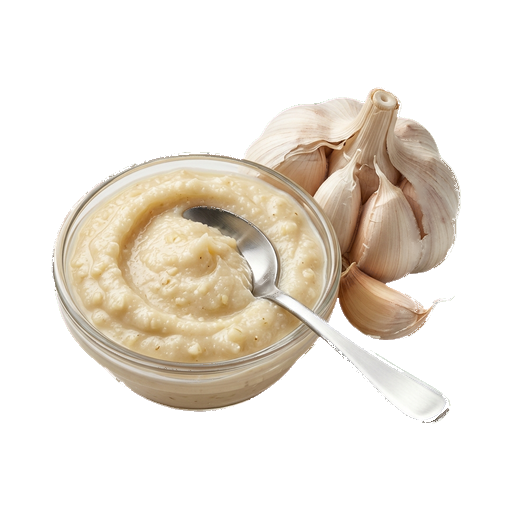
Garlic paste is a concentrated mixture of minced garlic with oil and salt that preserves the sharp, pungent flavor of fresh garlic and its characteristic pungent aroma. Used as a ready-made seasoning for quick addition to sauces, marinades, soups, and main dishes, saving time on peeling and chopping. When choosing, pay attention to consistency — it should be uniform without lumps, and store the paste in the refrigerator in an airtight container so that garlic doesn't lose its freshness and doesn't absorb odors from neighboring products.
About
Garlic paste is a concentrated kitchen helper that saves time and guarantees consistent results. Unlike fresh garlic, the paste has already been processed: it has been minced, mixed with oil and preservatives so that it lasts longer and is ready to use at any moment.
Aroma and taste
The paste has a sharp, piercing garlic flavor, but it's milder than a fresh clove. The sharpness is softened by oil and time — the pungency becomes more rounded, less burning. The aroma is persistent and recognizable, though it differs somewhat from what you feel when cutting fresh garlic.
Where to use it
- In marinades for meat and fish — the paste distributes quickly and penetrates the product
- In sauces and gravies — a teaspoon is enough to add depth
- In soups and stews — add at the end of cooking or directly in the bowl
- In hummus, aioli and other emulsions — the paste mixes more easily with oil
- On bread instead of butter or as a base for spread
- In salad dressings — dissolves evenly without leaving chunks
How to Calculate Dosage
One teaspoon of paste roughly corresponds to one fresh medium-sized garlic clove, but the flavor can be more intense. Start with half a teaspoon, taste it, and add more as needed. Remember: paste won't give you that fresh "crunch" in flavor that fresh garlic provides, so sometimes it makes sense to combine both options.
Selection and Storage
When purchasing, pay attention to the composition: a good paste should contain garlic, oil, and salt, everything else is preservatives for stability. The color varies from light cream to brownish depending on the degree of processing. The paste should be uniform, without oil separation.
- Store in the refrigerator in a tightly sealed jar — the paste will retain its properties for months
- After opening, make sure the oil covers the surface to prevent oxidation
- If the paste thickens in the refrigerator, gently warm the jar in warm water before using
- Avoid moisture getting into the jar — use a clean dry spoon each time
Garlic paste is not a replacement for fresh garlic, but rather a complement to it. It saves time when you're in a hurry and ensures even distribution of flavor throughout the dish, but for dishes where garlic should be the star (for example, in aglio e olio or garlic bread), a fresh clove is still irreplaceable.
Nutrition
per 100 g
- Calories
- 149 kcal
- Protein
- 6.4 g
- Fat
- 0.5 g
- Carbs
- 33.1 g
Measures and weight
- 1 tbsp
- 16.5 g
- 1 tsp
- 5.5 g
- 1 cup
- 275 g
Measure calculator
- Weight
- 100 g
- Calories
- 149 kcal