Usuba
Usuba
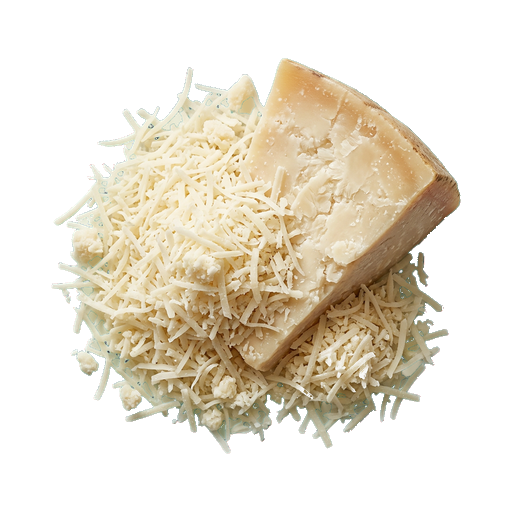
Grated Pecorino Romano cheese
A sharp Italian cheese made from sheep's milk with a dense, crumbly texture and distinctly pronounced salty taste. When grated, it distributes easily across dishes, melts well when heated, and is perfect for sprinkling over pasta, risotto, and vegetable side dishes. When choosing, pay attention to white or light yellow color and uniform texture — clumped cheese loses its aroma and distributes poorly.
About
Grated Pecorino Romano is not just cheese, but a tool that transforms a dish's flavor. Sharp, salty, with a piquant bite, it works quite differently from familiar Parmesan. If you're looking for an ingredient that won't soften in pasta, won't get lost in soup, and will be present in every bite — this is exactly it.
Taste and Aroma
Pecorino Romano is made from sheep's milk, and you can taste it immediately. The flavor is dense, aggressive, with pronounced saltiness and a slight bitterness on the finish. The aroma is sharp, somewhat spicy — not delicate, but assertive. When you grate it fresh, the smell becomes even more intense.
The cheese has a hard and brittle texture — when grated, it crumbles without clumping together. This is good: small particles distribute quickly throughout the dish and dissolve more easily in hot liquid.
Where does he work
- Pasta with spicy sauces — Pecorino Romano holds its own alongside garlic, pepper, and tomatoes
- Minestrone and thick vegetable soups — adds depth and saltiness
- Seafood dishes — its sharpness contrasts well with the sweetness of shrimp or squid
- Salads with bitter greens — enhances piquancy
- Appetizers and antipasti — sprinkle it on bread with oil or add to vegetable platters
The main rule: Pecorino Romano is a partner for bold flavors. If a dish already has character, this cheese will amplify it. If the taste is delicate and subtle, it will overpower it.
Selection and Storage
You can buy pre-grated Pecorino Romano if you're in a hurry, but it's better to get a whole piece of cheese and grate it yourself before cooking. Freshly grated cheese is more aromatic and flavorful — the difference is noticeable. Pay attention to the color: it should be light yellow, uniform, without spots or coating.
- A whole piece is stored in the refrigerator in parchment or a container for up to two months
- Grated cheese in an airtight container — no longer than two weeks, otherwise it will start to oxidize
- You can freeze grated cheese in small portions — useful for quick cooking
If the cheese has started to dry out, that's normal — it will still work in hot dishes. However, don't use it if there's a moldy smell or greenish coating.
Pairings
- With black pepper — a classic combination, they enhance each other
- With tomatoes — the sharpness of the cheese complements the acidity of tomatoes
- With garlic and red pepper — for bold pastas and soups
- With olive oil — simple and impressive on bread or in salads
- With herbs (parsley, basil) — herbs soften the sharpness of the cheese
Don't be afraid to experiment: pecorino romano handles high temperatures well, doesn't melt into clumps, and doesn't lose its flavor. It's a reliable ingredient that will always deliver results.
Nutrition
per 100 g
- Calories
- 403 kcal
- Protein
- 28 g
- Fat
- 32 g
- Carbs
- 0 g
Measures and weight
- 1 tbsp
- 7.5 g
- 1 tsp
- 2.5 g
- 1 cup
- 125 g
Measure calculator
- Weight
- 100 g
- Calories
- 403 kcal