Usuba
Usuba
Green cabbage
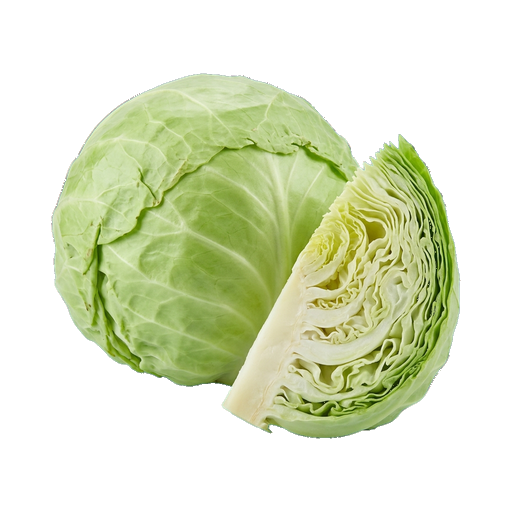
Green cabbage is a dense vegetable with smooth leaves of a delicate green color, featuring a mild, slightly sweet flavor with a barely noticeable hint of bitterness. It is versatile in cooking: suitable for raw salads, braises well, works in soups, and serves as a base for fermentation. When selecting, pay attention to the density of the head and the absence of darkening on the leaves — the heavier it is, the juicier the cabbage will be.
About
Green cabbage is the workhorse of the kitchen that never lets you down. Its dense, crispy leaves are equally good raw and after heat treatment. It's not just a salad vegetable, though it shines there; it's a versatile ingredient that holds its shape, absorbs the flavors of neighboring components, and yet remains true to itself.
Taste and texture
Fresh green cabbage crunches like fresh snow and has a mild, slightly sweet taste with a barely noticeable sharpness. When cabbage is boiled or stewed, it becomes more tender, the flavor deepens and acquires a light sweetness. During prolonged cooking, a characteristic sulfurous aroma may appear — this is normal and disappears if you don't overcook the vegetable.
Where to use it
- Raw — the basis for vitamin salads, coleslaw, cold appetizers
- Stewed or boiled — a side dish for meat, a component of borscht and cabbage soup
- In soups — great in vegetable, meat and fish broths
- Fried or grilled — with oil and spices becomes a standalone dish
- In puree — for creating uniform consistency and mild flavor
Delicious Combinations
Cabbage pairs well with everything that has a pronounced flavor. Garlic, ginger, and hot spices highlight its natural sweetness. Acidity — vinegar, lemon, tomatoes — makes it brighter and lighter. Fatty components, whether cream, butter, or meat broth, soften the texture and enrich the taste. Works well with cumin, coriander, and black pepper.
How to Choose and Store
Look for dense, heavy heads without dark spots, dents, or signs of rot. The leaves should be firm, not wilted. If the head is light and loose, the cabbage has already lost moisture. A fresh smell is a good sign; a musty smell indicates problems.
- Cabbage in the refrigerator is stored for 1–2 weeks in a plastic bag in the vegetable compartment
- A whole head lasts longer than sliced cabbage
- Sliced cabbage is best used within 3–4 days, otherwise it loses moisture and flavor
- At room temperature, cabbage wilts quickly; cold and humidity are optimal
The main advantage of green cabbage is its reliability. It rarely disappoints, stores well, and is always ready to use. Beginning cooks often underestimate this vegetable, thinking it's boring, but that changes with the first successful recipe, where cabbage reveals itself in all its glory.
Nutrition
per 100 g
- Calories
- 27 kcal
- Protein
- 1.2 g
- Fat
- 0.1 g
- Carbs
- 5.8 g
Measure calculator
- Weight
- 100 g
- Calories
- 27 kcal