Usuba
Usuba
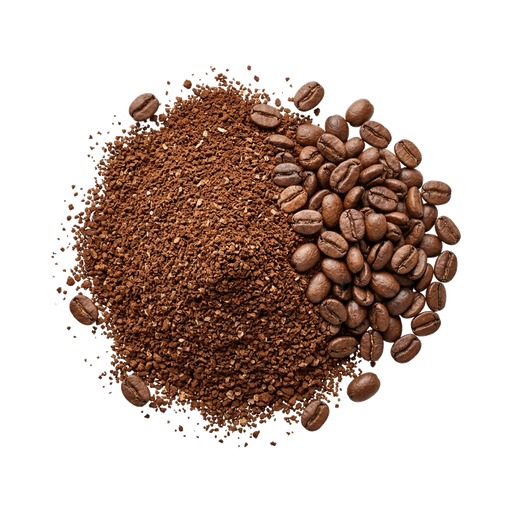
Ground coffee
Ground coffee is processed and ground coffee beans ready for brewing. The grind size affects extraction speed and flavor intensity: fine grind is suitable for espresso and Turkish coffee, medium grind for drip coffee makers, and coarse grind for French press. When choosing, pay attention to the grinding date and package seal, as ground coffee quickly loses its aroma and volatile compounds responsible for its characteristic smell and taste.
About
Ground coffee is a ready-to-brew product that saves time in the kitchen and simplifies the brewing process. The grind size affects the intensity of extraction, brewing speed, and the final taste of the beverage. Choosing the right grind for your brewing method is the first step to a good cup.
Grind and its role in taste
The size of coffee particles determines how quickly hot water extracts aromatic compounds and caffeine. Coarse grind is suitable for French press and cold brewing — water contacts the coffee longer, but doesn't over-extract bitterness. Medium grind is versatile: it works with drip coffee makers and Turkish coffee pots. Fine grind is needed for espresso machines and ibrik — this requires fast, intense extraction.
- Coarse grind — flakes visible to the naked eye, for French press
- Medium grind — resembles wet sand, universal for most brewing methods
- Fine grind — fine powder, for espresso and Turkish coffee pot
- Extra fine grind — powder, for traditional Turkish coffee
Selection and storage of ground coffee
When buying ground coffee, pay attention to the packaging date — the fresher, the better. The aroma should be rich and pleasant, without mustiness or staleness. A valve on the packaging allows gases to escape while preventing air from entering — this extends freshness.
Ground coffee loses its aroma faster than beans because the contact area with air is increased. Store it in an airtight container, in a cool, dark place, away from moisture and foreign odors. At room temperature, ground coffee stays fresh for 2–3 weeks; in the refrigerator, the shelf life can be extended to a month. Freezing is not recommended — condensation will spoil the taste.
Use in dishes
Ground coffee is used not only for beverages. It is added to marinades for meat — coffee emphasizes depth of flavor and imparts a subtle bitterness. In baking, ground coffee enhances chocolate notes in cookies, cupcakes, and cakes. A pinch in beef sauce or chili adds complexity and roundness to the taste. The key is not to overdo it, so coffee remains a background note rather than the main flavor.
Tips for the Perfect Drink
- Use filtered or soft water — chlorine and mineral salts distort the taste
- Coffee to water ratio approximately 1:16 — start here and adjust to your taste
- Water temperature of 90–96 degrees is optimal — boiling water can burn the coffee
- Brewed coffee should not sit longer than 30 minutes — over time the taste becomes bitter and flat
Ground coffee is convenient for those who value speed and consistency. If you're willing to sacrifice maximum freshness for simplicity, it's an excellent choice. The key is to select the right grind for your brewing method and store the coffee in proper conditions.
Nutrition
per 100 g
- Calories
- 210 kcal
- Protein
- 13.9 g
- Fat
- 14.4 g
- Carbs
- 4 g
Measures and weight
- 1 tbsp
- 6.8 g
- 1 tsp
- 2.3 g
- 1 cup
- 112.5 g
Measure calculator
- Weight
- 100 g
- Calories
- 210 kcal