Usuba
Usuba
Pear puree
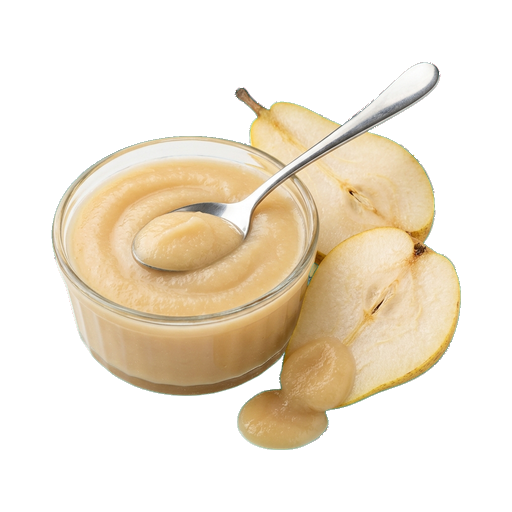
Smooth puree made from ripe pears with a delicate consistency and subtle sweet flavor with a light tartness. Used in baking, desserts, sauces, and as a base for beverages, adding softness and natural sweetness to dishes without overpowering aromas. When selecting, pay attention to the absence of lumps and homogeneity — quality puree should be smooth, and if making it yourself, strain the pears through a sieve for ideal texture.
About
Pear puree is a thick, delicate paste made from ripe pears that preserves all the sweetness and softness of the fruit. Unlike compotes and juices, puree contains all the fiber and fully reveals the character of the pear: its delicate aroma, barely perceptible tartness, and natural sweetness. It is a versatile ingredient that works in desserts, main dishes, and even beverages.
Aroma and Flavor
Pear puree smells of freshness and floral notes — it is one of the most delicate fruit aromas. The taste is mild, not acidic, with a light sweetness that doesn't hurt the teeth and doesn't tire you out. If the puree is made from well-ripened pears, it has almost no astringency; if the pears were slightly underripe, a barely noticeable viscosity may appear, which contrasts interestingly with the creamy texture.
Role in dishes
Pear puree is the foundation for baby food, but not only that. In confectionery, it works as a natural sweetener and binding ingredient: it is added to cookie dough, pie fillings, mousse, and panna cotta. Puree holds its shape well in jellies and mousses thanks to pectin, which naturally occurs in pears.
In main dishes, pear puree is added to sauces for meat — especially for duck and pork. It softens rich fats, adds depth and natural sweetness. You can use it in marinades, in sweet and spicy sauces, in beverages and cocktails.
Successful Pairings
- With butter and cinnamon — a classic combination for pies and crumble
- With ginger and cardamom — for spicy desserts and sauces
- With vanilla and almond — in mousse and panna cotta
- With black pepper and rosemary — in meat sauces
- With dark chocolate — an unexpected but working combination
- With yogurt and honey — for breakfasts and desserts
Selection and Storage
Choose puree with the shortest ingredient list possible: pear, water, sometimes lemon juice for preservation. Avoid products with added sugar if you want to control the sweetness in your dish. The consistency should be homogeneous, without lumps or separation. The color should be creamy brown or light beige, depending on the pear variety.
A closed jar of pear puree can be stored in a cool dark place for up to two years. After opening, the puree should be kept in the refrigerator and used within one to two weeks. If you prepare the puree yourself, freeze it in portions using ice cube trays or containers — this way it will keep for up to six months and will be convenient to use as needed.
Practical tip
If pear puree seems too liquid for a specific recipe, simmer it gently over low heat while stirring — it will thicken as moisture evaporates. Conversely, if the puree is too thick, dilute it with water or pear juice. Keep in mind that pear aroma is slightly lost during heating, so add the puree to hot dishes at the end of cooking if you want to preserve its delicate flavor.
Nutrition
per 100 g
- Calories
- 57 kcal
- Protein
- 0.4 g
- Fat
- 0.1 g
- Carbs
- 14.5 g
Measures and weight
- 1 tbsp
- 15.8 g
- 1 tsp
- 5.3 g
- 1 cup
- 262.5 g
Measure calculator
- Weight
- 100 g
- Calories
- 57 kcal