Usuba
Usuba
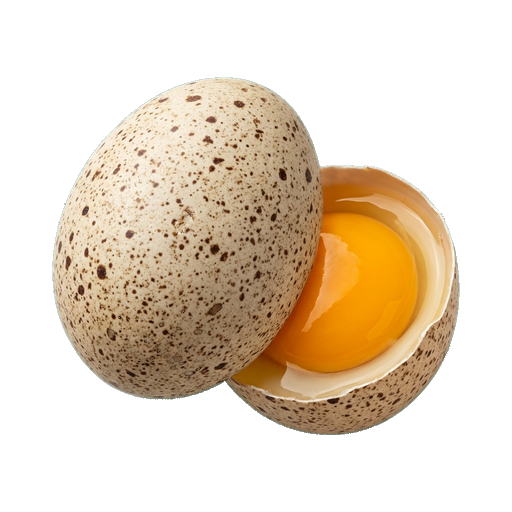
Guinea fowl egg
Guinea fowl eggs are smaller than chicken eggs but have a denser shell and a rich, flavorful yolk. In cooking, they are used the same way as chicken eggs — for omelets, baking, sauces, and side dishes — but they hold their shape better when frying and add a more pronounced flavor to dishes. When substituting for chicken eggs, keep in mind that one guinea fowl egg is approximately equal to three-quarters of a chicken egg.
About
What is it and why is it interesting
Guinea fowl egg is a product that often remains in the shadow of chicken eggs, although it deserves much more attention. It is smaller in size, with a denser shell of cream or brown color with characteristic speckles. Inside you will find a more saturated yolk and dense egg white, which behave quite differently when cooking. The taste is distinctly more pronounced, with a slight piquancy that doesn't clash with the palate, but complements the dish.
In the kitchen — features and possibilities
The main difference in cooking is that guinea fowl eggs take longer to boil. If chicken eggs need 7 minutes for a soft yolk, guinea fowl eggs will need about 9–10 minutes. The white becomes firm while the yolk remains creamy. The shell is thicker, making it harder to peel, but the egg stores better and lasts longer without spoiling.
Guinea fowl eggs fry more slowly on the pan, and the whites remain translucent for longer. This gives you more time to control the process — you can achieve the perfect state where the whites have set while the yolk remains runny. When whisked for omelets or batter, guinea fowl eggs produce a more stable foam and better maintain their structure.
Where to use it
- Hard-boiled eggs for salads and appetizers — firm whites don't fall apart, yolk stays bright
- Omelets and frittatas — denser structure holds shape better
- Baking and dough — whites lift sponge cakes and soufflés better
- Pasta and sauces — rich yolk gives creamier consistency
- Aspics and jellied dishes — gelatin from guinea fowl eggs is more elastic
Selection and Storage
When selecting, look at the integrity of the shell — cracks are not acceptable. The egg should be heavy for its size, without dents. To the touch, it is dense, almost like stone. A fresh egg makes no sound when shaken, and the yolk is tightly pressed against the white.
It lasts longer than chicken eggs — up to 4–5 weeks in the refrigerator. Thanks to its thick shell, a guinea fowl egg is less permeable to air and moisture. Keep it in the main compartment of the refrigerator, not on the door where temperature fluctuates. At room temperature, a fresh egg can be stored for a week, but it's better not to risk it.
Practical tip
If you're cooking with guinea fowl eggs for the first time, start with simple dishes — hard-boiled eggs or an omelet. This way you'll notice the difference in taste and texture. Then confidently use them in recipes where stability matters — in dough, creams, and sauces.
Nutrition
per 100 g
- Calories
- 155 kcal
- Protein
- 13.7 g
- Fat
- 11.3 g
- Carbs
- 0.6 g
Measures and weight
- 1 pcs
- 45 g
Measure calculator
- Weight
- 100 g
- Calories
- 155 kcal