Usuba
Usuba
Harissa
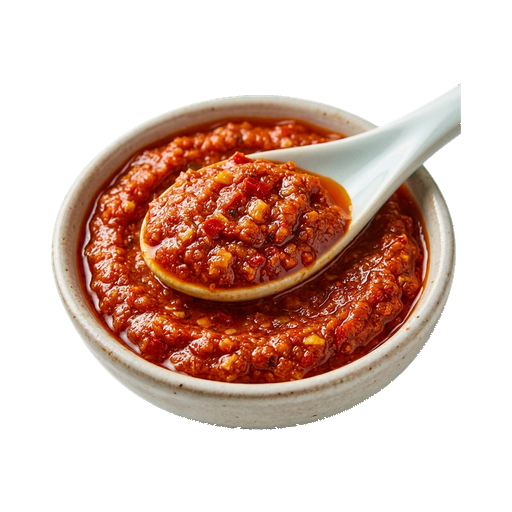
A spicy paste made from red peppers, spices, and oil with a rich, aromatic flavor and intense heat. Used as a base for sauces, marinades, and dressings in North African cuisine, as well as added directly to finished dishes for flavor intensity. When selecting, pay attention to consistency—the paste should be uniform without an oily layer, and store well in the refrigerator after opening.
About
Harissa is a spicy paste that turns any dish into a celebration for adventurous eaters. Its main characteristic is not just in its heat, but in its multi-layered flavor, where the spiciness is supported by deep aromatic notes. If you're looking for a way to add character and energy to everyday food, this paste will become your trusted kitchen companion.
Aroma and taste
Harissa smells of roasted red peppers, garlic, and a blend of spices — cumin, coriander, sometimes caraway. When you open a jar, you're greeted with an intense, almost smoky aroma that immediately sets the stage for a serious conversation about taste. On the palate, the paste unfolds gradually: first comes the heat, then spicy notes reveal themselves, and finally a pleasant oiliness completes it all.
Where and how to use it
Harissa works as a universal spicy accent. Add a teaspoon to soup a minute before serving — and it becomes completely different. Mix with yogurt or sour cream for a sauce to serve with meat or vegetables. Spread on bread before assembling a sandwich. Dissolve in oil and use as a salad dressing. It's great in marinades, in stewed dishes, in pasta sauces.
Successful Combinations
- With neutral bases: yogurt, sour cream, butter, olive oil
- With proteins: chicken, fish, chickpeas, eggs
- With vegetables: carrots, eggplant, tomatoes, zucchini, sweet pepper
- With herbs: cilantro, parsley, mint
- With carbohydrates: bread, rice, bulgur, pasta
Selection and Storage
When purchasing, pay attention to the consistency — good harissa should be smooth and homogeneous, without separation. The color varies from bright red to brownish-red depending on the composition and degree of processing. Check the ingredient list: the fewer additives, the better. After opening the jar, store the paste in the refrigerator, preferably in a glass container with a lid. If the paste begins to dry on top, simply drizzle it with olive oil — this will protect it from oxidation and extend its shelf life.
Start with half a teaspoon per serving — harissa is deceptive in its subtlety. The heat builds gradually, and it's easier to add more than to rescue the dish later.
Nutrition
per 100 g
- Calories
- 150 kcal
- Protein
- 3 g
- Fat
- 12 g
- Carbs
- 7 g
Measures and weight
- 1 tbsp
- 15 g
- 1 tsp
- 5 g
- 1 cup
- 250 g
Measure calculator
- Weight
- 100 g
- Calories
- 150 kcal