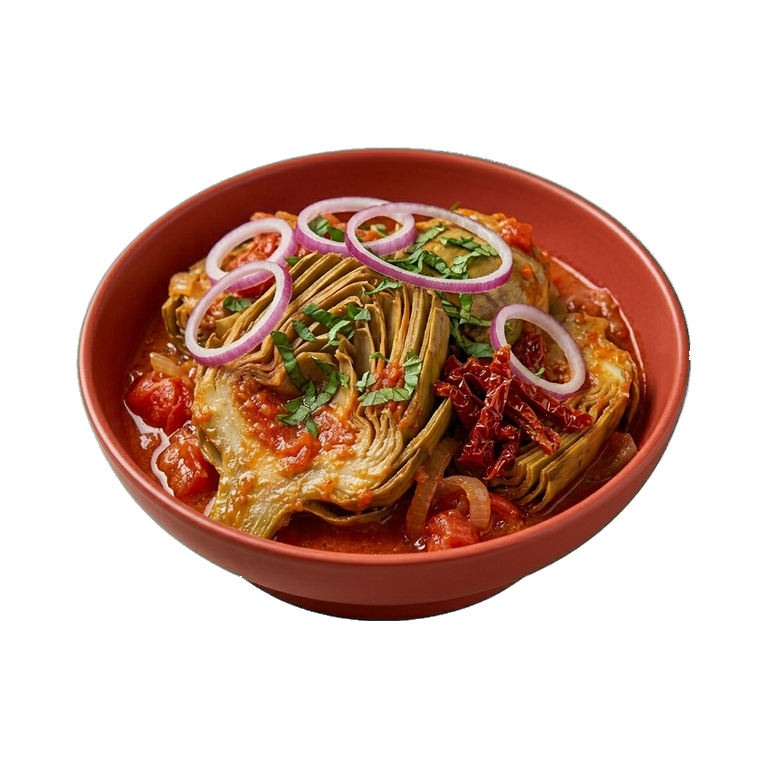
Usuba
Usuba
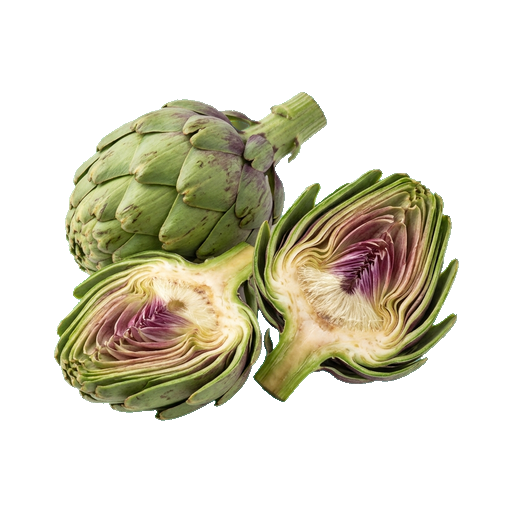
Artichokes
Spanish artichokes are young, tender varieties of artichoke with compact heads and a soft, slightly nutty flavor. They are significantly smaller than regular artichokes and are almost entirely edible, including the stem and leaves, making them a versatile ingredient for frying, stewing, or grilling. When selecting, prefer firm, springy heads without darkening, and before cooking, it is sufficient to cut them in half and remove only the toughest outer leaves.
About
Artichokes are not a vegetable in the traditional sense, but an inflorescence that is harvested before the flowers bloom. Spanish artichokes are renowned for their tender flesh and delicate flavor. They require certain preparation, but the result is worth the effort.
Aroma and Taste
Artichoke smells like grass with subtle nutty notes. The taste is slightly sweet, earthy, with a pleasant bitterness. Young artichokes are softer and more tender, and can be eaten almost whole. Large specimens have a fibrous heart that needs to be removed.
How to cook
Before cooking, cut off the top quarter of the artichoke and trim the stem. If the fruit is large, cut it in half lengthwise and remove the tough core with the hairy fibers. Place the artichokes cut-side down in a pot with salted water and cook for 20–30 minutes until the leaves start to come off easily.
- Boiling — a classic method. Serve with lemon sauce or melted butter
- Grilling or pan-frying — cut in half, brush with oil, cook cut-side down until golden
- Baking — whole or halves in the oven at 200 °C for about 35 minutes with olive oil and spices
- Stuffing — remove the core and fill with a mixture of breadcrumbs, garlic and herbs
Pairings and role in dishes
Artichokes work well with lemon, garlic, thyme, and rosemary. They are perfect as a standalone dish, a complement to pasta or risotto, as well as in salads and appetizers. Young artichokes are often used in Mediterranean cuisine — they are placed in olive oil with herbs and left to marinate.
Artichokes contain substances that alter taste perception. After eating an artichoke, water and wine may taste sweet — this is normal and temporary.
Selection and Storage
Choose artichokes with tight, green leaves without darkening and soft spots. They should be heavy for their size — a sign of juiciness. Young artichokes are smaller and more tender, large ones are suitable for stuffing. Avoid dried or yellowed specimens.
- In the refrigerator — in a bag or container for up to 5 days
- Cut artichokes — place in a glass of water like flowers, and they will last longer
- After cooking — store in the refrigerator for up to 3 days, boiled artichokes can be frozen
Artichokes are a product worth mastering. The first time may seem tedious, but the process quickly becomes routine. The tender flesh that you extract from each leaf is the main pleasure of this vegetable.
Nutrition
per 100 g
- Calories
- 47 kcal
- Protein
- 3.3 g
- Fat
- 0.2 g
- Carbs
- 10.5 g
Measures and weight
- 1 pcs
- 300 g
Measure calculator
- Weight
- 100 g
- Calories
- 47 kcal