Usuba
Usuba
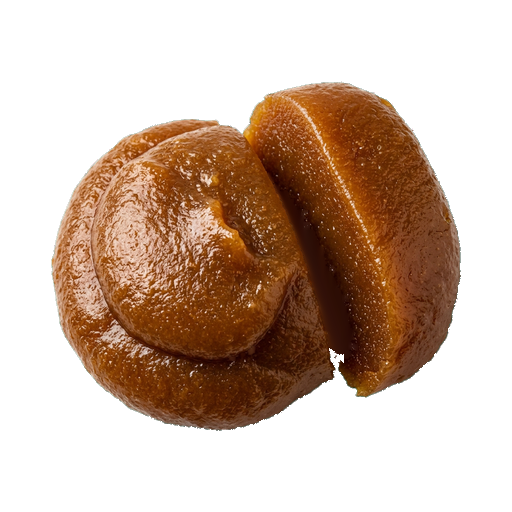
Jam
Fruit preserve is fruit puree reduced to a thick consistency, where berries or fruits almost completely lose their shape and transform into a homogeneous mass. It is thicker than jam, darker and more intense in flavor thanks to long cooking, which caramelizes the sugars and deepens the fruity aroma. In baking, desserts and sauces, fruit preserve works as a natural sweetener and thickener, and its dense consistency allows it to be used as a layer in cakes or filling for pies without the risk of leaking.
About
Jam is a stewed fruit puree that has turned into a thick, homogeneous mass. Unlike jam where whole berries or fruit pieces are visible, jam is completely cooked down and strained. This makes it a universal kitchen assistant: it works equally well in sweet dishes, savory sauces, and baked goods.
Taste and Texture
Jam offers a concentrated fruity flavor — sweet, but with a slight tartness that prevents it from being cloying. The consistency is dense, almost marmalade-like, and holds its shape well on a spoon. This means the jam won't spread in the dough or soften cookies if you place it inside them. The aroma is intense and fruity, sometimes with subtle caramel notes from the long cooking process.
Where and how to use
In baking, jam works as a filling for pies, buns, and cookies — it doesn't leak and holds its shape well. Spread it on pancakes or crepes instead of jam, and you'll get a smoother, lump-free texture. In sweet sauces, jam serves as a base: dilute it with water or juice, add spices — and you have a sauce ready for ice cream or cottage cheese.
- Filling for pies, buns, cookies
- Layer in cakes and pastries instead of cream
- Base for fruit sauce for meat or poultry
- Additive for yogurt, cottage cheese, porridge
- Glaze for baked goods
Selection and Storage
Look at the color — it should be rich, uniform, without layers or mold. The consistency should not be liquid: quality jam flows slowly from a spoon rather than pouring. Read the ingredients: good jam contains only fruits, sugar, and sometimes lemon juice. Preservatives and thickeners are a sign that what you have is not quite what you need.
A closed jar of jam can be stored in a cool, dark place for months and even years. After opening, move the jar to the refrigerator and use it within a month. If you are making jam yourself, place it in sterilized jars and seal tightly — this way it will last longer and be safer.
Combinations with other ingredients
Jam works well with sour cottage cheese, sour cream, and yogurt — they balance out the sweetness. In baking, it pairs nicely with vanilla, cinnamon, and ginger. If you're adding jam to a meat sauce, remember that it goes better with duck, pork, and beef than with white meat. With nuts, especially walnuts and almonds, jam creates a classic sweet-bitter combination.
Jam is not just a sweet treat, it's a working ingredient that makes baked goods moister, sauces brighter, and breakfast cozier. Keep a jar on hand: it will come to your rescue at the last moment when you need a quick filling or a sweet accent to a simple dish.
Nutrition
per 100 g
- Calories
- 263 kcal
- Protein
- 0.3 g
- Fat
- 0.1 g
- Carbs
- 65 g
Measures and weight
- 1 tbsp
- 19.5 g
- 1 tsp
- 6.5 g
- 1 cup
- 325 g
Measure calculator
- Weight
- 100 g
- Calories
- 263 kcal