Usuba
Usuba
Calvados
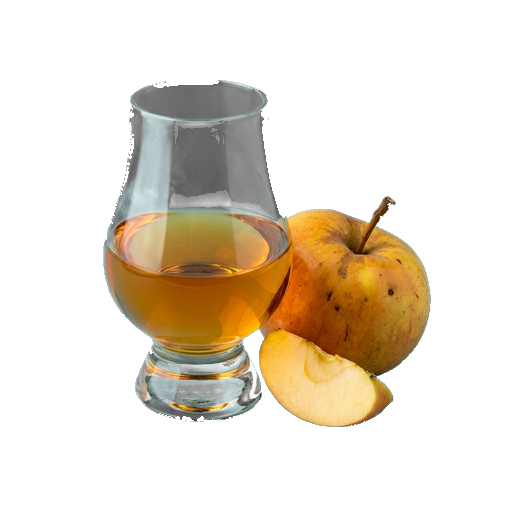
A strong alcoholic spirit obtained from apple cider through distillation, featuring a characteristic golden color and warm fruity aroma. In cooking, it is used for deglazing pans, preparing sauces for meat and poultry, as well as a component in marinades and desserts. When substituting, cognac or brandy would be suitable, though they will provide a more neutral flavor without apple notes.
About
Calvados is a strong spirit obtained from apples. Its main characteristic is that it smells and tastes precisely like apples, but with a depth and complexity that cannot be found in plain juice. In cooking, it is not just a beverage, but an ingredient that transforms a dish, adding roundness and sophistication to it.
Aroma and taste
Young calvados smells of fresh apples, floral notes, and subtle woodiness. The longer it ages in oak barrels, the more complex its bouquet becomes: honey, vanilla, and spicy notes emerge, while the apple base becomes softer and more refined. The taste is strong and warming, with natural sweetness that doesn't seem cloying.
Role in dishes
In cooking, calvados works in two directions. First, it is ideal for deglazing a pan after searing meat or poultry — the alcohol evaporates, leaving behind concentrated flavor and creating a base for sauce. Second, it is added to doughs, creams, sauces, and marinades, where it gives the dish roundness and depth without standing out as a separate flavor.
Pairings and Uses
- Duck, pork and chicken — calvados in sauce emphasizes their rich flavor
- Seafood, especially scallops and shrimp — alcohol brightens their delicate taste
- Mushrooms and shallots — classic base for calvados sauce
- Apples, pears and plums — natural partners, enhance fruity notes
- Cream and butter — calvados softens their richness and adds complexity
Selection and Storage
For cooking, mid-range calvados is suitable — expensive aged versions would be a shame to use for cooking. Pay attention to the label: the indication of age (VS, VSOP, XO) indicates the age of the spirit. Younger calvados has a brighter flavor, aged — softer and more complex. Young calvados works well for sauces and deglazing, while medium age can be used for creams and marinades.
Calvados should be stored in a sealed bottle in a cool place, protected from direct sunlight. Alcohol evaporates more slowly than wine, but airtightness is still important. An opened bottle can be stored for months without noticeable loss of quality, but it is better not to delay its use for too long.
Chef's Tip
If you are making a sauce with Calvados, always let the alcohol evaporate completely — heat it for several minutes over the fire so that the alcohol dissipates, but the flavor remains. This rule is especially important for dishes that will be eaten by children or people sensitive to alcohol.
Nutrition
per 100 ml
- Calories
- 250 kcal
- Protein
- 0 g
- Fat
- 0 g
- Carbs
- 0 g
Measures and weight
- 1 tbsp
- 14.1 g
- 1 tsp
- 4.7 g
- 1 cup
- 235 g
Measure calculator
- Weight
- 100 g
- Calories
- 266 kcal