Usuba
Usuba

Carbonade
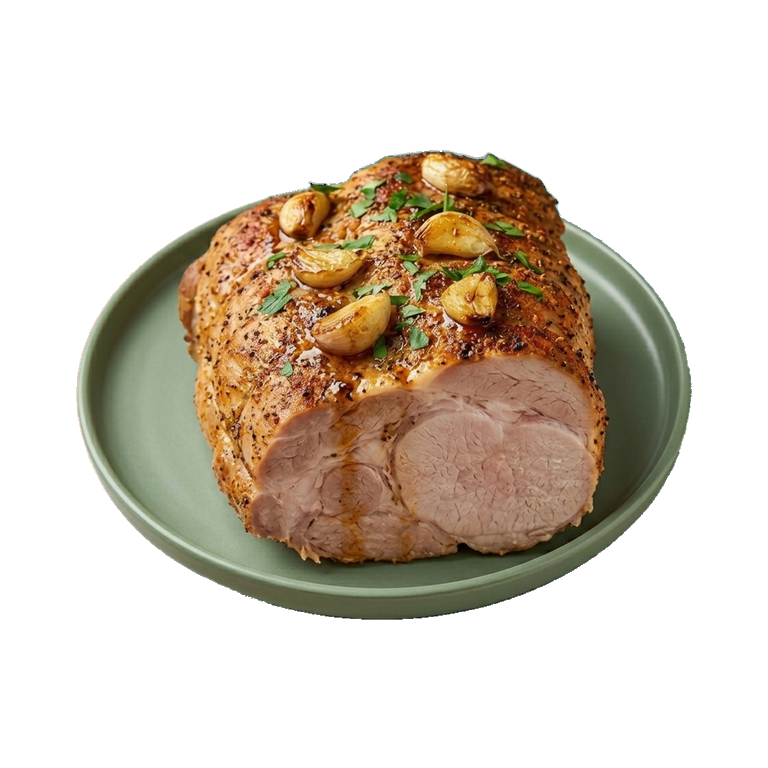
Carbonade is a meat product made from pork or beef, representing a smoked and boiled product with a dense consistency and characteristic smoky aroma. It is primarily used as a ready-made delicacy for slicing into cold appetizers, sandwiches, and salads, but also suits hot dishes. When choosing, pay attention to an even color of the cut, absence of stickiness, and a pleasant smoked-meat aroma without foreign odors.
About
Carbonade is a meat delicacy obtained by salting, smoking, and curing pork or beef. Unlike sausages, it is a whole piece of meat that retains its structure and density. On the cross-section, you can see a characteristic pinkish color with white fat streaks, and the product itself has a dense consistency and a slightly oily surface.
Aroma and Flavor
The taste of carbonade is rich and meaty, with pronounced notes of smokiness. The intensity of the smoky aroma depends on the processing method: some producers use cold smoking, which gives a delicate smoke, while others use hot smoking, creating a more aggressive flavor. The salt used in the curing process does not overpower the natural taste of the meat, but rather enhances it. Well-made carbonade has a subtle sweetness that emerges thanks to the spices and prolonged aging.
Role in dishes
- Smoked pork loin sliced thin is served as a cold appetizer with beer or wine — it's delicious on its own, without additions
- Added to salads instead of regular boiled meat to give them depth of flavor and a smoky aroma
- Used in hot dishes: soups, stews, side dishes — the meat doesn't fall apart and maintains its structure
- Cut into cubes for frying with vegetables or added to pasta dishes
- Included in assorted cured meats on a cutting board for snacking, where it serves as a more vibrant and pronounced option compared to sausage
Pairings with other products
Carbonade pairs well with acidic and spicy components: mustard, horseradish, pickled vegetables, and sauerkraut highlight its depth. Neutral side dishes — potatoes, rice, pasta — allow the smoked meat to be the center of attention. On a charcuterie board, carbonade sits alongside cheese, nuts, dried fruits, and dark bread. Beer, strong tea, or red wine are the best drink pairings.
Selection and Storage
- When purchasing, pay attention to the color: a pinkish-red cut indicates proper processing, too pale a shade may indicate low quality
- The surface should be dry, without sticky coating and mold
- The smell should be pleasant, smoky, without staleness and foreign odors
- Consistency — dense, the meat should not be too soft or, conversely, stone-like
Whole carbonade is stored in the refrigerator for up to two weeks in an airtight container or food wrap. If you have sliced it, use the sliced pieces within 3–4 days. For longer storage, you can wrap the carbonade in parchment paper and place it in the freezer for several months — thaw it gradually in the refrigerator before use.
Practical tip
If the carbonade seems too salty to you, soak the sliced pieces in cold water for 15–20 minutes before serving — the salt will partially come out and the taste will become milder. For hot dishes, add the carbonade at the end of cooking so it doesn't lose its smoky aroma.
Nutrition
per 100 g
- Calories
- 260 kcal
- Protein
- 14.5 g
- Fat
- 22 g
- Carbs
- 0 g
Measures and weight
- 1 slice
- 20 g
Measure calculator
- Weight
- 100 g
- Calories
- 260 kcal