Usuba
Usuba
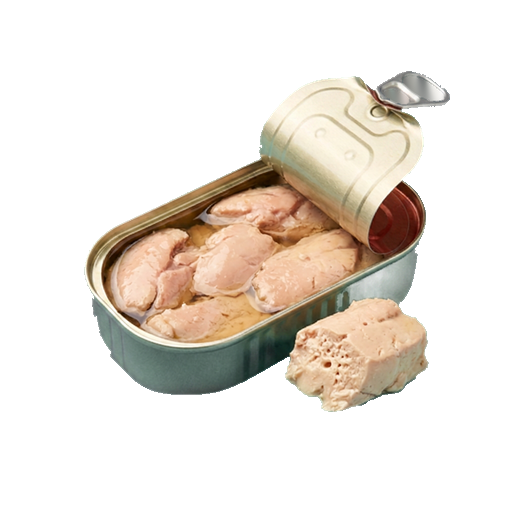
Canned cod liver
A delicacy made from Atlantic cod liver, preserved in its own fat or oil, distinguished by a tender, almost creamy texture and rich sea flavor with a subtle bitterness. Contains a high amount of omega-3 fatty acids and vitamin A, making it a valuable source of nutrients. Used in appetizers, on sandwiches, in salads, and as a standalone dish, it requires minimal preparation and pairs well with dark bread, lemon, and fresh herbs.
About
Canned cod liver is a delicacy that often remains overshadowed by more popular seafood delicacies. Meanwhile, it is an ingredient with a rich flavor and an impressive range of beneficial properties that can transform the simplest dish. In the jar you will find a soft, tender texture with a characteristic sea aroma and a rich, slightly creamy taste.
Taste and Aroma
Cod liver has a pronounced seafood flavor with subtle metallic notes — this is normal and indicates the product's authenticity. The consistency is dense yet tender, almost pâté-like. The aroma is intense and distinctive: if you're opening a can for the first time, be prepared for a sharp seafood smell. This will pass once you transfer the liver to a plate and let it air out a bit.
How to use in the kitchen
Canned cod liver is a versatile ingredient that works in different formats. You can spread it on bread or crackers, add it to salads, use it as a sandwich filling or as a base for pâté. Some chefs add it to soups and fish dishes for depth of flavor. The main rule is: don't overcomplicate it — cod liver is expressive enough on its own.
- On a sandwich with black bread and fresh herbs
- In salads with potatoes, beets, or seaweed
- As a base for a cold appetizer with lemon and olive oil
- In omelets or egg dishes
- In fish pâtés together with butter and spices
Selection and Storage
When choosing, pay attention to the integrity of the jar — there should be no dents or rust. Open the jar at home and check the color: the liver should be brown or dark yellow, with a uniform consistency. If you see separation of oil and liver — this is normal, just mix it well. The smell when opening may be sharp, but should not be rancid or spoiled.
Store a closed jar in a cool place at room temperature — it will easily last several years. After opening, transfer the contents to a glass container or seal the jar tightly with plastic wrap and store it in the refrigerator for up to a week. Cod liver easily absorbs foreign odors, so an airtight container is your reliable assistant.
Successful Combinations
Cod liver pairs well with acidity — lemon, vinegar, pickled vegetables. Onion and garlic emphasize its flavor, while butter softens the briny sharpness. On the table, it goes well with dark bread, potatoes, seaweed, and fresh herbs. Try combining it with hot spices — pepper, mustard, horseradish — the contrast turns out to be interesting.
If cod liver seems too intense to you, start with a small portion on a sandwich, mixing it with butter or mayonnaise. Over time, the taste will reveal itself and you'll understand why this delicacy is valued in Scandinavian and Russian cuisine.
Nutrition
per 100 g
- Calories
- 613 kcal
- Protein
- 4.2 g
- Fat
- 65.7 g
- Carbs
- 0 g
Measure calculator
- Weight
- 100 g
- Calories
- 613 kcal