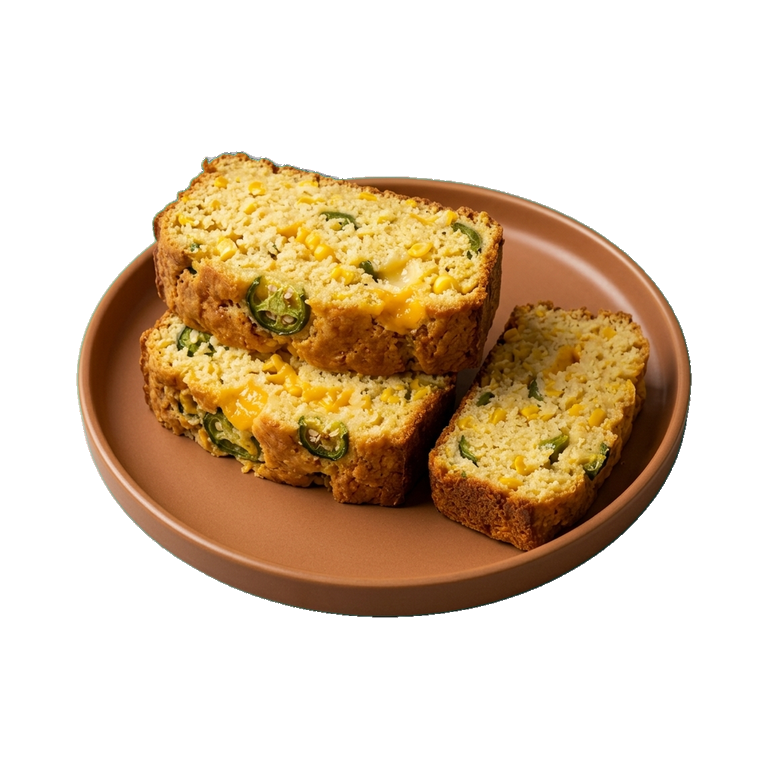
Usuba
Usuba
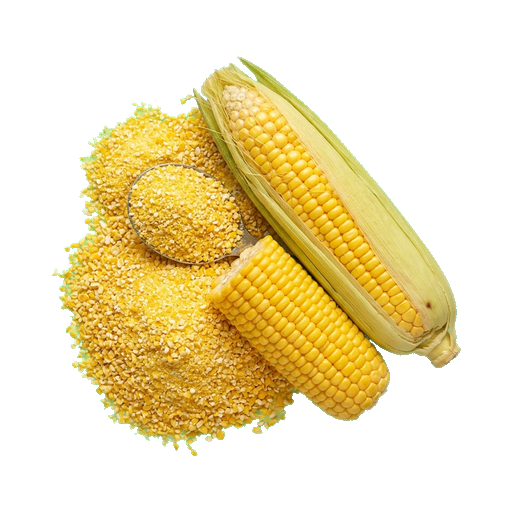
Cornmeal, coarse
Cornmeal is a coarse-grained product with a characteristic sweet flavor and bright yellow color, obtained from dried corn kernels. Thanks to its large particle size, it retains texture in dough and gives baked goods a pleasant crunch, making it well-suited for bread, cornbread, porridges, and polenta. When substituting fine cornmeal, you should increase the amount of liquid in the recipe, as coarse cornmeal absorbs more moisture.
About
Coarse cornmeal is not just an ingredient, but a full-bodied flavor and texture that transforms familiar dishes. Large grain particles preserve the characteristic sweet aroma of corn and create a pleasant graininess in the finished dish. Unlike fine flour, coarse grinding works as an independent character, not a background component.
Texture and taste
Coarse grinding provides a noticeable graininess — the bread turns out with a pleasant crispy crust and airy crumb, porridge holds its shape and doesn't turn into mush. The taste is mild, slightly nutty, with a barely perceptible sweetness. Such flour absorbs liquid more slowly than fine flour, so the dough consistency requires attention.
Where to use it
- Cornbread and buns — coarse flour creates a loose, airy structure
- Polenta — a classic dish where the granular texture of flour is fully revealed
- Porridges and side dishes — hold their shape and don't turn into mush
- Breadcrumbs and batter — provides a crispy crust and golden color
- Pancakes and fritters — add texture and a slightly nutty flavor
How to cook
If you are working with coarse flour for the first time, remember: this flour requires more liquid than wheat flour. When kneading dough, add water or milk gradually, adjusting based on consistency. For semi-sweet dishes (bread, porridges), coarse flour works on its own; for baked goods requiring fluffiness, it makes sense to mix it with wheat flour in a ratio of 1:1 or 1:2.
Combinations with other ingredients
- Milk and butter — classic base for polenta
- Cheese and herbs — enhance nutty notes and add saltiness
- Honey and sugar — highlight the natural sweetness of grains
- Eggs and leavening agents — help achieve airiness in baking
- Hot spices (paprika, chili) — contrast with the mild flavor of flour
Selection and Storage
When purchasing, pay attention to the color — it should be uniform, yellow or cream, without gray impurities. Flour should not smell musty. Store in an airtight container in a cool, dry place; at room temperature it keeps for 2–3 months, in the refrigerator — up to six months. If flour has been kept open for a long time, sift it before using to avoid lumps and ensure freshness.
Nutrition
per 100 g
- Calories
- 361 kcal
- Protein
- 6.9 g
- Fat
- 3.9 g
- Carbs
- 72 g
Measures and weight
- 1 tbsp
- 9 g
- 1 tsp
- 3 g
- 1 cup
- 150 g
Measure calculator
- Weight
- 100 g
- Calories
- 361 kcal