Usuba
Usuba
Lamb breast
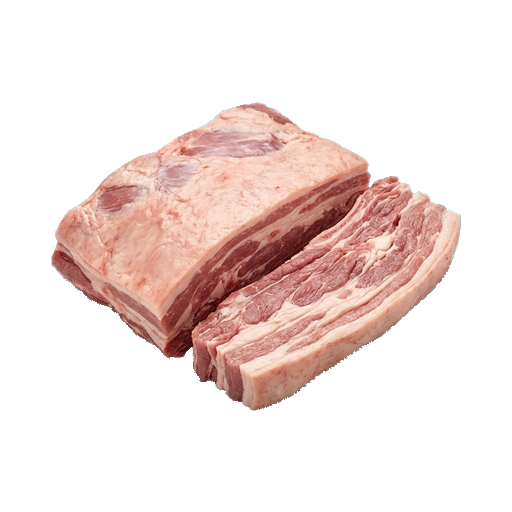
Lamb brisket is meat with fat layers from the lower part of the carcass, distinguished by a rich flavor and tender texture when properly heat-treated. It is usually prepared through long braising, boiling, or baking to allow the fat to render and the meat to become tender. When selecting, pay attention to the color of the meat — it should be pink-red, and the fat should be light and clean; before cooking, it is helpful to remove some of the surface fat if the brisket is very fatty.
About
Lamb brisket is the front part of the carcass with layers of meat and fat, which requires respectful treatment in the kitchen. It is not among the premium cuts, but it is this very 'unpopularity' that makes it ideal for long braising and slow cooking. When you prepare brisket correctly, the fat becomes a conductor of flavor, and the muscle fibers transform into a tender mass.
Taste and Aroma
Lamb brisket sounds full-bodied and confident — it's not a delicate whisper, but a distinct voice. The fat layers carry a characteristic sheep note, which becomes deeper and rounder when braised. The meat has a dense structure in its raw form, but this is not a drawback: with prolonged heat treatment, it softens and absorbs the aromas of spices and vegetables it is cooked with.
Role in Dishes
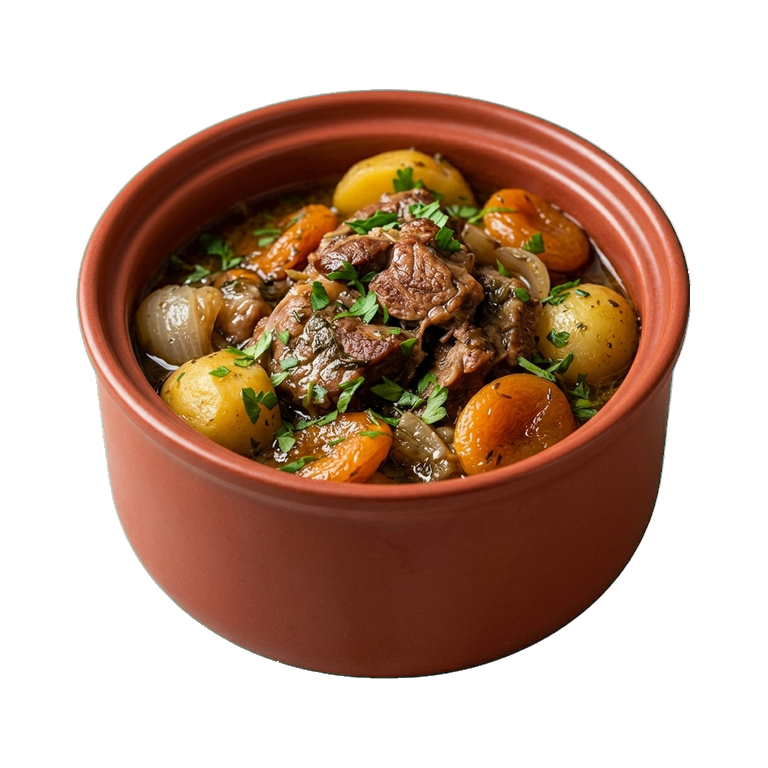
Brisket is a cut for those who are willing to wait. It reveals itself in pilaf, in Uzbek lagman, in Moroccan tagine. You can braise it with tomatoes and herbs, cook it over coals wrapped in foil, or simmer it in broth for soup. The main thing is not to rush. Two to three hours over low heat, and the brisket will give everything it has.
Pairings
- Spices: turmeric, cumin, coriander, black pepper, clove
- Vegetables: carrot, onion, garlic, tomatoes, eggplant
- Herbs: rosemary, thyme, parsley, cilantro
- Liquids: red wine, broth, tomato juice
Selection and Storage
When purchasing, pay attention to the color — the meat should be dark red, without gray spots. Fat layers should be white or cream-colored, not yellow. Smell it: the aroma should be fresh, without sourness. The weight of a piece usually ranges from one and a half to three kilograms — this is optimal for home cooking.
Brisket can be stored in the refrigerator for three to four days on the coldest shelf. If you need to keep it longer, freeze it. In the freezer, it will keep for a month or even two. Before cooking, let it thaw slowly in the refrigerator so the meat doesn't lose its moisture.
Preparation
- Take the brisket out of the refrigerator an hour before cooking — it will cook more evenly this way
- Trim excess fat, but leave a thin layer — it's needed for flavor
- Pat the surface dry with a paper towel before searing to get a nice crust
- Slice against the grain if serving the cooked piece at the table
Lamb brisket is not an ingredient for hurrying. It is an invitation to slow down, give time to do its work, and get a result that will justify your expectations. It forgives small cooking mistakes and generously rewards patience.
Nutrition
per 100 g
- Calories
- 280 kcal
- Protein
- 15 g
- Fat
- 24 g
- Carbs
- 0 g
Measure calculator
- Weight
- 100 g
- Calories
- 280 kcal