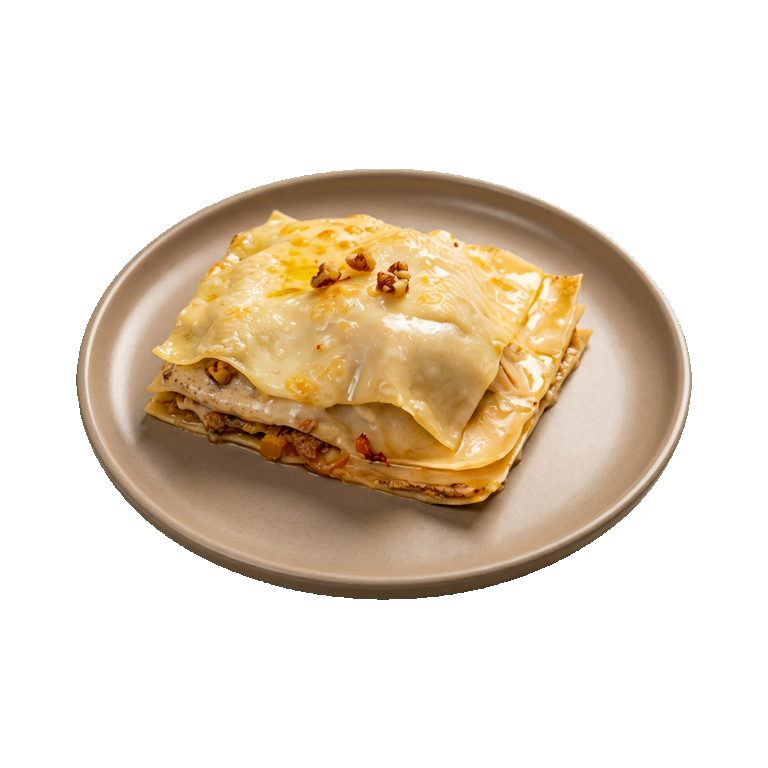
Usuba
Usuba
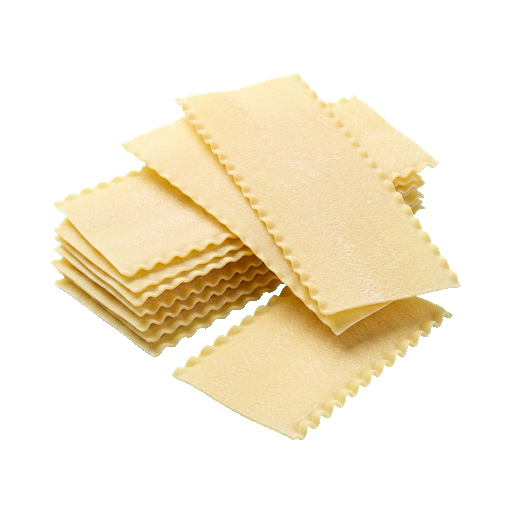
Lasagna dough
Thin sheets of wheat dough specifically designed for layered lasagna assembly. Ready-made dough saves cooking time and ensures uniform layer thickness, though fresh homemade dough is considered more tender and aromatic. When choosing, pay attention to the packaging date and the integrity of the sheets, and when cooking, remember that some varieties require pre-softening in hot water, while others are placed dry directly into the baking dish with sauce.
About
Lasagna pasta is a thin sheet made from wheat flour, eggs, and water that serves as the base for a multi-layered dish. Its main task is simple: to hold the filling without falling apart during baking and to absorb the sauce while remaining elastic. Unlike regular pasta, lasagna sheets must be strong enough to support the weight of the layers, but at the same time tender and pleasant to taste.
Texture and Appearance
Lasagna sheets have a smooth surface with a subtle matte sheen. They should be elastic — if a sheet breaks when you try to bend it, it means either the dough is overdried or it was stored incorrectly. Good dough separates easily from neighboring sheets and does not clump together. The color varies from light yellow to a more saturated yellow, depending on the number of eggs in the composition.
How to choose and use
- Check the production date and expiration date — fresh pasta sheets are always preferable
- Sheets should not be brittle or crumble when touched
- Make sure the packaging is intact and the sheets are not stuck together
- For classic lasagna, use sheets without pre-boiling — they will cook through in the sauce during baking
- If the sheets are very thick or stiff, you can pre-boil them in salted water for 2–3 minutes
Storage and shelf life
Dry lasagna pasta is stored in a closed package at room temperature in a dry place. The main enemy is moisture, which causes the sheets to stick together and promotes mold growth. After opening the package, transfer the remaining pasta to an airtight container or seal the bag tightly. Opened pasta keeps for 2–3 weeks. If you notice that the sheets have started to crumble or dark spots have appeared on them — it's better not to risk it.
Pairs with
- Ground meat and tomato sauce — a classic combination
- White sauce (béchamel) with bacon and mushrooms
- Vegetable fillings: spinach, eggplant, zucchini with ricotta
- Seafood with white wine and creamy sauce
- Parmesan and mozzarella for the top layer and between the sheets
Helpful Tips
If the sheets are too brittle, moisten them with clean water a few minutes before use — they will become more flexible. When layering, make sure the sauce is liquid enough for the sheets to absorb it, but not so much that the lasagna turns into mush. Don't serve the lasagna immediately after baking — let it rest for 10–15 minutes so the layers hold together well when slicing.
Nutrition
per 100 g
- Calories
- 371 kcal
- Protein
- 13 g
- Fat
- 1.1 g
- Carbs
- 75 g
Measure calculator
- Weight
- 100 g
- Calories
- 371 kcal