Usuba
Usuba
Candied lemon peel
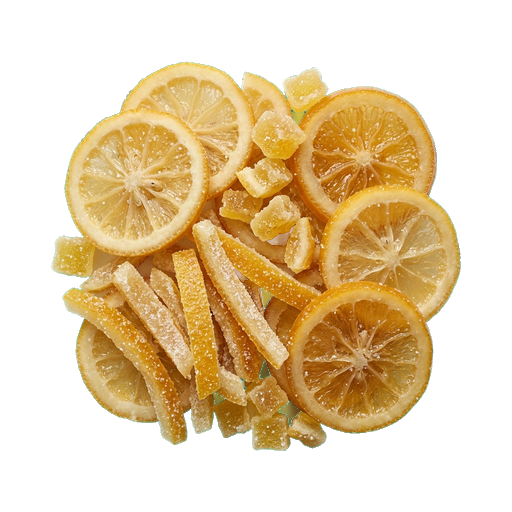
Candied lemon peels are sugared lemon slices or strips with flesh, coated in crystalline sugar. They have a bright sweet-and-sour flavor with bitter notes and are used as a standalone treat, as well as for decorating and flavoring desserts, baked goods, beverages, and ice cream. When choosing, pay attention to the elasticity and evenness of the sugar coating — quality candied peels should be slightly moist but not sticky, with visible pieces of lemon peel.
About
Lemon candied peel consists of sugared slices or strips of lemon zest that have transformed into a sweet, slightly tart delicacy. It's not just candy: it's a concentrated source of bright citrus notes that work in both sweet and savory dishes. Candied peel holds its shape, doesn't spread, stores well, and brings freshness and character to every dish.
Taste and Aroma
The taste of candied lemon peel is a contrast. On one hand, the sweetness of sugar that coats each piece. On the other — the bright tartness and bitterness of lemon zest, which doesn't go away. This bitterness is not irritating; rather, it makes the flavor interesting and multidimensional. The aroma is intense, almost piercing, a real lemon, but no longer fresh — slightly cooked, concentrated.
Where candied fruits are made
- In baking — cupcakes, Easter bread, buns with candied fruits become brighter, citrus freshness breaks through the butter and flour
- In desserts — added to ice cream, mousse, panna cotta to break up sweetness and add contrast
- In chocolate — candied fruits in chocolate glaze or simply dusted with cocoa — a classic
- In dried fruit mixes — alongside raisins, apricots, cranberries, candied fruits create a complete bouquet of flavors
- In beverages — a piece of candied fruit in tea or a cocktail not only decorates but also imparts its flavor
- In spicy and meat dishes — yes, they work here too: in sauces, marinades, with duck or fish, candied fruits add freshness
How to Choose and Store
Good candied fruits are bright, yellow or orange-yellow, not dark. To the touch, they are elastic, but not hard as stone. If candied fruits stick together in a lump — this means either they are too fresh or were stored incorrectly. The smell should be distinctly lemony, pleasant, without mustiness.
Candied fruits are stored in a tightly sealed jar or container in a dry place at room temperature. If the air is humid, they may stick together — in this case, they can be sprinkled with sugar or dried fruits. Properly stored candied fruits retain their flavor and aroma for months, or even a year.
Pairings
- With chocolate — dark chocolate emphasizes the bitterness of candied fruits, white — softens it
- With ginger, cinnamon, clove — oriental spices enhance the aroma
- With vanilla and cardamom — create a sweet, aromatic base
- With orange candied fruits or dried cranberry — a mix of citrus and berries
- With honey and nuts — a classic combination for desserts and porridges
Practical tip
If the candied fruits are too sweet and overpower the flavor — chop them into smaller pieces. Small pieces distribute more evenly and don't create concentrated bursts of sweetness. It's best to add candied fruits to baked goods at the end of mixing or even before baking — this way they will retain their shape and won't turn into mush.
Nutrition
per 100 g
- Calories
- 300 kcal
- Protein
- 0.5 g
- Fat
- 0.1 g
- Carbs
- 75 g
Measures and weight
- 1 tbsp
- 10.5 g
- 1 tsp
- 3.5 g
- 1 cup
- 175 g
Measure calculator
- Weight
- 100 g
- Calories
- 300 kcal