Usuba
Usuba
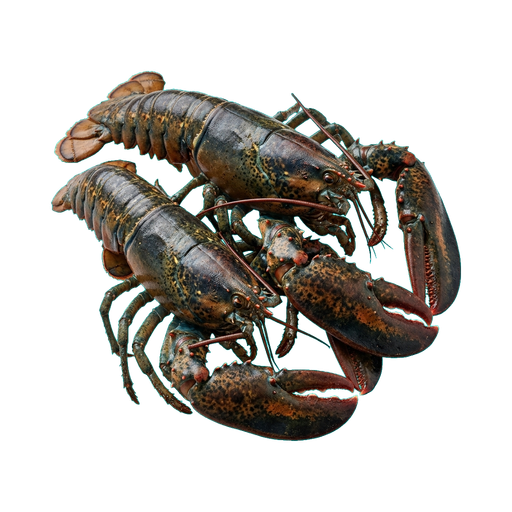
Lobster
Lobsters are large marine crustaceans with dense meat that has a slightly sweet flavor and tender texture. They are prized for their delicate meat from the claws, tail, and body, which readily absorbs butter, wine, and spices. When selecting a lobster, pay attention to its liveliness and weight — a fresh lobster should be active, and the meat becomes tougher with prolonged storage, so it's best to cook it on the day of purchase or at most the next day.
About
What you need to know about lobsters
Lobsters are marine crustaceans with dense meat of a slightly sweet flavor and delicate texture. The main difference from crabs and shrimp is that lobster meat is firmer, less fibrous, and maintains its shape with any cooking method. This makes them an ideal choice for restaurant dishes and festive tables.
When choosing a lobster, pay attention to the weight — the optimal size is 400 to 800 grams, such specimens are more tender. A live lobster should be active, with a firm tail that curls under the belly. The shell should be hard, without soft spots. If you're buying frozen lobster, make sure there is no ice crust and no dark oxidation spots.
Taste and aroma
Lobster meat has a delicate seafood flavor with a slight sweetness. The most tender and juicy meat is found in the claws and tail. The shell and head contain aromatic juice that is often used for sauces and broths — these are not waste, but a valuable ingredient. Fresh lobster has a seafood aroma, clean and without any fishy smell.
How to Cook Lobsters
The simplest and most traditional method is boiling in salted water for 12–15 minutes depending on size. The meat should be opaque and easily separate from the shell. For a more interesting result, try grilling by cutting the lobster in half lengthwise, or baking it with butter and garlic. Quick searing over high heat will preserve the juiciness.
- Boiling — the most reliable method, the meat becomes tender and easily separates
- Grilling — gives a smoky aroma and a light crust, requires attention to timing
- Baking with oil — preserves moisture, suitable for restaurant portions
- Blanching before butchering — facilitates meat separation from the shell
Pairs well with
Lobster pairs beautifully with classic seafood sauces: creamy white wine sauce, tomato-based, and lemon. Butter, garlic, and parsley are its perfect companions. The tender meat doesn't require aggressive spices, but responds well to paprika, saffron, and mild pepper. Ideal in pasta, risotto, soups, and salads.
Selection and Storage
Live lobster is best cooked on the day of purchase or the next day, stored in the refrigerator at a temperature close to zero, wrapped in damp cloth. Frozen lobster can be kept for several months. Thaw slowly in the refrigerator, don't rush — this way the meat will retain its juiciness and flavor. Cooked lobster is stored in the refrigerator for up to three days.
Main rule: do not overcook. Overcooked lobster meat becomes tough and loses its sweetness. It is better to undercook by a minute than to dry it out.
Nutrition
per 100 g
- Calories
- 90 kcal
- Protein
- 19 g
- Fat
- 1 g
- Carbs
- 0 g
Measures and weight
- 1 pcs
- 500 g
Measure calculator
- Weight
- 100 g
- Calories
- 90 kcal