Usuba
Usuba
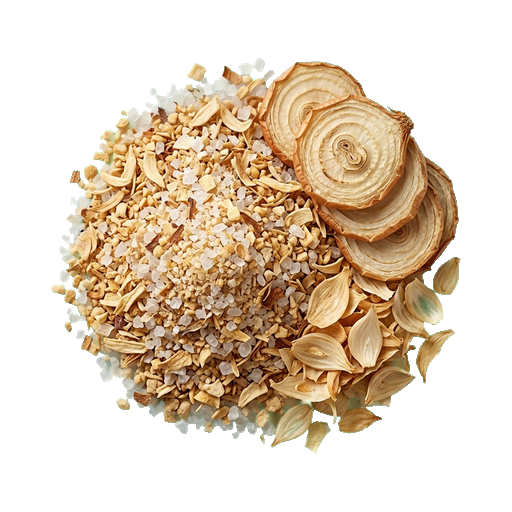
Onion Salt
A seasoning made from dried onion mixed with sea salt that imparts an intense onion aroma to dishes without adding moisture. It is used for seasoning meat, vegetables, soups, and appetizers, and is also suitable for sprinkling over finished dishes. When using, it is important to account for its saltiness and adjust the amount of salt in the recipe to avoid over-salting the dish.
About
Onion salt is not just a seasoning, but a ready-made solution for those who appreciate depth of flavor without unnecessary fuss. It is a mixture of dried and ground onion with salt, sometimes with the addition of other spices. Unlike fresh onion, such a seasoning works instantly: no tears, no chopping, no waiting for the onion to release its aroma. Just a pinch — and the dish acquires character.
Aroma and Flavor
Onion salt smells sharp and slightly sweet, with a salty note. When it touches your tongue, you first feel the saltiness, then a sweet onion flavor unfolds with a light sharpness. It's not aggressive, but rather cozy and familiar. The intensity of the taste depends on the concentration of onion in the mixture — in quality versions, onion makes up the main part of the composition.
Where and how to use it
Onion salt is so versatile that it seems to be made for everyday cooking. Sprinkle it on french fries or baked potatoes — you'll get a crispy crust with an onion character. Add it to ground meat for cutlets or meatballs — the onion will bind the ingredients and enrich the flavor. Season soups, stews, and stewed vegetables with it. Even a simple salad of tomatoes and cucumbers will become more interesting.
Onion salt works well as a final touch: sprinkle it on the finished dish a minute before serving to get a distinct onion flavor. On meat, fish, in eggs, on cheese — it finds its place everywhere. The main thing to remember is that this is already salt, so there's no need to add extra sodium chloride.
Combinations and Proportions
Onion salt pairs well with black pepper, garlic, paprika, and dried herbs. If you're preparing a meat dish, combine it with rosemary or thyme. For vegetables, a combination with turmeric or ground coriander works well. When working with onion salt, start small — a quarter teaspoon per serving — and add to taste. It's easier to overdo it than to fix it.
Selection and Storage
When choosing onion salt, pay attention to the composition: it should contain onion and salt, everything else is optional. Quality seasoning has a uniform color (gray-yellow or light brown) without lumps and foreign odors. If you see a product that is too white, this is a sign of excess salt and lack of onion. Smell it: there should be a distinct onion aroma, without mustiness.
Onion salt is stored in a tightly sealed jar or container in a cool, dry place away from sunlight. Moisture is the enemy of such a seasoning: it clumps together and loses its free-flowing texture. If the mixture does become damp, break up the lumps with a fork or place a grain of rice in the jar, which will absorb excess moisture. With proper storage, onion salt maintains its quality for a year or two.
Onion salt is a seasoning for the busy, but not for the careless. It saves time, requires no special skills, and transforms an ordinary dish into something you'll want to cook again and again. Keep a jar on hand and add it to any dish that, in your opinion, could use an onion note.
Nutrition
per 100 g
- Calories
- 15 kcal
- Protein
- 0.4 g
- Fat
- 0.1 g
- Carbs
- 3 g
Measures and weight
- 1 tbsp
- 18 g
- 1 tsp
- 6 g
- 1 cup
- 300 g
Measure calculator
- Weight
- 100 g
- Calories
- 15 kcal