Usuba
Usuba
Mango chutney
A spicy fruit condiment with characteristic acidity and sweetness, made from ripe mango with the addition of spices, vinegar, and sugar. Chutney is ideal for spicy Indian dishes, meat, fish, and cottage cheese appetizers, helping to balance the richness and intensity of main courses. When choosing, it is important to consider the consistency of the condiment — it can be either smooth or contain fruit pieces, which affects the serving method and pairing with different dishes.
About
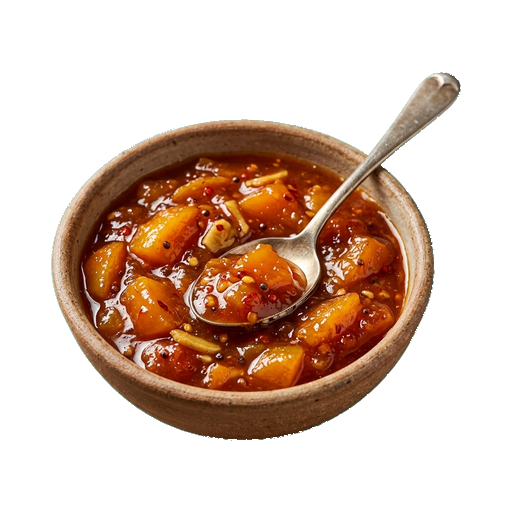
Mango chutney is a spicy, sweet-and-sour paste that transforms a simple meal into a celebration of flavors. Its thick consistency, vibrant yellow-orange color, and explosive harmony of spices make it a universal companion to any table. It's not just a condiment, but a full-fledged ingredient that can dramatically change the character of a dish.
Taste and Aroma
The basis of chutney is ripe mango — sweet and juicy. But sweetness here never dominates. It is balanced by sharp spices: chili, ginger, sometimes black pepper. Acidity comes from vinegar or lemon juice. The result is a multi-layered flavor where each component plays its role: the sweetness of mango, the heat of pepper, the warmth of ginger, the spice of turmeric.
The aroma of the chutney is rich and striking. Upon opening the jar, you immediately sense a spicy bouquet with fruity notes. It's a smell that whets the appetite and prepares your taste receptors for an intense flavor experience.
Where and how to use
- With spicy dishes: chutney softens the heat and adds sweetness. Perfect alongside curry, spicy cutlets, or fried fish
- In sauces and marinades: a spoonful of chutney transforms a simple yogurt sauce into an exquisite dip or meat marinade
- On sandwiches: spread chutney on bread with processed cheese or cottage cheese — you'll get a snack with character
- With cheese and cold cuts: a classic pairing, when chutney's spicy sweetness contrasts with saltiness and richness
- In rice and grains: add chutney to cooked rice or quinoa to enliven the side dish
Combinations with other ingredients
Chutney works well with fatty ingredients: cream cheese, cottage cheese, sour cream. The acidity and spiciness cut through the fat and refresh the taste. With meat — especially chicken and pork — chutney creates an ideal balance. Fish, especially fatty varieties, also benefits from the spicy sweetness.
Vegetables that are often included in chutney (tomatoes, onions, peppers) make it an excellent companion for vegetable dishes. Try adding a spoonful to pumpkin or carrot puree soup — you'll get an unexpected twist.
Selection and Storage
When choosing, pay attention to the consistency: good chutney should be thick, not liquid. The color should be bright, without dark oxidation spots. Check the ingredients: the fewer preservatives and thickeners, the better. Natural chutney contains mango, spices, vinegar, and salt — everything else is unnecessary.
- Keep the closed jar in a cool dark place for up to a year
- After opening, transfer to a glass container and store in the refrigerator
- Open chutney keeps for 2–3 weeks if it hasn't been in contact with a dirty spoon
- You can freeze chutney in portions in ice cube trays — convenient for use
Mango chutney is an ingredient that works as a flavor enhancer. It doesn't overpower the dish, but reveals its new facets. Keep a jar in your cabinet for those days when you need to quickly turn an ordinary dinner into something extraordinary.
Nutrition
per 100 g
- Calories
- 200 kcal
- Protein
- 1 g
- Fat
- 0.5 g
- Carbs
- 48 g
Measures and weight
- 1 tbsp
- 18 g
- 1 tsp
- 6 g
- 1 cup
- 300 g
Measure calculator
- Weight
- 100 g
- Calories
- 200 kcal