Usuba
Usuba
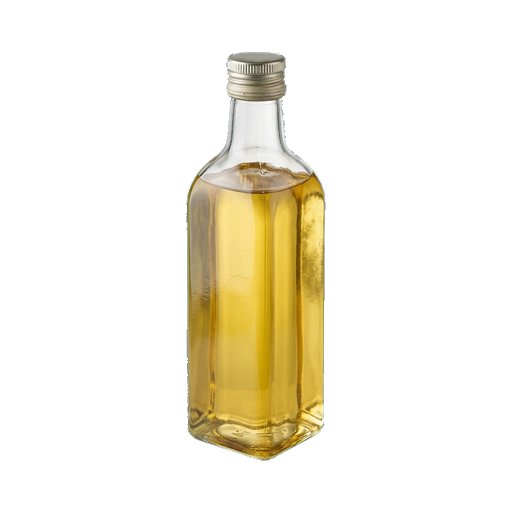
Deep frying oil
A specialized oil with a high smoke point, designed for deep frying products in hot liquid. This oil must withstand temperatures of 160–190 °C without breaking down or forming harmful substances, ensuring a crispy coating and even cooking. Refined vegetable oils are suitable for deep frying — sunflower, peanut, or specialized blends that maintain stability with repeated use and remain functional for longer.
About
Frying oil is not just an ingredient, but the foundation of a crispy crust and tender filling. Its choice determines whether your result will be oily and heavy or light and appetizing. The right oil works seamlessly: it heats evenly, doesn't smoke prematurely, and doesn't absorb into the product like a sponge.
Which oil to choose
The main property of frying oil is a high smoke point. This is the temperature at which oil begins to break down and release smoke. For deep frying, you need a smoke point of at least 190–200 degrees, or preferably higher.
- Refined sunflower oil — a classic choice. Neutral, affordable, with a smoke point around 210 degrees.
- Peanut oil — more stable than sunflower oil, withstands 230 degrees, adds a light nutty note.
- Corn oil — holds temperature well (210–230 degrees), barely affects taste.
- Vegetable oil blend — often specially formulated for deep frying, already contains stabilizers.
- Extra virgin olive oil — not suitable. Low smoke point (160 degrees) and expensive.
Avoid unrefined oils with a pronounced flavor — they will start to burn and spoil the dish. Also, do not use oil past its expiration date: oxidized oil will give bitterness and an unpleasant smell.
Frying Practice
Temperature is the main tool. Oil that is too cold will be absorbed into the food, making the dish greasy. Oil that is too hot will burn on the outside and remain raw inside. The optimal temperature for most dishes is 170–180 degrees.
- Use an oil thermometer or test with a bread cube — if it turns golden in 60 seconds, the temperature is correct.
- Do not overfill the pan or deep fryer with oil — leave space for expansion when heating and for safety.
- Do not mix old oil with new oil — old oil is already oxidized and will spoil the fresh oil.
- Remove crumbs and food scraps immediately, otherwise they will burn and give the oil a bitter taste.
- One batch of oil can be used multiple times, but no more than 6–8 frying cycles.
Storage and Processing
Used oil can be filtered through cheesecloth or a coffee filter and stored in a glass bottle in the refrigerator — it will last longer. But if the oil has darkened, acquired a burnt smell, or become sticky, it's time to change it. Do not pour used oil down the sink — it will clog the pipes. Collect it in a bottle and take it for recycling or to a special collection point.
Good frying oil is an investment in quality. It makes the difference between home cooking and restaurant results.
Nutrition
per 100 ml
- Calories
- 900 kcal
- Protein
- 0 g
- Fat
- 100 g
- Carbs
- 0 g
Measures and weight
- 1 tbsp
- 13.8 g
- 1 tsp
- 4.6 g
- 1 cup
- 230 g
Measure calculator
- Weight
- 100 g
- Calories
- 978 kcal