Usuba
Usuba
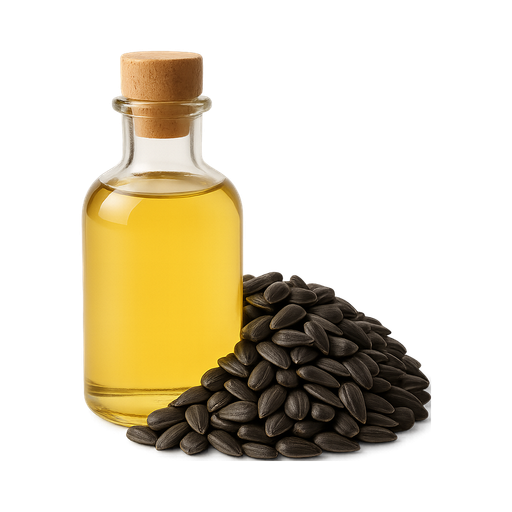
Cooking oil for frying
Plant-based oil free from animal fats, used during fasting days and when observing religious restrictions. Suitable for frying, stewing, and making sauces thanks to its high smoke point and neutral flavor. When choosing, pay attention to the degree of oil refining — refined oil better withstands heat, while unrefined oil may impart a pronounced taste to the dish.
About
What is vegetable oil and why you need it in your kitchen
Vegetable oil is a plant-based oil that remains liquid at room temperature and contains no animal fats. In the kitchen, it works as a universal helper: it handles frying in a pan, deep frying, and even salad dressings equally well. Its main advantage is that it remains stable at high temperatures and doesn't smoke prematurely, allowing you to cook without unwanted odors and preserving the quality of your dish.
Which oils are suitable for a fasting diet
Refined oils with a high smoke point are most commonly used for frying. Sunflower oil is the most accessible and reliable option, as it can withstand temperatures up to 230 degrees. Rapeseed oil is slightly more expensive but also performs well in a pan. Peanut oil imparts an interesting flavor and can handle even higher temperatures. Refined coconut oil is suitable for frying, although its delicate aroma may be lost at high temperatures.
How to Choose Cooking Oil
- Check the label: it should say "refined" or "for frying". Unrefined oils smoke at low temperatures and ruin the taste of the dish.
- Check the smoke point — it should be no lower than 200 degrees for regular frying and from 230 degrees for deep frying.
- Pay attention to the color: quality oil is transparent, without cloudiness or sediment.
- The smell should be neutral or barely noticeable. A sharp smell indicates oxidation.
How to work with lean oil when cooking
Pour oil into a cold pan and let it heat well before adding ingredients. If you're cooking something delicate — fish, vegetables — medium heat is enough. For meat and potatoes, you'll need a hotter fire. Don't overfill the pan with oil: for regular frying, a thin layer is sufficient, for deep frying the product should be completely submerged.
Storage and Reuse
Refined oil should be stored in a dark, cool place, away from sunlight and heat. A sealed bottle will last a year or longer. After frying, the oil can be filtered through cheesecloth and reused, but no more than two or three times — it loses its properties and begins to affect the taste. If the oil has darkened, acquired an unpleasant smell, or starts smoking at room temperature, it's time to replace it.
What is best to cook with vegetable oil
- Fried potatoes and french fries — oil prevents them from absorbing, potatoes remain crispy.
- Meat and poultry in a pan — good contact with hot oil creates a beautiful crust.
- Vegetables — eggplants, zucchini, tomatoes fry quickly and evenly.
- Deep frying for donuts, in a deep fryer or in a pot — oil maintains the right temperature for a long time.
- Breaded dishes — cutlets, battered fish, chicken wings come out with an appetizing crust.
Nutrition
per 100 ml
- Calories
- 884 kcal
- Protein
- 0 g
- Fat
- 100 g
- Carbs
- 0 g
Measures and weight
- 1 tbsp
- 13.8 g
- 1 tsp
- 4.6 g
- 1 cup
- 230 g
Measure calculator
- Weight
- 100 g
- Calories
- 961 kcal