Usuba
Usuba
Mollusks
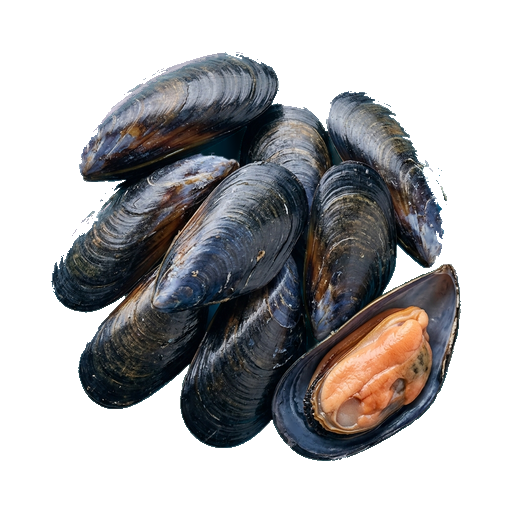
Mollusks are marine and freshwater invertebrate animals whose meat is distinguished by a tender texture and delicate, slightly sweet flavor with marine notes. In cooking, oysters, mussels, squid, octopus, and other representatives of this class are used, prepared on the grill, in soups, pastas, or raw. When selecting, it is important to pay attention to freshness — shells should be closed and smell of the sea without signs of decay, while frozen mollusks require proper thawing to preserve the juiciness of the meat.
About
Mollusks are a marine delicacy that opens up numerous possibilities for the cook. From tender oysters to meaty octopuses, each type has its own character and requires an understanding of how best to use it in the kitchen. It is not just an ingredient, but an entire world of flavors, textures, and cooking techniques.
Taste and texture: from tender to firm
The flavor profile of mollusks depends directly on the species. Oysters offer a mineral, slightly sweet note with a hint of sea salt. Mussels are more delicate and refined, with a barely perceptible sweet aftertaste. Scallops represent pure sea flavor with nutty notes, and their texture is firm and dense.
Squid and octopus require careful handling: when properly prepared, they become tender and slightly sweet, but they are easy to overcook. Filter-feeding mollusks (oysters, mussels) absorb the flavor of the water they live in, so season and origin affect their character. Always choose live mollusks with tightly closed shells — this guarantees freshness and safety.
Role in dishes and cooking methods
Mollusks are versatile. Oysters and scallops are wonderful raw or lightly heat-treated — this way they retain their tenderness and fresh sea flavor. Mussels are ideal for pasta, soups, and risotto: they release their taste into the liquid, enriching the broth. Squid is sliced into rings and quickly sautéed, or stuffed whole for a more festive dish.
- Oysters and scallops: raw, grilled or with minimal heat treatment
- Mussels: stewed in white wine, added to pasta and risotto
- Squid: quick frying, stuffing, added to salads
- Octopus: long stewing or boiling until tender, then slicing and frying
The golden rule: don't overcook mollusks. Oysters and scallops lose their tenderness in seconds, squid becomes rubbery if kept warm for more than a couple of minutes. The exception is octopus, which requires prolonged stewing (an hour or more) to soften.
Pairings and Side Dishes
Mollusks love acidity and freshness. Lemon, white wine, fresh parsley, and garlic are their faithful companions. Mussels work wonderfully with creamy sauce, white wine, and herbs. Oysters are delicious with spicy sauce, lemon, or simply with sea salt. Squid shines alongside olive oil, garlic, and hot pepper.
- White wines (Sauvignon Blanc, Chardonnay) enhance the fresh seafood notes
- Tomatoes and olives add brightness and fullness to the flavor
- Spices (red pepper, garlic) contrast with the tenderness of the meat
- Pasta and rice absorb the seafood juice and become the star of the dish
Selection and Storage
When buying live mollusks, check that the shells are tightly closed and have no cracks. Tap lightly on an open shell — a live mollusk should close it. The smell should be fresh and marine, with no signs of staleness or ammonia. Avoid mollusks with cracks, dents, or unusual coloring.
Store live mollusks in the refrigerator at 0–4 degrees Celsius in a bowl covered with a damp towel. Don't seal them in an airtight container — they need air. Oysters and mussels live in the refrigerator for 3–5 days. Squid and octopus, if already cleaned, last longer — up to a week. Frozen mollusks can be kept for months, but thaw them in the refrigerator, not at room temperature.
Freshness is the main rule when working with mollusks. The fresher they are, the easier they are to cook and the brighter the flavor.
Nutrition
per 100 g
- Calories
- 86 kcal
- Protein
- 15.6 g
- Fat
- 1.4 g
- Carbs
- 2.2 g
Measure calculator
- Weight
- 100 g
- Calories
- 86 kcal