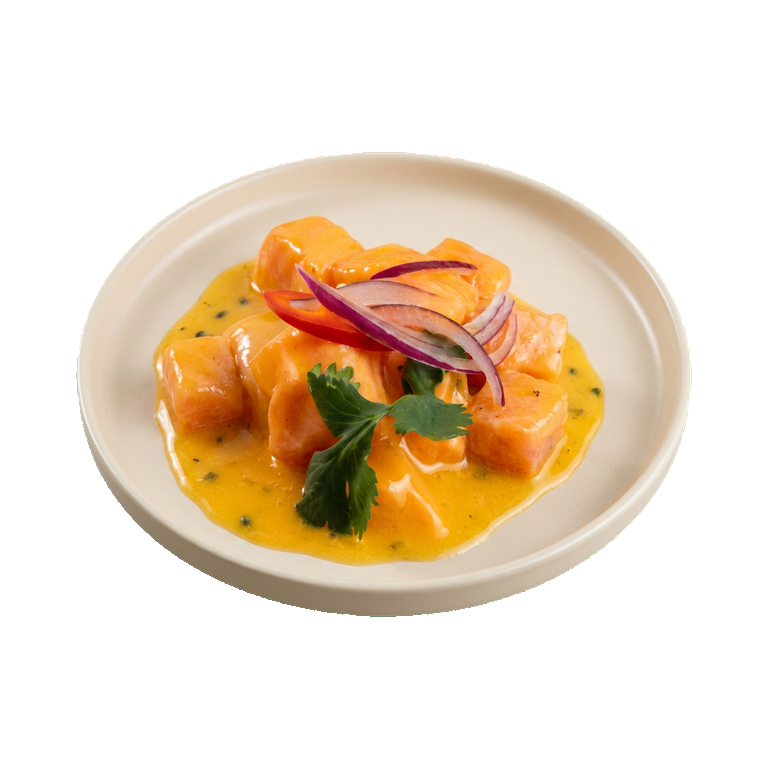
Usuba
Usuba
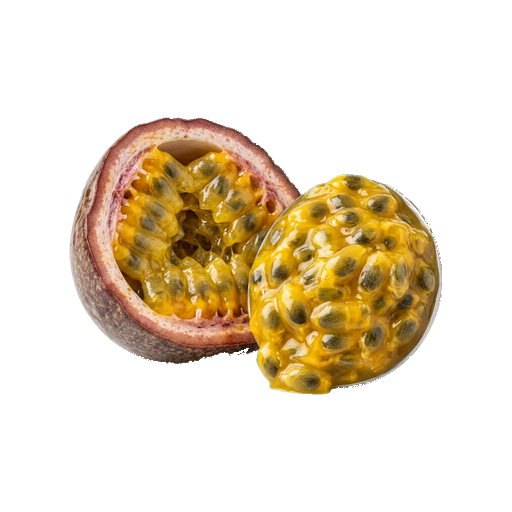
Passion fruit pulp
Passion fruit pulp is an aromatic liquid substance with tiny black seeds inside the fruit, featuring an intense tropical aroma and tart flavor with fruity notes. Used in desserts, beverages, sauces, and creams, it adds exotic freshness and bright acidity to dishes. When selecting, pay attention to the skin's wrinkliness — a ripe fruit appears shriveled, and the pulp should be aromatic and display a rich yellow-orange color.
About
Passion fruit pulp is liquid gold in cooking. Inside the fruit lies a mass with seeds that is simultaneously sour, sweet, and aromatic. It is used in both sweet desserts and spicy sauces, cocktails, and dressings. Its main virtue is an intense flavor that easily transforms even the simplest dish.
Taste and Aroma
Passion fruit pulp has a pronounced tropical aroma with fruity and floral notes. The taste is simultaneously sour and sweet — the acidity can be quite aggressive, especially if the fruit is not fully ripe. The seeds add texture and a subtle bitterness. This multi-layered flavor profile makes the pulp a versatile ingredient: it can be the foundation, an accent, or an unexpected twist in a dish.
Where and how to use it
In sweet dishes, passion fruit pulp works well in mousses, panna cottas, cheesecakes, and pies — its acidity balances creamy and sweet components. It is added to ice cream sauces, yogurts, and cottage cheese. In the kitchen, it is indispensable in cocktail programs: margaritas, daiquiris, and tropical mixes gain depth and complexity from it.
- Desserts: mousse, panna cotta, cream, ice cream sauce
- Beverages: cocktails, smoothies, lemonades, compotes
- Savory dishes: marinades, sauces for fish and seafood, salad dressings
- Pastries: fillings, glazes, cake soaks
Selection and Storage
Fresh passion fruit pulp is easiest to extract from a ripe fruit: the skin should be wrinkled and dark (this is a sign of ripeness, not spoilage). Break the fruit in half and scrape out the pulp with a spoon. If you need pulp without seeds, strain it through a sieve, but remember that the seeds add texture and some of the aroma.
Fresh pulp is stored in the refrigerator in an airtight container for no more than three days. For long-term storage, it is frozen in ice cube trays or small containers — this way it retains its flavor and aroma for up to six months. Concentrated passion fruit juice (industrial) has a longer shelf life and works in dishes just as effectively, although some freshness is lost.
Harmonious Combinations
Passion fruit pulp pairs well with coconut, vanilla, and cream — they soften its acidity and enhance the tropical mood. With citrus fruits (lemon, orange) it creates a bright, energetic mix. White chocolate and passion fruit is a classic combination in desserts. On the savory side, it works perfectly with ginger, chili pepper, and fish.
- Sweet partners: coconut, vanilla, cream, white chocolate, mango
- Spicy partners: ginger, chili, black pepper, lime
- Proteins: fish, seafood, chicken
The main rule when working with passion fruit is not to be afraid of its acidity. This is not a mistake, but its nature. If the dish turns out too sour, add sugar or cream, but do not remove the pulp itself. Its intensity is what it is valued for in the kitchen.
Nutrition
per 100 g
- Calories
- 97 kcal
- Protein
- 2.2 g
- Fat
- 0.3 g
- Carbs
- 23.4 g
Measures and weight
- 1 tbsp
- 15.8 g
- 1 tsp
- 5.3 g
- 1 cup
- 262.5 g
Measure calculator
- Weight
- 100 g
- Calories
- 97 kcal