Usuba
Usuba
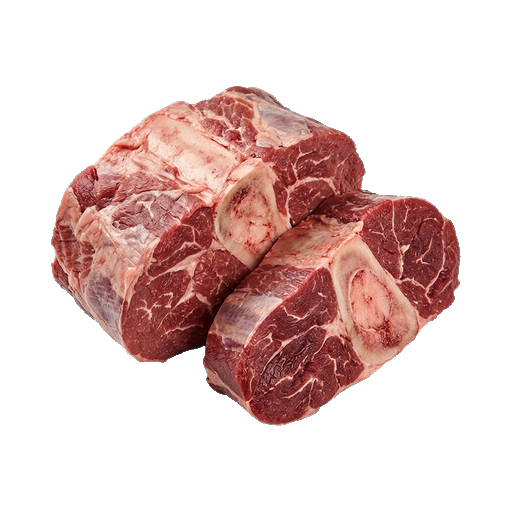
Meat on the bone
Meat on the bone consists of meat pieces with attached bone that release collagen and minerals into the broth during boiling and stewing, making it more rich and thick. These cuts cook slower than fillet but develop a more pronounced meaty flavor and remain juicier thanks to the bone's protection. When selecting, pay attention to the meat color — it should be bright red or pink, and the bone should be light without darkening, which indicates product freshness.
About
Meat on the bone is not just a piece of meat with skeletal remains, but a full-fledged ingredient that changes the taste of a dish. During cooking, the bone releases gelatin, collagen, and minerals into the broth, creating a richness that boneless meat cannot provide. This is why professional chefs prefer such cuts for soups, stews, and slow-braised dishes.
Aroma, taste and texture
Meat on the bone has a more pronounced, deeper flavor than fillet. This happens because the bone contains bone marrow — a substance with a rich, fatty aroma. When you cook such meat, the marrow melts and saturates the surrounding tissues, making the dish more aromatic and satisfying.
The texture of meat on the bone turns out to be more tender than it might seem. Collagen from the bone transforms into gelatin when heated, and the meat becomes softer, even if cooked for a long time. This is especially noticeable in slow braising or when boiling — the meat literally falls off the bone.
Where to use in the kitchen
- Broths and soups — the main purpose. Bone provides clarity and viscosity, while meat adds nutritional value.
- Stews and braised dishes — meat on the bone retains juiciness for a long time and doesn't fall apart during prolonged cooking.
- Oven-baked pieces — bone helps meat cook evenly and protects it from drying out.
- Aspic and jellies — bone is essential, only it will provide the required amount of gelatin.
- Skewers and grilling — meat on bones looks more impressive and cooks more interestingly.
How to Choose and Store
When selecting, pay attention to the color of the meat — it should be bright red or pink, without dark spots or dried edges. The bone should be clean, without any bluish discoloration. If the pieces are in vacuum packaging, check the date and make sure there is no liquid, which would indicate thawing.
Meat on the bone in the refrigerator should be stored for 3–4 days on the lower shelf, away from other products. In the freezer, it will keep comfortably for several months. Before use, thaw slowly in the refrigerator — this way the meat will retain its juiciness and nutrients.
Practical Tips
- Don't throw away the bone marrow — it's a delicacy. Scoop it out with a spoon and use it for sandwiches or add it to sauce.
- Take the meat out of the refrigerator 20–30 minutes before cooking to let it warm up — this will ensure it cooks evenly.
- For soup, first blanch the piece with boiling water to remove blood and impurities — the broth will be clearer.
- The bone adds weight to the piece, so when calculating per portion, take slightly more than you would with boneless meat.
Meat on the bone is an investment in the quality of your dish. Yes, it requires a bit more cooking time and produces some waste, but the taste and texture are worth it. If you want a truly hearty soup, tender stew, or an impressive baked dish, choose this type of meat.
Nutrition
per 100 g
- Calories
- 250 kcal
- Protein
- 18 g
- Fat
- 19 g
- Carbs
- 0 g
Measure calculator
- Weight
- 100 g
- Calories
- 250 kcal